शुक्रवार, 19 दिसंबर 2014

कोच्चि मुजरिस बिनाले में मानव अतीत और भविष्य की जटिल परिस्थितियों को उजागर करती पटवर्धन की कलाकृतियां

Bk.ks ds o;kso`) dykdkj ds 3&iSuy okyh dykd`fr dks fcukys esa fo’ksk rkSj ls iznfkZr fd;k x;k gS
dksfPp] 19 fnlacj % lq/khj iVo/kZu ;qokoLFkk ds nkSjku bfrgkl esa fnypLih ysrs jgs vkSj vkf[kjdkj og yacs le; rd foKku fQD'ku dh rjQ vkdfkZr jgsA vrhr vkSj Hkfo"; ds izfr muds twuwu ls iSnk gq;h isphnfx;ksa us 60 o"kZ ls vf/kd mez okys bl jsfM;ksykWftLV dks ;gka py jgs dksfPp& eqftfjl fcukys ¼ds,ech½ dh rjQ [khap yk;k tgka mUgksaus viuk ,d fo’kky dykd`fr LFkkfir dh gSA

सुधीर पटवर्धन की कलाकृति निहारते दर्शक 
^fcfYMax , gkse( ,DlIyksfjax n oYMZ* rhu iSuyksa okyh ¼f+=iV½ dykd`fr gS ftlus lgL=kfCn;ksa ls ekuo thou dks izHkkfor djus okyh ijLij fojks/kh vkSj dkQh gn rd lekukarj xfrfof/k;ksa dks iznf’kZr fd;k gSA blesa fn[kk;k x;k gS fd euq; u;h kSfy;ksa dh rykk djrk gS rks nwljh rjQ og vius thou esa LFkkfir gksus ds fy;s la?kkZ djrk gSA miuxjh; QksVZ dksfPp esa dksfPPk & eqftfjl fcukys*14 ¼ds,ech*14½ ds eq[; ,fLiuoky lHkk LFky ij leqæ ds lkeus ds ,d dejs esa dSuokl ij ,fØfyd dk;ksZa ds lkFk cSBs iVo/kZu dgrs gSa] ^^nwljh vksj] og thou esa LFkkfir gksus ds fy, ç;kl djrk gSA ;g mRlqdrkiw.kZ gSA**
dykdkj us djhc Ng eghus esa bls vafre :i iznku fd;k gSA 5-6 QqV&nj&15&QqV dh rhu Qyd okyh dykd`fr bu nksuksa fparu }kjk iSnk fd;s x;s x;s –';ksa dks izLrqr djrh gSA Bk.ks ds 65 o"khZ; fuoklh dgrs gSa] ^^bl lky twu ls] eSaus dbZ phtksa dh leh{kk djuh 'kq: dhA eSaus okil bfrgkl vkSj varfj{k dh [kkst nksuksa fo"k;ksa ij iqLrdksa ij v/;;u djuk 'kq: fd;kA** mUgksaus dgk fd eSaus vU; phtksa ds lkFk 13 Hkkx okyh e'kgwj Vsyhfotu J`a[kyk ^dkWLeksl % , ilZuy oks;kt* vkSj fQYe ^lksykfjl* dks nksckjk ns[kkA
सुधीर पटवर्धन की कलाकृति
dykdkj us dgk fd muds uohure dke dh rS;kjh esa eqacbZ ds ikl gh jgus okys ds,ech*14 ds dyk funs'kd ftfr'k dykr us lg;ksx fd;kA iq.ks esa iSnk gq, iVo/kZu dgrs gSa] ^^eq>s LFkku vkSj le; ds fopkjksa ds vklikl dykd`fr;ksa dk fuekZ.k djus djus ds fy, dykr ds D;wjsVksf;y uksV ls izsj.kk feyh] tks gesa ;g ;kn fnykrk gS fd i`Foh xzg çfr ?kaVs 100]000 fdyksehVj dh rst xfr ls varfj{k esa ifjØek djrh gSA
12 fnlacj dks 'kq: gq, 108 fnolh; ds,ech*14 esa mudh dykd`fr;ka eq[; iSuy ij /;ku dsafnzr djrh gSA tSlk fd iVo/kZu dgrs gSa fd dykd`fr ds ckdh nks iSuy Hkh ^^de egRoiw.kZ** ugha gSaA
igyh vkSj rhljh isafVax Øe'k% ewy ekuo çokl vkSj varfj{k esa pyus ds ckjs esa gSa] tcfd chp dh isafVax dks 16 oha lnh ds iqutkZxj.k dykdkj ihVj czq,?ksy dh ydhjksaa ij ckcsy iksVªkZ;M ds ikSjkf.kd VkWoj vkSj ,d HkO; Lekjdh; bekjr ds ,d cqf)erkiw.kZ feJ.k ij fpf=r fd;k gS ftls :lh okLrqdkj Oykfnehj VkVfyu us 1917 dh cksY'ksfod Økafr ds ckn isVªksxzSM esa fuekZ.k ds fy, cuk;k Fkk] ysfdu okLro esa bls dHkh ugha cuk;k x;kA
iVo/kZu dgrs gSa] ^^nksuksa Vkoj] lÙkk ds fy, vkneh dh bPNk vkSj ç—fr ij viuh egkjr gkfly djus dks fpf=r djrs gSaA iVo/kZu us 2005 ls gh viuk iwjk le; dyk ds fy, O;rhr djuk 'kq: dj fn;k] gkykafd os 'kgjh xjhc vkSj e/;e oxZ dh O;Fkk dks fpf=r djus ds fy, va/ksjs vkSj ?kus 'kgjh {ks= dh Hkh Mªkbax cukrs jgsA
gkykafd mUgksus gYds <ax ls dgk fd ^^QksVZ dksfPp dh /kjrh ij nks Vkojksa dks j[kdj bl fcukys dks ^cScsfy;u iz;kl* ds :i esa ekU;rk nh x;h gSA** mUgksaus dgk fd VkVfyu dh ifj;kstuk foKku vkSj izkS|ksfxdh ds }kjk iSnk dh x;h laHkkoukvksa dks fgC: ckbfcy esa Hkfo";oDrk ds :i esa is'k djrh gSA ^^bl fo'okl ds ckotwn fd euq"; Hkxoku ds vfHk'kki dks ugha le> ldrs gSa] ,d ds lkFk nwljs dh okrkZyki uss yksxksa ds iyk;u ds fy, usr`Ro fd;kA**
iVo/kZu us] viuh 'kSyh ds foijhr] fcukys ds vius dk;ksZa esa mnkjrkiwoZd xzaFkksa dk bLrseky fd;k gSA okLro esa] igys iSuy ds izeq[k us [kqn Hkh izfl) fczfV'k ys[kd #Fk ikMsy dh ydhjksa dks fpf=r fd;k gS ftudh dfork ^Vkbe Vw Q~ykbZ* dk dykdkj ij xgjk çHkko iM+kA
muds ds,ech*14 ds dke dks 1983 & 84 esa iVo/kZu ds MªkbZax ij vk/kkfjr gky dh fyFkksxzkQ ds lsV ds dkj.k Hkh igpku feyh] tc og le;&;k=k ds fopkjksa ls csgn eksfgr gks x;s FksA og dgrs gSa] ^^;s fçaV ,sfrgkfld vkSj Hkfo"; ds eqdkcyksa dk vkºoku djrs gSaA blfy, mUgsa 'kkfey fd;k x;k gSA**
igys iSuy ds :i esa] iVo/kZu dgrs gSa fd vius u"V gks pqds jsfxLrku ds xkaoksa ls iyk;u dj igkM+ dh vksj Hkkxus okys yksxksa dh Nfo;ksa dks fpf=r djus okys ledkyhu dykdkj T;ksfr clq dh ,d isafVax dks Hkh ;gka iznf'kZr fd;k x;k gSA rhljs iSuy us] Hkh dsjy esa tUes fp=dkj ¼ftUgsa la;ksx ls] igys ds,ech esa Hkh LFkku fn;k x;k Fkk½ ls lgefr tkfgj dh gSA
29 ekpZ] 2015 dks lekIr gksus okys nwljs ds,ech esa 30 ns'kksa ds 94 dykdkjksa dh 100 eq[; dykd`fr;ksa dks 'kkfey fd;k x;k gSA

Lalit Kala Akademi will host “Shift Collective”, a spectacular exhibition of paintings and photographs.

New Delhi 19 December
Lalit Kala Akademi will host “Shift Collective”, a spectacular exhibition of paintings and photographs of two young artists -- Suman Sengupta (Kolkata) and Amit Dey (Delhi)

Shift is different from moving forward or moving backward. It means moving along the lateral. And among all physical mobility - pushing, pulling, picking or dropping -- shifting is the most challenging.

In the 22 works in this exhibition, viewers will see a gradation in the development of the ideas of the artists in this scheme, how each concept has been meticulously developed and rendered. The artists come from the mainstream visual media. The major shift in the manner in which the artists have challenged their mainstream work is the real creative genius of this exhibition. This is an internal journey but so daring that it should be thrown up in the open to be watched and interpreted.

The exhibition has been curated by Ms Joyoti Roy, who works with the Outreach Department at the National Museum, New Delhi.

The exhibition Shift Collective is a twist in the tale. It holds the bull by its horn and turns it around and then charges him in a different direction. This is a rare coming together of the popular and the exclusive where works challenge their own subjects and metaphors. It is familiar and unfamiliar at the same time.

The artists come from the mainstream visual media. The major shift in the manner in which the artists have challenged their mainstream work is the real creative genius of this exhibition. This is an internal journey but so daring that it should be thrown up in the open to be watched and interpreted.

In the 22 works in this exhibition, viewers will see a gradation in the development of the ideas of the artists in this scheme, how each concept has been meticulously developed and rendered. So shift your gears and enjoy this ride. It is going to be an act of handling weight, direction, tact and impact, all at the same time.

When: 21-27 December 2014
Where: Lalit Kala Akademi Gallery 5
Kasturba Gandhi Marg, New Delhi

Attack, Suman Sengupta

Suman Sengupta I Paintings
 Suman Sengupta studied Applied Art at the Government College of Art in Kolkata, yet, his primary love for painting remained unscathed. Whatever his medium, whatever his canvas and whatever his subjects Suman’s paintings are bold, honest, simple and driven, essentially, by passion and love for the vocation. His paintings are often his tool of reaction to the world around him.

Suman has been inspired by the works of Vincent van Gogh, Pablo Piccasso and Bikash Bhattacharya all known to be passionate painters, who painted because of an urgent need to express without a care for consequence and attaining the heights of unique, often assertive, interpretations of life around.

In a distinguished career in advertising, spanning over sixteen years, Suman has led creative work on some of the most iconic brands, working at some of the most prestigious creative agencies in India. It also gave him the opportunity to work on different media. Suman Sengupta is now the Executive Creative Director at Hammer Communication. However, he continues to nurture newer techniques and project his emotions and imagination on canvas.

 
Origin .Amit Dey. Digital Print on Paper
Amit Dey I Photographs

Amit Dey is one of the rare photographers who have achieved commercial success and critical acclaim in equal measures. His works have received numerous awards at shows of international repute, including 1st Place in Advertising Photography at the very prestigious Photography Masters Cup 2011. His works have also been awarded at CLIO, Goafest, Adrian awards and Px3.  His commercial work includes campaigns for Honda, Coca-Cola, Leading Hotels of the World, Monte Carlo, Nescafe and Royal Bank of Scotland.

Based in New Delhi, India, he has been involved in creating many different types of images, ranging from fashion to architecture, lifestyle to concepts... and many things in between. Cherishing his artistic freedom, he loves to experiment, and refuses to be tied to any particular genre or style. He immerses himself completely in the projects he takes up, always pushing the boundaries, to produce images that are better than what he has ever produced before.

The Curator

Joyoti Roy

Joyoti heads the Outreach Department at the National Museum – New Delhi, Ministry of Culture, Govt. of India in her mainstream profession. She is a trained Art Conservator and a Museum & Arts Manager and has worked with national and international cultural organizations, namely Intach, Alkazi Foundation for the Arts, National Culture Fund, British Museum, Tate Gallery, London and the J Paul Getty Trust, USA. She has been doing theatre since she was 10 years old, first with Bengali Theatre Groups in Jatra, then in Anant (An Association for Nascent Art and Natural Theatre) and later from 2001 she has been working with the Street Theatre Group Jana Natya Manch as an actor, singer and writer. She writes on theatre, arts and culture regularly and has been involved in developing various culture related policies for the Government of India.  Joyoti co-edits a theatre journal run by the India Theatre Forum called e-rang which is distributed through the web to over 25000 readers every month.

M D NICHE - Media Consultants

photographs of art works by French-Swiss artist Julian Charriere at Kochi-Muziris Biennale (KMB) 2014.

Artist Julian Charriere's work We Are All Astronauts at Durbar Hall  1

Artist Julian Charriere's work We Are All Astronauts at Durbar Hall 3

Artist Julian Charriere's work We Are All Astronauts at Durbar Hall  2
French-Swiss artist Julian Charriere's work, 'We are all Astronauts', displayed at the Darbar Hall venue of the ongoing Kochi Muziris Biennale 2014. The installation of 13 found globes explores changing perception of time and space in a world accelerated and flattened by globalisation. 

गुरुवार, 18 दिसंबर 2014

दिल्ली के लोग आनंद लेंगे लद्दाख के मौसम का

दिल्ली 19 दिसंबर : न दिनों दिल्ली की सर्दी अपने चरम पर है।  कुछ छायाकार इस मौसम को और भी सर्द बनाएँगे दिल्ली के इंडिया हैबिटेट सेंटर में।  सात दिनों तक  लोग एक साथ आनंद ले सकेंगे दिल्ली और  लद्दाख के सर्द मौसम का।  दरअसल दिल्ली के कुछ फोटोग्राफर प्रति वर्ष अपनी पूरी टीम के साथ मोटरसाइकिल द्वारा लद्दाख की खूबसूरत वादियों का भ्रमण करते है तथा यहाँ की खूबसूरती को अपने कैमरे में कैद करते है। इन्ही खूबसूरती को लोगों के साथ बांटने के उद्देश्य से एक छायाचित्र प्रदर्शनी का आयोजन इंडिया हैबिटेट सेंटर के विजुअल आर्ट गैलरी में होने जा रहा है जिसका उद्घाटन आज 3 बजे पेट्रोलियम राज्य मंत्री श्री धर्मेन्द्र प्रधान करेंगे।  प्रदर्शनी में  6 छायाकारों की  लगभग 45 छायाचित्र प्रदर्शित होंगे। प्रदर्शनी 26 दिसंबर तक लोगों के अवलोकनार्थ खुली रहेगी।
छाया : त्रिभुवन कुमार देव 

चार कलाकारों की कला प्रदर्शनी का कल होगा समापन

ई दिल्ली १८ दिसंबर : बिहार के चार कलाकारों की कला प्रदर्शनी इन दिनों दिल्ली के ललित कला अकादमी में चल रही है।  प्रदर्शनी का उद्घाटन १३ दिसंबर को हुआ था।  वरिष्ठ कलाकार श्री अनिल कुमार सिन्हा, श्री बिजय चन्द प्रसाद, सदानंद सिन्हा एवं उमेश प्रसाद के चित्रों की सात दिवसीय सामूहिक कला प्रदर्शनी  का कल समापन होगा।

photographs of two installations at Kochi-Muziris Biennale (KMB) 2014.


Balancing Act
Balancing Act: Veteran Indian artist Gulammohammed Sheikh's installation 'Balancing Act' is catching public attention at Vasco da Gama Square in Fort Kochi as a sculptural transition at the ongoing Kochi-Muziris Biennale 2014. The work is based on an 18th-century Jaipur school painting depicting acrobatics on a tightrope being performed before a ruler and his court. The Gujarat-born artist-author-scholar, aged 77, has yet another KMB'14 work of his being displayed at Durbar Hall Gallery in downtown Ernakulam.

Undercurrent
Undercurrent: Lebanese Artist Mona Hatoum's 's site-specific work titled Undercurrent finds place in a large dark chamber at the main Aspinwall House venue of the ongoing Kochi-Muziris Biennale 2014. With the pulsating motion of light, the installation seems to encapsulate the mysterious ebbs and flows of the universe in perpetual motion.

Young volunteers lend artful face to biennale workplace

Colourful graffiti at Foundation office catches fancy of passers-by

Kochi, Dec 18: In the process of organising India’s biggest contemporary-art festival, the Kochi Biennale Foundation (KBF) has conjured up a longish multi-hued graffiti across its fence running by a busy roadside, courtesy a youngsters’ movement dedicated to popularising and updating visual aesthetics among common people.
No less than 25 painters worked in batches for more than five days and nights, taking turns to complete the fresco that has turned the face of the KBF office itself into a work of collective art which is the basic spirit of the Kochi-Muziris Biennale (KMB) whose second edition began on December 12.
Done primarily in shades of red, blue, yellow and black, the 30-metre work against the white backdrop KBF’s compound wall in Fort Kochi depicts a performance procession with a line-up of human silhouettes, symbolising them as carriers of a grand art movement that has dawned upon this ancient city in coastal Kerala ever since the preparations for the debut biennale of 2012-13.
“The idea is to also remind the viewer of the momentousness of India’s first biennale even as we have now creditably got into the second,” says artist P S Jalaja of RAY (Radiant Artists Yield) which largely comprises alumni and students of the vintage RLV College of Fine Arts in suburban Tripunithura.

Launched in 2007, the artists’ group began working for KMB’14 in its run-up by exhibiting street art around locations in Fort Kochi. Recalls 23-year-old sculptor Jasinther Rockfeller of RAY: “We did wall paintings in continuation of our series called ‘Working-class Heroes’. It portrays images of people such as head-load workers, sweepers, auto-rickshaw drivers, tailors, masons.... their activities and life in general.” For KMB’14, RAY volunteers had begun such works since this mid-November.
KBF was impressed with the fresh burst of graffiti in its vicinity, and began looking forward to a stronger association with RAY. “I liked their concept,” notes KBF secretary Riyas Komu. “Today, their painting on the office fence has come out pretty well; it’s striking for the passerby.”
The work merits some embellishments which will be completed shortly, says Jalaja, a native of Keezhillam near Perumbavur in Ernakulam district, whose work was a major hit in the first KMB. “We have stuck to two points: the work has to be colourful, it has to show the community spirit. We will now be touching it up.”

Chimes in RAY’s Prince Dinakar: “It is in fact a piecing together of ideas from within our team.” Adds another artist Suraja K S: “It was exciting to work together for the biennale this way.”
The graffiti has already some quirky text. For instance, it shows “Again All Odds?”. This has been composed apparently as an indication at continuing struggles vis-a-vis KMB’14 after the KBF had brought out a book titled ‘Against All Odds’ that detailed how it braved difficulties in organising the country’s first biennale two years ago.

Some of RAY’s members are also part of other endeavours of KMB’14. Jaya P S, for instance, is associated with a Students’ Biennale which is integral to the ongoing festival that features 100 works by 94 artists from 30 countries. “It is gratifying to lend your services to the next generation of artists,” adds Jaya, a younger sibling of Jalaja.


M D NICHE - Media Consultants

बुधवार, 17 दिसंबर 2014

KMB ’14 pops up unique show of rare India maps during 16th & 19th centuries

Partner project with Hyderabad’s Kalakriti Archives streams in curious visitors
Kochi, Dec 17: The Kochi-Muziris Biennale (KMB) unveiled today a unique collection of museum-quality maps of India from the 16th to the 19th centuries, thus facilitating a first-of-its-kind public exhibition in the country—in association with an art-promoting organisation.
Hyderabad-based Kalakriti Archives has tied up with Kochi Biennale Foundation, which is hosting the 108-day KMB’14 that began on December 12, to bring out the show that features a total of 47 maps spanning across four centuries and arranged under three categories: Jain cosmic, pilgrimage and cartographic.
a visitor looks at the maps in the Heritage Arts,Mattancherry  
Titled ‘Cosmology to Cartography’, the exhibition at Heritage Arts in suburban Mattancherry showcases both early maps that are produced with vegetable dye on cotton, besides later ones done in woodcuts, copper engravings with colour or watercolour and ink on paper.
“Located in one of the oldest antique warehouses, it presents a good juxtaposition between historical and antique objects,” said KMB’14 director of programmes Riyas Komu, hailing it as a “very site-specific project that fits perfectly” into the ongoing biennale’s artistic director Jitish Kallat’s curatorial theme of ‘Whorled explorations’. KMB’14, which is slated to conclude on March 29, 2015, mainly shows 100 works by 94 artists from 30 countries.
“The cartography exhibition provides a glimpse into the glory days of navigation,” added Komu, himself a reputed artist based in Mumbai.
The India maps, some of which are stunning for their scale, have been collected by Kalakriti founder Prshant Lahoti over a decade ago.
Vividly coloured, they contain picturesque representations of the world—sometimes in tune with Jain philosophy, where the earth is divided into regions of the gods, mortals and the damned. The pilgrimage maps, which probably belonged to temples, chart out panoramic routes to Badrinath in the Himalayas or Shatrunjaya in Gujarat. Key shrines are marked out along the course of the Ganges, and graced by depictions of people meditating, trekking or taking baths on the banks of the river flowing upcountry.
Dutch map
“The exhibition displays move from the symbolic to the political, and there is a dichotomy in the first, the middle and last few,” said executive curator Vivek Nanda, who is a town planner and whose current projects include the Mumbai-Delhi corridor. “The early part of the exhibition represents a world of meaning, while the later political ones are a world of order; these depict coastal towns and sea ports, which were important trading indicators.”
There are some very rare depictions, an early 18th-century Japanese map which shows India as the centre of the world because it is the home of Buddhism, a pilgrimage map with Persian translations, a mid-18th century one produced from early Portuguese manuscripts that shows the southern peninsular facing upwards, the first Dutch map of the subcontinent and the Middle East, and the first map of India as a single entity, made in 1822, for the directors of the English East India Company.
The political maps, made by the Portuguese, Dutch, French and English, were created to consolidate their power in India. The British colonial maps were produced painstakingly, over five to seven years, using astronomical observations, and in terms of difficulty, the maps they made of Europe and North America were incomparable to the Indian ones, according to exhibition curator Alex Johnson.
Nathdwara
“After they had made maps of Bengal, the British desperately needed accurate maps of the rest of India,” said Johnson, Munich-based author and dealer in antiquarian maps. “So, they started to create this with Indian help and by 1822, they had mapped out the whole country.”
Middle-aged Lahoti, who established Kalakriti in 2002, expressed the hope the cartography exhibition would open up greater public interest, besides leading to a significant exchange of ideas and education with other collectors.
“I was excited and proud to showcase them for the first time at such an important cultural venue as the biennale,” said the real-estate businessman. “I did not want to dilute the importance of the maps by showcasing them anywhere else. These maps are the history of India, and give a valuable glimpse into the statues of old cities, some forgotten. I think it is a duty to preserve it for future generations.”

M D NICHE - Media Consultants

मंगलवार, 16 दिसंबर 2014

Clint Exhibition Opens, Marks start of Children’s Biennale

Late child prodigy’s 60 works unveiled at new gallery in Jew Town
Kochi, Dec 16: One of India’s legendary child prodigies became part of the country’ only biennale today when the ongoing extravaganza here opened an exhibition of select works of late Edmund Thomas Clint—Kerala’s art genius who died three decades ago, leaving behind more than 25,000 pictures in a life that hardly spanned seven years.
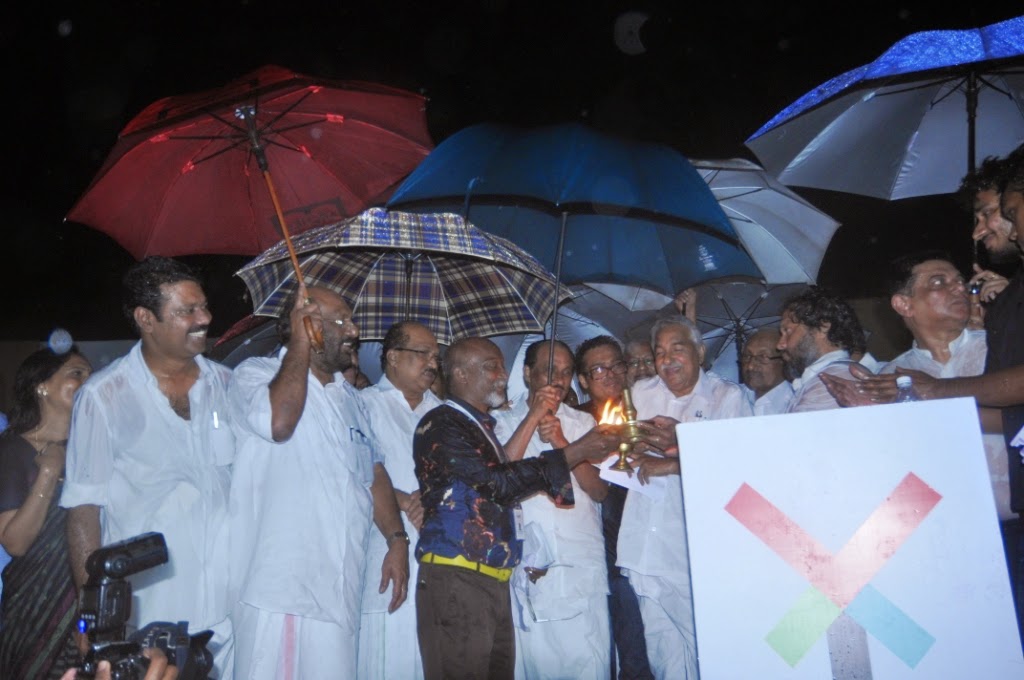
Edmund Clint's father Joseph M T lights lamp as
Riyas Komu, Balan Nambiar, Jitish Kallatt, Bose Krishnamachari,
 N B Majnu look on
In the process, the 108-day Kochi-Muziris Biennale (KMB) also facilitated the opening of a new gallery, as close to 60 prints of the works of Clint found display in a West Kochi venue called Cosmopolitan Cult, located in the historical Jew Town within coastal Mattancherry.
Clint’s septuagenarian father Joseph M T opened the Clint Exhibition, which also marked the start of a Children’s Biennale which will run parallel to KMB’14 that opened on December 12 and is set to conclude on March 29 next year. The Kochi Biennale Foundation (KBF) has organised a children’s segment to rekindle the spirit of drawing and painting in the younger generation.
Mr Joseph lit the traditional lamp at the forenoon function that was also addressed by KBF president Bose Krishnamachari, secretary Riyas Komu, KMB’14 artistic director Jitish Kallat and veteran sculptor Balan Nambiar besides N B Majnu who owns the gallery.
Mr Joseph, who is a Kochiite, recalled how his wife Chinnamma (who could not attend today’s function as she was unexpectedly indisposed) used to routinely take out their son Clint across the open greenery around their quarters in Thevara suburbs which was bordered by the scenic Perandur canal. “That constant brush with the nature kindled images in him; evoked curiosity about several things such as trees, flowers, birds and animals around,” he added.
A visitor looks at art works of Clint
A retired employee with Central Institute of Fisheries Technology in nearby Willingdon Island, Mr Joseph struggled for words as he recalled Clint’s last work—portraying the traditional Thira dancer—which the boy happened to get a peek while passing through Koyilandy upstate in April 1983, a month before he died of kidney failure.
Krishnamachari noted that Clint “showed excellent” command over water colour, which is a difficult medium to gain mastery.
Komu noted that Clint received a world of understanding for himself in his short life. “It is visible in his works,” he added.
Curator Kallat, who is also curator of KMB’14, said Clint possessed “a child’s view and a grown-up’s vision”.
New gallery, Cosmpolitan Cult, at Mattancherry opens with a Clint show that opened , marking start of Children's Biennale at KMB'14
Nambiar, who has been teaching children art for 43 years, noted that Clint’s works on display at the biennale featured a mix of what a four-year-old could draw both as a precocious boy as well as an average child.

Majnu said he was proud that the ancient trade hub of Jew Town could chip in its bit to the second edition of KMB featuring 100 main works by 94 artists from 30 countries.

सोमवार, 15 दिसंबर 2014

Kochi-Muzirs Biennale, 2014, एक नज़र


Nikhil Chopra's Biennale Performance in progress

Nikhil Chopra's Biennale Performance in progress
Ajay Jadeja with Daniel Connel at  Aspinwall House
Artist Subodh Gupta with Lakshmi Menon
Balan Nambiar  at childrens biennale at Aspinwall House
Flag hoisting

Flag hoisting

Inauguration

Inauguration
Leading designer Rajeev Sethi with KBF president Bose Krishnamachari
Performing artist Nikhil Chopra ending his 52- hour performance

Students view a Nataraja Kalamezhuthu at a collateral site in Mattancherry

"Vibrant Space" A Group Show at Ravindra Bhawan


KMB ’14 partner project Ummijaan opens with all of Abad business family

Kochi, Dec 15: The ongoing Kochi-Muziris Biennale (KMB) facilitated an unexpected get-together of a Gujarati family that flourished in their business in this city over the past two centuries, courtesy an exhibition of their select photos being organised as part of the 108-day art festival.
Titled ‘Ummijaan: Making Visible a World Within’, the project in partnership with KMB’14 began Sunday evening at a Mattancherry venue which saw its two rooms slowly filling to capacity with four generations of the prosperous Abad family minus the over-arching presence of octogenarian Haleema Hashim even as her camera-shot images grace the three-and-a-half month show at the Aasiya Bai Trust Hall.
The Abad family, which runs big-time businesses in the country’s hospitality sector and seafood export, found its two decades of visual portrayal from the 1970s, following the creative eye of 20-year-old Nihaal Faizal who has curated an exhibition as great-grandson of Haleema, now 86 and fast losing memory.
Haleema’s children, grandchildren and great-grandchildren along with their spouses found the inaugural function of ‘Ummijaan’ as a special opportunity to refresh relations and update memories about their household which has moorings in the parched Kutch territory of present-day Gujarat.
The Kochi Biennale Foundation termed the exhibition as “an artful display of a fantastic archive”, and hailed the artistic spirit of both Haleema and Nihaal for his choice of 66 photographs at the show. “It is a very intimate Kochi imagery,” said KMB 2014 director of programmes Riyas Komu. “It is very reflective of our engagements at the biennale; it brings out the hidden stories and talents of the region.”
The exhibition venue saw the presence of all the people featured in the vintage photographs. It is another matter that some among them eventually decided not to be featured in the exhibition; so there is a black cloth over a couple of the frames. Exclamations such as “damn cute” and “is that you?” reverberated in the air as the subjects—now a few decades older—of the photographs pointed themselves out to friends.
There was excitement as the family, who belong to the Kutchi Memon community, greeted each other in Creole-Kutchi, a mix of Kutchi, Urdu and Malayalam. “Well it bears no resemblance to the Kutchi spoken in Gujarat today,” pointed out a member.
The women, largely dressed in abayas, welcomed visitors at the entrance to the exhibition.
“It is fantastic to be here,” said A R Mohamad Faizal, Nihaal’s father. “It is good to see the younger generation go back to and appreciate their roots. That is so rarely seen today. I am proud to be here.”
The 66 photographs—some black and white, some colour—were taken by Haleema, now bedridden at her marital home in Chullikal, Fort Kochi.
“We had the pictures for several decades without understanding the value of it,” said Tasneem Arif, Haleema’s daughter-in-law. “When my grandson Nihaal showed an interest in them, I went around searching and picking out the pictures from all our families. It is now exciting bring them together and to be a part of the whole biennale experience.”

Giant bell installation at Biennale chronicles stories

Delhi-based Malayali Gigi Scaria’s work drills into history & myth
Kochi, Dec 15: Viewed from a distance and without referencing local history or folklore, the giant metal bell on the placid seaside would appear like an installation that simply heralds the experimental spirit of the ongoing Kochi-Muziris Biennale (KMB).
That impression could deepen as the visitor at the 108-day extravaganza gets to know more about its themes and symbolisms that range from extolling the traditional dock-work techniques of Khalasis in Kerala to a colonial-era fable about a weighty bell that sank in a European ship while headed for the Malabar Coast.
‘Chronicle of the Shores Foretold’ is a performance-based work of sculpture which pools in hyperlink histories and myths which artist Gigi Scaria has sought to liberally interpret about labour, religion and maritime trade that have been woven into the socio-cultural fabric of his native state.
Giji Scaria's _Chronicle of the Shores Foretold_at Pepper House
As a Malayali based in Delhi for two decades, 41-year-old Scaria has made the small dock in a water-front venue of KMB’14, lending a real-time value to his artwork that is among the 100 main exhibits at the second edition of the biennale which casts 94 artists from 30 countries. Fixed in the backyard of Pepper House, an 18th-century Dutch-style complex, that had been a point of trade between India and foreign lands, the 2.5-tonne bell hoisted by bamboo poles finds its place today just furlongs opposite an International Container Trans-shipment Terminal which is hardly four years old.
Moulded and welded in Coimbatore of east-central Tamil Nadu, the bell, which is 13 feet tall and measures a diameter of 16 feet at the base, has the Arabian Sea water jutting out through a string of holes drilled into it. This, Scaria notes, is a symbol of the times that Kochi has passed through, narrative of the changes in its character owing to medieval invasions and new-age development among others.
The bell was installed on the eve of KMB’14, which began on December 12, by Mappila Khalasis from upstate Malabar. “They are one traditional community who have been largely unaffected by change of labour equations in the era we life in,” notes Scaria, who has done his Masters in Fine Arts from Jamia Milia University in the national capital. “I sought their help in installing my work to also highlight the value of labour in the present times defined by easy pleasure.”
Thus, last Thursday, Khalasis from Beypore Coast off Kozhikode erected the bell with a crane—making it a performance by septuagenarian dockworker Hameed A N A and his team.
“We are a community of contemporary relevance,” points out Hameej, 77, noting that Khalasis were employed in the rescue operations of Kerala’s 1988 Peruman railway tragedy, where they brought up compartments that had sunk into the Ashtamudi Lake near Kollam after the train plunged off a bridge, killing 105 passengers on July 8.
Today, ‘Chronicles of the Shore Foretold’ stands against the backdrop of vibrant movements of the cranes at the container terminal in tiny Vallarpadam Island. The backdrop also looks busy with different kinds of ships and boats—both passenger and fishing—plying up and down the sea.
Scaria, a native of Kothanellore off Christian-dominated Kottayam, notes that the “bell-sinking myth” associated with churches in his central Travancore belt has also contributed to his installation. “Even today, there is this belief that the bell emerges annually from the deep sea on the festival day, and tolls on its own,” he adds with a smile.
Much like that ring, his biennale installation (whose titled was inspired by Gabriel Garcia Marquez’s ‘Chronicles of a Death Foretold’) awakens dormant memories of a community—in fact, for people across the world.

KMB 2014’s 100-day film festival opens with John Abraham’s Amma Ariyan

Kochi, Dec 15: Kochi-Muziris Biennale (KMB) 2014 saw the screening of one of India’s avant garde movies on Sunday as Artists’ Cinema, the 100-day film festival, got off to a start with  ‘Amma Ariyan’ (1986) directed by late John Abraham.
The Artists’ Cinema was inaugurated by actor-filmmaker Amol Palekar, and will run for almost the entire length of the contemporary art festival concluding on March 29, 2015.
Describing KMB as a festival which strives to enrich visual aesthetics, 70-year-old Palekar said it was apt that the 2014 biennale featured a film segment. “I will be curating a set of feminist-centric movies in the third week of March (2015) here,” he added.
Amol Palekar inaugurating Artists' Cinema programme of Kochi-Muziris Biennale 2014
Bangalore-based film historian Ashish Rajadhyaksha introduced the film to the gathering.
All the movies will be screened at the newly-built Umbrella Pavilion in Aspinwall House, which is the main KMB venue in Fort Kochi.
KMB 14 Director of Programmes Riyas Komu said the average Malayali has a strong sense of visual arts, which he hoped would be further enriched by the Artists’ Cinema at the ongoing biennale. Film personality and social activist Joy Mathew, who acted as the protagonist in ‘Amma Ariyan’, also spoke on his experiences with what was Kerala’s first “people’s film”.
Selected by 15 documentary and feature filmmakers, film historians, critics and curators, the shows at Artists’ Cinema are free to the public and will start at 6.30 pm every day.
The films, curated by key names like editor Bina Paul, film critic C S Venkateswaran and artist and documentary filmmaker Amar Kanwar, are taken from a diverse topics ranging from social science to politics, art and history, though the aim of the festival is to showcase documentary and video art to people.
“Digital filmmaking has revolutionised the art and serious cinema is no longer for pundits,” said Bandu Prasad, programmes manager of KMB 2014. “We are trying to find a balanced position between independent and commercial digital filmmaking and providing a platform for good cinema.”

Films chosen by Berlin-based Natasha Ginwala will start showing on December 15. Her selection, titled Metabolic States: Becoming Image, features a set of video works by 13 international artists, which “relates nicely to the exhibition and the seminar that precedes it”. “It is really interesting to have a festival of this nature that is so committed to independent films and documentaries,” said the 29-year-old curator-writer. “It’s unique and because films are rarely seen within an art context, but this festival keeps the venue like a community space.”

रविवार, 14 दिसंबर 2014

Poet Thayil performs, cricketer Jadeja visits biennale on Day 2

5,000 visit main Aspinwall venue on holiday
Kochi, Dec 14: A vibrant Sunday crowd marked more than 5,000 footfalls at Kochi-Muziris Biennale (KMB), where celebrities from the field of sports, literature and art joined visitors at the main Aspinwall House which also hosted a day-long seminar and set start to a 100-day film festival.
Ajay Jadeja viewing Lavanya Mani's work at Aspinwall House

Former cricketer Ajay Jadeja took a round of the 69 exhibits at Fort Kochi’s colonial Aspinwall complex, while a furlong away internationally-acclaimed writer Jeet Thayil came up with a contemporary music recital in the Cabral Yard site that houses a work by Malayali artist Valsan Koorma Kollery.
Jamnagar-born Jadeja, who has one branch of his family in Kerala, said KMB possessed a cutting-edge quality which was essential for the art scene in India to flourish in the days to come. “It should be an eye-opener to many of us,” he shrugged. “And definitely a novel experience to me.”
Poet-novelist Thayil, 55, sang and played instruments at an hour-long concert where he was assisted by Suman Sridhar and Natasha Mendonca on the guitar and keyboard. “These are songs we penned and composed,” he said about the English ditties the trio presented in the evening.
Veteran Malayali artist ‘Paris’ Viswanadhan, whose work was a key attraction in the debut biennale, said an open mind Keralites displayed in ancient days was clear from the state’s history, which is being portrayed in parts at KMB’14 as well. “The biennale here gives us a clearer idea of Kerala’s rich past,” he added.
Jeet Thayil's music conert at Cabral Yard

Former Kerala Tourism Director G Harikishore, who is currently the collector of Pathanamthitta district, spent two-and-a-half hours at Aspinwall House in Fort Kochi—a suburb that houses all but one of the eight KMB venues.
A little away, in Mattancherry, Pune-based Malayali artist P K Nandakumar organised a traditional ‘Kalamezhuthu’ with an unconventional image. Three artistes led by Baby Kurup from Pattambi in Palakkad district sketched the ‘Dancing Nataraja’, using natural powders in a 12x10 feet artwork at a room by the Pazhayannur Devi Temple where middle-aged Nandakumar is working on a collateral project named ‘Land Reformed’, which also features giving clay-modelling classes to school students.
The Asiya Bai Trust Hall, also in Mattancherry, became venue for a grand get-together of the prosperous Abad business family in Kochi but with roots in Kutch province of Gujarat. That was courtesy ‘Ummijaan: Making Visible a World Within’, which is a three-and-a-half-month-long exhibition being organised as a partner project of KMB’14.
Another partner project, Cosmology to Cartography, also began at Heritage Arts gallery in Jew Town. It displays India’s maps from the 15th to the 19th centuries, making it the first such project in India.
The locations of Students Biennale (Cosmopolitan Cult) and Mohammed Ali Warehouse in West Kochi also witnessed big rush of visitors today.
A two-day international seminar also began at Aspinwall House’s new Umbrella Pavilion, where speakers today tracked Kochi’s historical cosmopolitanism.

Biennale seminar scans layers of Kochi’s cosmopolitanism

Kochi, Dec 14: Layers of multi-cultural civilisations have enriched the cosmopolitanism of Kochi over centuries, but scripting their history warrants sifting of strong evidences from guesswork sometimes bordering on imagination, a two-day international seminar noted today.
Speakers at ‘Terra Trema’ conceptualised by Geeta Kapur, being held as part of the ongoing Kochi-Muziris Biennale 2014 delved deep into how much Kerala’s Malayalam has borrowed from languages spoken in countries with which India’s western coast has had brush, noting that such adaptations have extended to spheres of performance art.
Geeta Kapur and Riyas Komu

For instance, Carelmancharitham, which is a famed story-play in coastal central Kerala’s Biblical dance-drama of Chavittunatakam that originated in the 16th century, depicts the 8th-century Italian king Charlemagne as a crusader, pointed out renowned writer N S Madhavan.
Also a travel writer and football columnist, he also made a power-point presentation that showed how certain letters of the Malayalam alphabet came into use, forced by borrowed use of words from other languages.
The session, titled ‘Kochi Waters: Refracted Cosmopolitanisms’, saw historian Rajan Gurukkal stressing the need for caution while coming to conclusions about, say, the lost port city of Muziris where life existed almost three millennia ago.
“The Pattanam excavations, which I personally believe show relics of life in the Muziris, have thrown up pot shards from Rome. But that does not mean the indigenous people used Mediterranean utensils—these are stuff that they used during their monsoon-time stays in Kerala,” added Prof Gurukkal, a former vice-chancellor of Mahatma Gandhi University, Kottayam.
Chennai-based journalist-author Sashi Kumar, as moderator of the forenoon session, noted that Kerala’s cosmopolitanism also owes to its diaspora community who brought new sensibilities and lifestyles into their native state.
The afternoon session, anchored by social scientist Sanal Mohan, focused on Dalit art.
Kottayam-resident writer T M Yesudasan took up the mythical Thoombinkal Chathan of the Pulaya community, in the context of a work on the theme in the 2012 biennale by Malayali artist K P Reji, as an example of recent trends in sensibilities related to Dalit motifs.
Hyderabad-based culture theorist Susie Tharu quoted incidents of how Dalit activism led to political upheavals in the 1970s Karnataka under chief minister D Devraj Urs.
Monday’s forenoon session would be on ‘Global Capital and West Asia’, with economist Prabhat Patnaik and political scientist Achin Vanaik speaking on ‘The Imperialist Project in West Asia’ and ‘The Tragedy of Palestine’ respectively.
There will be two afternoon sessions. ‘Curating in Troubled Terrain’ (speakers: Berlin Museum Director David Eliott and curator Reem Fadda) will be moderated by Kapur.
The final session, ‘Ground Tremor’, which deals with archaeology, will be addressed by Kerala historian P J Cherian and German writer Anselm Franke.

Curator-writer Natasha Ginwala, who will moderate the session, will subsequently give an introduction to the four films being screened in the evening.