शनिवार, 6 फ़रवरी 2016

Dhoomimal Gallery gives peek to 80 Jamini Roy works for first time

Bureaucrat Amitabh Kant hails 20th-C master’s show as a ‘real treasure’

New Delhi, Feb 6: Ever since their making more than half a century ago, the artworks remained unseen for the public. Today, those Jamini Roy drawings and paintings are on their debut display in the capital.
Curator & Art Critic Uma Nair with Amitabh Kant (Secretary,DIPP)
No less than 80 visual compositions of the 20th-century master are being exhibited at Dhoomimal Gallery in downtown Connaught Place, as top bureaucrat Amitabh Kant formally inaugurated the show brimming with aesthetics that hitherto remained accessible to its keepers: Uma and Ravi Jain Estate.
“This is an unbelievable collection; it’s a real treasure,” said Kant, who is a 1980-batch IAS officer, about the exhibition ‘Carved Contours’ curated by art scholar-columnist Uma Nair. “Jamini Roy made Indian art recognizable the world over. A disciple of the iconic Abanindranath Tagore (1871-1951), he broke away from the Western approach of his contemporaries, thus turning a chapter in the art of this country.”
Kant, who is Secretary to the Department of Industrial Policy & Promotion and
Chairman of Delhi-Mumbai Industrial Corridor Development Corporation, also released on Friday evening a catalogue of the works at the exhibition that will run till March 10. Many of the drawings and paintings are more than seven decades old.
Uma Jain (Dhoomimal Gallery) and Amitabh Kant (Secretary,DIPP)
releasing the official Catalogue of Jamini Roy's work
The 110-page book, brought out by Dhoomimal Gallery, carries a foreword by veteran Uma Jain and curatorial note by Uma Nair and a couple of art write-ups besides a brief biography of Jamini and the images of all his works at ‘Carved Contours’. The 1936-established Dhoomimal is India’s oldest gallery, now celebrating its 80th year.
Uma Jain pointed out that these Jamini works “are in perfect condition”. Also, “they have the features of rarity, they vary in quality and have a wide perspective of content,” she said.
Curator Uma Nair noted that Jamini Roy (1887-1972)—as India’s first modernist master—was particularly inspired by the Kalighat and Pat paintings of rural Bengal. “For him, they possessed the spontaneity and simplicity of line he was striving for. Roy abandoned the use of European paints in favour of mineral- and vegetable-based pigments made from rock-dust, tamarind seeds, alluvial mud and indigo,” she added.
What’s more, the artist’s admiration for rural folk art was politically-motivated. “It was part of a nationalist desire to find an artistic style free from colonialism. Thus, Roy developed his own striking formalist pictorial language” said Nair. 
Uma Jain (Dhoomimal Gallery) with Amitabh Kant (Secretary,DIPP)
This show has a series of simple monumental images of sari-clad women, village dancers and domestic animals besides Madonna and Christ and the famed Ramayan series, besides a string of drawings that have been categorized in a separate segment.
Uday Jain, who is a scion of the Uma and Jain Estate, said expressed happiness over the family’s private collections having now come out in as a historic exhibition.

बुधवार, 27 जनवरी 2016

80 Jamini Roy works to go public for first time

Dhoomimal Gallery to host 42-day show of 20th-century master from Friday

New Delhi, Jan 27: Art buffs will get their first-ever view of 80 works of Jamini Roy, as an exhibition of the 20th-century master is opening in the capital this Friday, unveiling a set of drawings and paintings that had remained part of a private collection.
The 42-day show at Dhoomimal Gallery will feature Jamini Roy’s drawings and paintings from more than a half-century-old assemblage of Uma and Ravi Jain Estate which owns Delhi’s oldest gallery.
Curated by critic-scholar Uma Nair, the works at January 29-March 10 ‘Carved Contours’ represent Roy’s inspiration from the Kalighat and Pat traditions of Bengal. Done on cloth, board and paper, they feature simple monumental images of sari-clad women, village dancers and domestic animals besides Madonna and Christ and the famed Ramayan series.
“All of it eminently exemplifies his strikingly formalist pictorial language,” notes the curator.
The exhibition, which opens at 6 pm, is a collateral event of the India Art Fair 2016.
Uma Jain said the collection happened least with the aim of creating a portfolio. “. It was about taste, about building a collection out of one’s own passion,” she added.
Roy (1887-1972), who was a frontline pupil of iconic Abanindranath Tagore, developed a style that scholars note was a reaction against the Bengal School and Western tradition of art. He abandoned the use of European paints in favour of mineral and vegetable-based pigments made from rock-dust, tamarind seeds, alluvial mud and indigo, notes Uma Nair.
“Jamini’s admiration for rural folk art was politically motivated. It was part of a nationalistic desire to find an artistic style free from colonialism,” she added. “His works of men and women explore the economy of line, the beauty of gesture and the compositional clarity of the frontal perspective.”
At ‘Carved Contours’, the curator has come up with the Jamini works in clusters, suiting the ambience marked by the gallery’s high ceiling. “There are drawings on one wall, and the coloured ones on the other,” she pointed out.

सोमवार, 25 जनवरी 2016

फिलीपींस के कलाकारों का सम्मान

पटना , 24 जनवरी 2016 : फिलीपींस का एक सांस्कृतिक दल इन दिनों बिहार के दौरे पर है। इस दल के सदस्यों को आज पटना के बहुद्देशीय सांस्कृतिक परिसर में अंग वस्त्र तथा प्रतिक चिन्ह दे कर सम्मानित किया गया।यह सम्मान बिहार के कला एवं संस्कृति मंत्री शिवचंद्र राम के हाथो आनंदी प्रसाद बादल (अध्यक्ष , बिहार ललित कला अकादमी ), सत्य प्रकाश मिश्र  ( सचिव, बी. ल. क. अ. ) आदि गणमान्य व्यक्तियों की उपस्थिति में प्रदान किया गया।
बिहार की प्रसिद्द मञ्जूषा कला, माली कला, मधुबनी कला, सिक्की कला, टेराकोटा जैसी लोक कलाओं से भी इनका विशेष परिचय कराया गया। 


रविवार, 10 जनवरी 2016

Young installation artists bring out Hyderabadi spirit at Krishnakriti

Festival gives boost to new media in city of nizams, pearls and bangles

Hyderabad, Jan 10:  A rich mix of varied sights and sounds of Hyderabad has found artistic encapsulation at a show of four installations by as many young talents at the Krishnakriti2016 festival of Art & Culture here.

While two of them employ audio records to capture the city’s good old spirit which has been in the throes of a major transformation of late, the rest two present the theme with emphasis on visual elements that are suggestive of Hyderabad’s rich past and a vibrant present.

Artist - K Saisheela 

“The idea is to explore the relationship between image, memory and visuals in representing the city from a nostalgic angle,” says artist-researcher Nirmala Biluka, who is the curator of the show that has given up-and-coming artists working in new media to participate in the January 7-10 festival featuring fine art, music, film, literature and theatre.

Among the participants at Madhapur’s Centre for Cultural Resources and Training is Anila Kumar G whose 2016 work is a pile-up of 11 trunk boxes, some of which have audio recordings related to Hyderabad as an entity that just merged with nascent India in 1948 to developments as recent as it becoming the capital of Telangana in 2014 and certain general conversations of its public late last year.

Artist - Shravan Kumar Pendayla

A similar idea finds tasteful application by K Saisheela, who has enriched a rectangular space with four iron boxes that let out local ethnic music when opened. Next to them, Shravan Kumar Pendayla has put together significant photos from the past and present related to Hyderabad, while Asgar Ali Mohd translates the city’s famed monuments into a tastefully-lit vertical work around a translucent cylinder.

Asgar took 15 days to complete ‘My City’ which is a roundish acrylic sheet given acid treatment to conjure up images of three key Hyderabad monuments: Charminar, Golconda Fort and Qutub Shahi Tombs. By late evening, it gets illuminated in the country’s tricolour pattern.

The LED-equipped drum has a stand beneath it surrounded by granite stones poured with blank paint. “They symbolise the original rocky terrain that is disappearing slowly with the urbanisation of our times,” points out Asgar, a native of the city.
Artist Anila Kumar G

Shravan, too, has gone for a similar idea of projecting Hyderabad with its historical landmarks, but resorts to dangle the images as a row of nine acrylic sheets from bamboo hangers and leather flaps fitted with brass nails.
Why nine? “Because Hyderabad has nine letters (in English),” he smiles, showing the prints of Falaknuma Palace, emblem of erstwhile Nizam’s administration, his portrait, regiment and seal besides Golconda, Charminar and the white-granite Buddha statue towering Hussain Sagar Lake. Plus a note on his work ‘Renaissance and Reminiscence’.

The boxes in the works of Saisheela and Anila Kumar use audio tapes, but there is some major differences. Saisheela’s boxes open to ethnic poetry and music when they display ethnic items: Urdu poetry amid a pile of cups and saucers, Islamic prayers amid attar bottles, Qawwali music amid sepia postcards of the city and mundane noises from Laad Bazar amid a heap of bangles sold in that famed area. “Islamic culture has fascinated me in particular,” says the artist who holds a Masters in art history.

 Anila Kumar’s trunk boxes, on the other hand, has audio clippings from events as old as from 1948 issues to those as late as the 2014 formation of Telangana and its common people discussing socio-political issues. “I recorded them a month ago, standing at railway platforms and bus stations—without them knowing what I was doing,” adds the youngster from Bangalore. “I am myself a migrant. Hence the trunk boxes here.”

शनिवार, 9 जनवरी 2016

Range of top artists graces Krishnakriti workshops, interactive sessions

Hyderabad, Jan 9: : Four of India’s eminent artists who are into different mediums of fine art shared their ideas and experiences at Krishnakriti2016, revealing a whole range of aesthetics that have kept evolving within them to the benefit of the country’s contemporary visual culture.

While pioneering graphic novelist Orijit Sen presented at length on Friday evening his ongoing work on changing Hyderabad, senior sculptor Ravinder Reddy gave a power-point presentation of his sculptures that he has been working since graduation days. Young Prathap Modi gave students a brief training in woodwork art, while sexagenarian sculptor Valsan Kollery had an interactive session with art scholar Dhritabrata Bhattacharjya Tato after holding a workshop on sculpting and sketching.

The 12th edition of January 7-10 Krishnakriti Festival of Art and Culture featuring art workshops, installation exhibition, film festival, music, dance and literary sessions among others is being organised by the Krishinakriti Foundation which is into promotion of culture and education in a big way.
Delhi-based Sen, who is an alumnus of National Institute of Design in Ahmedabad, said his upcoming book—presenting the many layers of this city of nizams having now become an IT hub—would go much beyond nostalgia.

Ravinder Reddy interactive with the audience

“It is always interesting to note how residents of a locality adapt themselves to new situations. In any case, places are a big area of my interest,” he said, showing on the screen some of Hyderabad’s most changing streets around the famed Charminar.
The 52-year-old artist, who had spent his high-school days in this city, also noted that residents of urban pockets generally fail to notice certain key visual features around. “I know people who go to buy milk from their nearby shop, unmindful of a big tree under which they queue up,” he added.

Reddy, who hails from Suryapet which is known as the Gateway of Telangana and learned his art from MS University at Baroda, pointed out how he has over the years simplified his art with lesser features when it comes to sculptors-small and huge-made largely with fibre, besides using bronze and terracotta.

“Search of one’s of style is a major thing in the life of an artist. Normally it doesn’t come pre-meditated—definitely not with me,” he said in a 30-minute interaction where he showed pictures of his major works over the past four decades.
Modi, who has a Masters’ in visual art from the same institution in Gujarat, gave a breezy training to over 50 students at his workshop as part of the festival here. 

Artist - Prathap Modi displaying his work
The 33-year-old artist wound up the session by showing his own portrait he finished during the course of the interaction.
Kerala-born Valsan, 62, said the concept of pyramid has been a major obsession in his art, leading him to do an inverted version of the structure at the 2nd edition of Kochi-Muziris Biennale that concluded in April 2014.
“Time is our biggest enemy,” he said. “But when should not keep regretting a lost past. Look at the future.”

Film on Northeast village where kids are called by distinct whistles


Caller tunes in Meghalaya’s Kongthong echo at Krishnakriti docu fest

Hyderabad, Jan 9: A tribal village in India’s remote northeast has its members calling out children by whistling tunes of individual distinctness, a film screened in this city revealed to the curiosity and fun of its audience.

‘Resonance of Mother’s Melody’, which featured as the first documentary at the ongoing Krishnakriti Festival of Arts and Culture, showed residents of a matrilineal Khasi hamlet in rugged Meghalaya sticking to this age-old mode of communication defined by a special tune the mother gives to her child during initial phase of breastfeeding.
Filmmaker Dip Bhuyan 

Kongthong, which is an agglomeration of 19 hamlets with a total of 120 households and a population of little over 550, is perhaps the only place in the country where people communicate among themselves through whistling and using different tunes to call each other, according to Dip Bhuyan, the director of the 23-minute work made in 2013 after four pre-shoot visit to the hilltop 70 km south of the state’s capital of Shillong.

“It was a young researcher who first came to know of this place and its caller tunes. She then led a group of friends to the place to explore more. She observed it and had interactions with the villagers,” recalls self-taught filmmaker Bhuyan, a native of Assam, having graduated from Cotton College in Guwahati before completing his masters in Statistics from Delhi University in 1991. “The mothers give the whistle tune, which, at a later stage of growth, gets a shorter version that is used for communication.”
Filmmaker Renuka George

It is another matter that each child has otherwise a proper name, which gets registered in the neighbourhood school.
Bhuyan’s colour movie, which has won applause at screenings abroad and at Indian festivals including IFFI Goa, starts with the journey of the researcher and goes on to capture the caller tunes of Kongthang, prompting the team to arrive at certain key findings—based also on the narrative of the local headman, who estimates the village is roughly two centuries old.

A second film screened at the Krishnakriti2016 essayed the life of (late) Hindustani instrumentalist Asad Ali Khan. The 70-minute eponymous documentary made in 2010 was a distilled version of footages that ran to 60 hours after 22 days of stay in the rudra veena master’s native Rampur in Uttar Pradesh, director Renuka George said.

“The rudra veena is a difficult instrument; Khan sahib was perhaps among the last to use it in its original form,” said the filmmaker, a Delhi-based Malayali hailing from Tiruvalla in south-central Kerala. “The vajrasana posture in which you ideally sit to play the huge instrument which requires both physical and spiritual involvement is in itself a kind of penance.”

The two films at the festival were succeeded by a stage concert by ghazal vocalist Chinmayi Sripada along with pianist Anil Srinivasan of Chennai.


“For our generation, Hariharan is our icon. We all strive to sing like him,” said young playback singer Chinmayi, midway the 80-minute programme.
Added 38-year-old Anil, who is educated in the American universities of Souther California and Columbia: “It is great to use a western instrument in various genres of Indian music.”

Kerala artist’s unorthodox ways regale crowd at Krishnakriti fest

Valsan Kollery sketches teenage girl, says bad art is one way to excel

Hyderabad, Jan 9: With a typically free-spirited mind, sculptor Valsan Koorma Kollery engaged his audience with wisecracks and simple tips on broad aesthetics about painting, thereby entertaining students as much as educating them in a city far from his native Kerala.

At the ongoing Krishnakriti Festival of Arts and Culture here, the sexagenarian known for his jovially rebellious approach to almost everything around gave a brief introductory lecture ahead of choosing an early-teenage girl as his muse for a charcoal sketch that won loud appreciation from 100-odd young enthusiasts who gathered at Centre for Cultural Resources and Training in Madhapur.
Sculptor - Valsan Kolleri drawing a portrait of a teenage girl

“Take all your shyness away. Inhibition is what blocks creativity. Just sketch or paint or whatever. It may be bad art, but then there is no short cut to excelling oneself in any field,” he told a 75-minute workshop on Friday evening as part of the January 7-10 Krishnakriti2016 featuring a range of cultural events.

North Malabar-born Valsan, 62, who joined Government College of Fine Arts in Chennai way back in 1971, said one could be initiated into art at any age. “You can start it even after retirement from your job. It can be a very good second nursery,” he said, minutes before randomly asking a girl from the crowd to pose for a portrait. “Well, a small work is also a big work.”

Valsan, who misses no chance to ridicule set notions and methodical training in art, said it’s the blind who often sense art better that those with eyesight. “Years ago, I brought visually-challenged people to an art exhibition of mine in Madras University. In a 3,000-square feet area, they stood in rapt attention, feeling each of the 35 artworks in their own way,” recalled the native of Patiam in Kannur district, who did his advanced art studies from France (ENSBA, Paris) and Gujarat (MS University, Baroda).

Open-mindedness is what is essential to art, he added, saying this holds relevant to any area of culture. “For instance, you need no music to dance. You can dance to the colour around, to the fall of the rains, to an inspiring object you come across....”

While sketching on paper the picture of 13-year-old K. Bhavya Manasa, he leisurely asked the class-8 student of Jubilee Hill Public School to store small little artworks one does on and off. “You know why? When you feel like crying sometimes—as well all do—just go back and take a look at them. It can make you happy, isn’t it?”

The sketching, during which Valsan said “I can trace the face of your mother, grandma and great-grandmother if you give me time”, was finally presented to the gathering when the artist deliberately held the paper upside down as he lifted it for all to see.
Sulptor - Valsan Kolleri

Arti Nagpal, a housewife who occasionally paints, told Valsan that his workshop had now inspired her to return to her habit of sketching. “Suddenly, I realise I miss it a lot,” the young lady said, clicking a selfie with the guest artist—the only one to figure in both editions of Kochi-Muziris Biennale (held in 2012 and ’14) by far.
Bengali Priyanka Das, who is doing masters in fine arts from University of Hyderabad, simultaneously sketched Valsan and showed her work to the artist. An appreciative Valsan drew another sketch of his on the left page of the book in return.

Later, at an interaction with art scholar Dhritabrata Bhattacharjya Tato, Valsan spoke about his mid-career shift from bronze to stone as the medium of sculpting. “We can make any place beautiful with right use of art,” he said, sharing his experience of building butterfly parks off Thrissur town and close to Nilambur forests in Kerala.


The artist also his second tryst at India’s only biennale—in Kochi, where virtually churned out a quiet island of creative space that retained the site’s rustic greenery, thus tacitly asking the new-age visitor to return to nature.

शुक्रवार, 8 जनवरी 2016

William-Vidya narrative of Mughal fall finds debut stage in south India Literature-music jugalbandi marks start of Krishnakriti 2016 festival

Hyderabad, Jan 8: The city of nizams and nawabs was all ears for a refreshing narrative of the petering phase of the once-powerful Mughal era, as author William Dalrymple and musician Vidya Shah performed together a unique literature-music duet for the first time in peninsular India.

The hour-long jugalbandi on Thursday evening marked the start of a four-day art and culture festival being organised here by Krishnakriti Foundation, which brought to Hyderabad the famed ‘Enter The Last Mughal’ show in another instance of serving the state capital with novel aesthetic experiences.

“This is a strange fusion,” said Dalrymple, before opening the programme where he read out excerpts from his celebrated book ‘The Last Mughal’ which profiles the 1857 fall of the dynasty in Delhi, 33 decades after Central Asia-born conqueror Babur laid its foundation along his eastward advancement. “For the last four years, Vidya and I have been trying to explore how to unveil the history in an unconventional way.”
Added singer Shah who is also a social activist and writer: “Our presentation has largely found audiences abroad. It’s a great feeling to debut it in the south of the country.”


The point reinforces his organisation’s motto of introducing art buffs to a wide range of human endeavours, said Prshant Lahoti, the founder trustee of Krishnakriti Foundation. “Our aim is to enrich people with three abiding refinements of life: art culture and education,” he told the gathering at the inauguration of Krishnakriti2016 in Centre for Cultural Resources and Training, Madhapur.

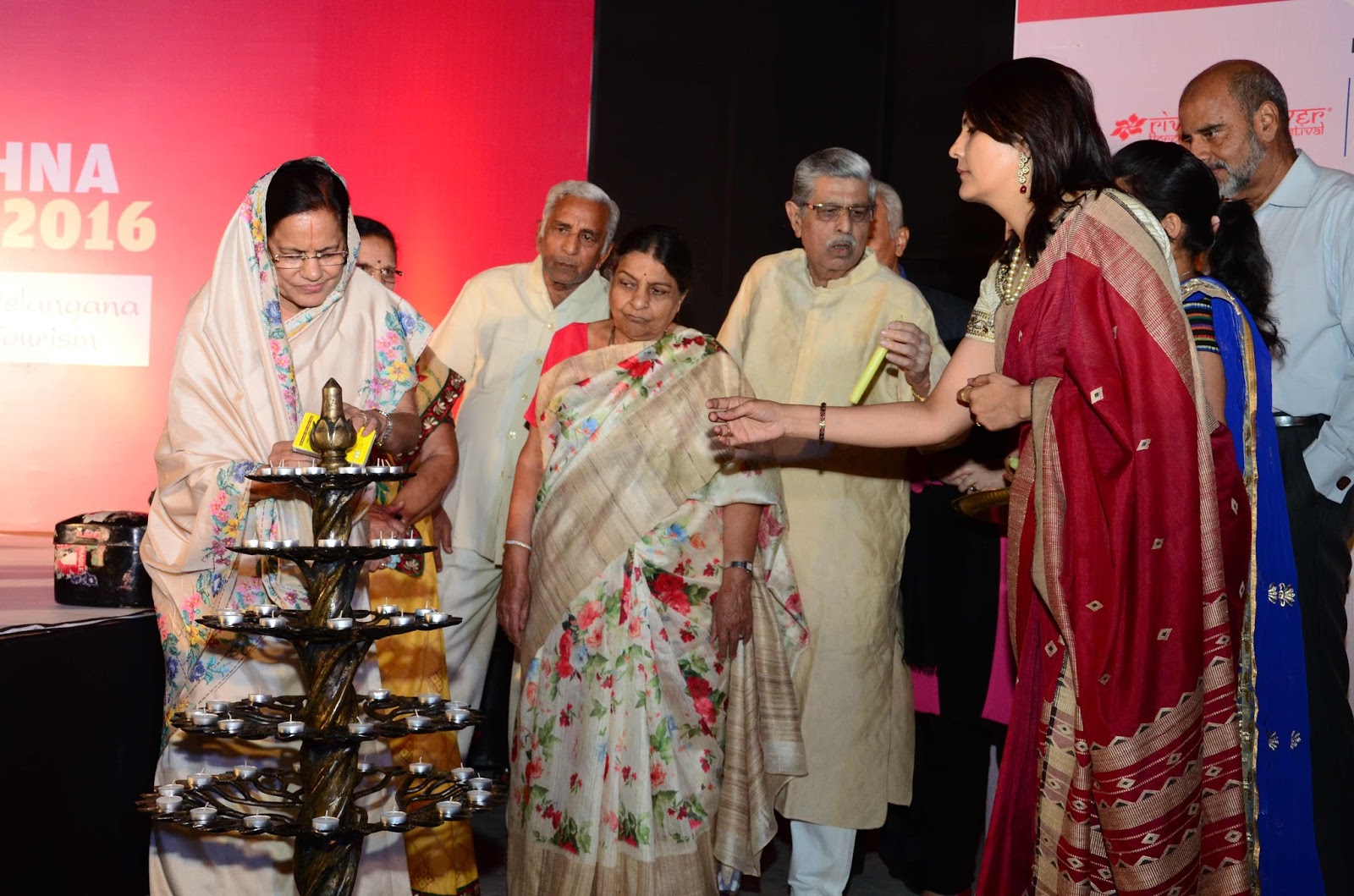
The January 7-10 festival was formally opened with the lighting of lamps by trustees of the 2002-incepted Foundation and Prshant’s family members led by his mother Nirmala Lahoti, who is wife of (late) Krishnachandra B Lahoti in whose memory the annual event is conducted annually.
Dalrymple and Shah, at the opening session of the fete this year, blended a range of arts ranging from story-telling, poetry and music and percussion with focus on the degeneration of the Mughal dynasty dating back to the second quarter of the 16th century and peaking in glory during Shah Jahan’s 30-year rule (from 1628) when the empire extended up to almost the whole of present-day India besides Bangladesh, Pakistan, Afghanistan and a sliver of Iran.

Recalling those days, Dalrymple initiated the stage-show by saying that a view from Lahore Gate in Delhi then would give one a glimpse of the world’s largest and richest empire of its time. Simultaneously, for long, there was an extraordinary surge in the field of arts, with even the milkman on the street reciting a line or two from high-brow poetry, added the 50-year-old Scottish author who is also a TV presenter.
At this, Shah, who used to deliver Carnatic concerts before branching out Hindustani, sang a Dadra—a light-classical idiom of north Indian music. Kaise jaadu daala, to the accompaniment of the sarangi (Ghulam Ali) and the tabla (Shantibhushan Jha), regaled the audience with her powerful voice and shruti-aligned rendition.

Sliding on the 1840s, Dalrymple noted that the madrasas functioned as great schools of knowledge. Added to this was the popularity of Mirza Ghalib (1797-1867) whose Urdu poems became a hit even while the letters he wrote threw light on his creative genius. Complementing, Shah came up with a ghazal, transporting the gathering to the beauty of lending intimate musical touch to rhyming couplets sharing the same meter.


Dalrymple then turned the chapter on to the “proto-nationalist approach” by revolutionary litterateur Azim-ullah Khan, with Shah crooning his work Hum hein iske malik and noting that the lines later inspired Muhammed Iqbal to write the patriotic poem Sare jahan se achha in 1931 against the British occupation of India. 

Soon, by the second half of the 19th century, rot had set in the cultural field as well as the administrative power of the dynasty. In 1857, when the sepoys engineered a mutiny against the Raj, last Mughal emperor Bahadur Shah Zafar was a frail octogenarian soon to be put on trial by the imperialist power.
Dalrymple read out from his 2006 book a passage that epitomised the gone valour of the king—and an epoch. For the audience, the poignancy was accentuated through a Shivaranjini-raag song about Zafar’s haplessness.
“The show has been evolving since we debuted it,” said Shah. “It is an ongoing process of distillation.”

गुरुवार, 7 जनवरी 2016

Krishnakriti Festival of Art & Culture

 The 12th edition of the Krishnakriti Festival of Art & Culture was inaugurated today at the Centre for Cultural Resources and Training (CCRT), this evening.

From Left to Right - Nirmala Lahoti, Vijay Kumar Lahoti, Aruna Malani, Suresh Chandra Lahoti, Rekha Lahoti at the Inauguration at CCRT, Hyderabad.

Photograph from the performance of the 'Enter the Last Mughal' by William Dalrymple & Vidya Shah

बुधवार, 6 जनवरी 2016

कला, संगीत, थिएटर, सिनेमा, साहित्य संगम के साथ ‘‘कृश्णकृति 20016’’ कला एवं संगीत प्रेमियों को मंत्रमुग्ध करने को तैयार

हैदराबाद में डेलरिम्पल-विद्या हेरिटेज प्रदर्शनी  के साथ 07 जनवरी से 10 जनवरी तक चलने वाले इस महोत्सव की शुरूआत होगी 
हैदराबाद, 6 जनवरी: मोतियों के शहर के रूप में मशहूर हैदराबाद शहर में इस सप्ताह कृश्णकृति महोत्सव का आयोजन हो रहा है जिसमें विविध आयामी चित्रकला, मूर्तिकला, संगीत, हेरिटेज, थिएटर और सिनेमा के अलावा साहित्य के विभिन्न पहलुओं को पेश किया जायेगा। यह महोत्सव चार दिन तक चलेगा।
महोत्सव के आयोजकों ने आज यहां बताया कि 07-10 जनवरी तक चलने वाले इस महोत्सव के दौरान अलग- अलग क्षेत्र के विशेषज्ञ न केवल अपनी कलाओं का प्रदर्शन करेंगे बल्कि इंटरैक्टिव सत्रों तथा कार्यशालाओं में अपने विचारों का आदान-प्रदान करेंगे। इसके अलावा इस दौरान हर दिन शाम को वृत्तचित्र फिल्म महोत्सव का भी आयोजन होगा।
हर साल आयोजित होने वाले महोत्सव ’कृश्णकृति’’ के 12 वें संस्करण का मुख्य आयोजन स्थल माधेपुर का  सांस्कृतिक संसाधन एवं प्रशिक्षण केन्द्र होगा जिसमें दिग्गज अभिनेता आमोल पालेकर, पाकिस्तानी कलाकार राशिद राणा, ग्राफिक उपन्यासकार ओरिजित सेन, मूर्तिकार रविंदर रेड्डी, सूफी गायक ध्रुव सांगरी और प्रसिद्ध शास्त्रीय संगीतज्ञ सुजात खान और रसिक चन्द्रशेखर के अलावा अनेक हस्तियों की ओर से कार्यक्रम पेश किये जायेंगे।
यह महोत्सव कविता तथा संगीत के प्रभावकारी समागम के साथ शुरू होगा। इसमें विख्यात लेखक विलियम डेलरिम्पल और शास्त्रीय संगीतकार विद्या शाह के बीच विचारोत्तेजक संगम होगा। इस महोत्सव का आयोजन करने वाली संस्था कृश्णकृति फाउंडेशन के प्रमुख श्री प्रशांत लाहोटी के अनुसार ‘‘इंटर द लास्ट मुगल’’ शीर्शक वाला यह अद्भूत कार्यक्रम दुनिया भर के सम्राटों, नामी - गिरामी कवियों, राज नर्तकों, राजनीति, युद्धों, बीते युग के प्यार एवं टकरावों की जीवंत झलक पेश करेगा। यह महोत्सव बोटानिका, फोर्ड, जी एल मंधानी ट्रस्ट और तेलंगाना टूरिज्म के सहयोग से आयोजित किया जा रहा है।
श्री प्रशांत लाहोटी ने आज यहां आयोजित एक संवाददाता सम्मेलन में बताया, ‘‘इसके अलावा यह फाउंडेशन फ़्रांस के दूतावास के सहयोग से कलाकारों तथा छात्रों को छह महीने की इंटर्नशिप भी प्रदान करता है। हर साल, चुने गये उम्मीदवारों को उच्च अध्ययन के लिए पेरिस जाने का मौका मिलता है।’’ उन्होंने बताया कि इस बार महोत्सव के दौरान कलाकार एवं शोधकर्ता निर्मला बिलुका द्वारा बनाये गये स्थल विशिष्ट इंस्टालेशन को भी प्रस्तुत किया जा रहा है।

कलाकृति आर्ट गैलरी के संचालक श्री प्रशांत ने बताया कि कृश्णचन्द्रण बी लाहोटी की स्मृति में 2003 में स्थापित फाउंडेशन सांस्कृतिक प्रदर्शनियों का भी आयोजन करता है। कलाकृति आर्ट गैलरी के पास भारत के ऐतिहासिक नक्शों का संग्रह है और माना जाता है कि यह संग्रह देश का सर्वाधिक व्यापक संग्रह है।
श्री लाहोटी ने कहा कि कृश्णकृति 2016 का समापन 10 जनवरी को सितार वादक सुजात खान तथा दक्षिण भारत के बांसुरीवादक रसिक चन्द्रशेखर की प्रस्तुति के साथ होगा। इसी दिन माधोपुर में शिल्परमम में साढ़े 8 बजे एक जाज संगीत कार्यक्रम और नाटक का प्रदर्शन किया जाएगा। श्री लाहोटी को 2013 में फांस की सरकार की ओर से शेवेलियर डांस एल’आर्डे डेस आर्ट्स एट डेस लेटेªस (नाइट आॅफ द आर्डर आफ आर्ट्स एंड लेटर्स) का सम्मान मिला था।
कृश्णकृति फाउंडेशन के एक ट्रस्टी श्री अनूप राव ने कहा, ‘‘यह महोत्सव एक दशक से भी अधिक समय से विभिन्न प्रकार की सौंदर्य संवेदनशीलता की पूर्ति कर रहा है। इसमें अब भी कोई बदलाव नहीं आया है।’’
रिवर टू रिवर फ्लोरेंस इंडिया फेस्टिवल के निदेशक सेलवाजिया वेलो ने कहा, ‘‘एक आर्ट गैलरी से इस महोत्सव को शुरू करने का विचार अत्यंक आकर्षक है। इसने मुझे इस अद्भुत सहयोग करने के लिए आकर्शित किया।’’
दूसरे दिन, एक ‘कला तकनीक’ कार्यशाला (शाम 3 बजे से) आयोजित की जाएगी जहां केरल में जन्मे कलाकार वाल्सन कोलेरी क्ले- माॅडलिंग पर विचार विमर्श का नेतृत्व करेंगे। उसके बाद प्रताप मोदी ‘‘वुडकट’’ पर विचार विमर्श का नेतृत्व करेंगे।
इसके बाद ग्राफिक उपन्यासकार ओरिजित सेन (‘ड्राइंग हैदराबाद’) और मूर्तिकार रविंदर रेड्डी (‘मोनुमेटलिटी की तलाश में’) के द्वारा इंटरैक्टिव सत्र आयोजित किया जाएगा। इसके तहत कोल्लेरी विद्वान धृतब्रता भट्टाचार्य (‘जादुई हाथों से संसार को आकार) के साथ वार्तालाप करेंगे।
सायं 6 बजे, डाॅक्युमेंटरी फिल्म महोत्सव - रिवर टू रिवर फ्लोरेंस इंडियन फिल्म फेस्टिवल इज ए कोआर्गेनाइजर का शुभारंभ होगा जिसके तहत दिप भुइयां के द्वारा एक घंटे की फिल्म ‘रेजोनेंस आॅफ मदर्स मेलोडी’ दिखायी जाएगी। शाम में ही रेणुका जॉर्ज के द्वारा स्वर्गीय हिंदुस्तानी वादक पर ‘उस्ताद असद अली खान - ए पोट्रेट’ दिखायी जाएगी। उसके बाद एक इंटरैक्टिव सत्र ‘अनप्लग्ड’ आयोजित किया जाएगा, जिसके तहत पश्चिमी कर्नाटक पियानोवादक अनिल श्रीनिवासन पाश्र्व गायिका चिन्मयी श्रीपदा के साथ वार्तालाप करेंगे।
तीसरे दिन की शुरुआत ‘एक कला तकनीक’ कार्यशाला से होगी जिसके तहत पौशली दास वाॅश पर और अनिल शर्मा ‘मिनिएचर एंड रियलिस्टिक पेंटिंग्स इन टेम्परा’ पर सुझाव देंगे। इसके अलावा ‘स्पेस वर्सेस टाइम: मैपिंग हिसोरियोग्राफीज - द नैरेटिव आॅफ परफार्मेंस आर्ट इन इंडिया’ पर एक इंटरैक्टिव सत्र आयोजित किया जाएगा जिसके तहत विशेषज्ञ सुरेश कुमार जी, मनमीत देवगन और राहुल भट्टाचार्य से वार्तालाप करेंगे।
शाम के समय रूही दीक्षित और जिबा भगवागर के द्वारा वृत्तचित्र फिल्म ‘स्पेस बिटवीन’ दिखायी जाएगी। ध्रुव संगरी के द्वारा सूफी परफार्मेंस से पहले लाहौर में जन्में राशिद राणा एक इंटरैक्टिव सत्र ‘ट्रांसपोजिषन्स’ को संबोधित करेंगे।
अंतिम दिन की कार्यवाही फिल्मों पर एक पैनल चर्चा के साथ शुरू होगी। ‘सो मेनी सिनेमाज: डू फिल्ममेकर्स हैव टू बी रिस्पांसिबल टू देयर आॅडियेंस?’ शीर्षक के तहत चर्चा में, वक्ता में हरिहरन कृश्णा, सेल्वागिया वेलो और डाॅ. पवन मानवी के अलावा अभिनेता अमोल पालेकर और समाजशास्त्री शमूएल बर्थेट शामिल होंगे।
इसके अलावा ‘डिसकसिंग प्लुरलिटीज / मार्जिनलिटीज इन कंटेम्पररी इंडियन आर्ट’ पर भी एक पैनल चर्चा आयोजित की जाएगी, जिसमें जयराम पोडुवाल, आनंद गडपा, सूसी थारू, राहुल भट्टाचार्य और अंशुमान दासगुप्ता जैसे विद्वान शामिल होंगे। उसके बाद रूही दीक्षित और जिबा भगवागर के द्वारा एक फिल्म ‘स्कैटर्ड विंडोज, कनेक्टेड डोर्स’ दिखायी जाएगी।
शाम साढ़े 6 बजे से, शिल्परमम के राॅक हाइट्स में एक घंटे का इंडो- क्रियोल म्यूजिक कंसर्ट (एलायंस फ्रैंकाइस के सहयोग से) आयोजित किया जाएगा, उसके बाद नाटक ‘एट किंग्स’ (विक्रमाजीत सिंहा के द्वारा) का मंचन किया जाएगा और सुजात- रसिका कंसर्ट आयोजित किया जाएगा।

शुक्रवार, 27 नवंबर 2015

20 वें केरल अंतर्राष्ट्रीय फिल्म महोत्सव के उद्घाटन समारोह में उस्ताद जाकिर हुसैन होंगे आकर्षण के केंद्र

तिरुवनंतपुरम, 27 नवंबर : केरल अंतर्राष्ट्रीय फिल्म महोत्सव (आईएफएफके) के 20 वें संस्करण का उद्घाटन समारोह उस्ताद जाकिर हुसैन के तबला वादन की प्रभावकारी शैली के स्पंदन से गुंजायमान होगा।

विश्व प्रसिद्ध तबला वादक शुक्रवार, 4 दिसंबर को शुभारंभ होने वाले इस महोत्सव के सम्मानित अतिथि होंगे। वे अपने ‘उठान’, ‘कायदा’ और ‘रेला’ जैसे रूपों और रचनाओं के अपने व्यापक प्रदर्शनों से निशागांधी सभागार में गणमान्य व्यक्तियों और प्रतिनिधियों को संगीत के आनंद से सराबोर करेंगे।

उनका प्रदर्शन आयोजन को पांडित्य और गंभीरता प्रदान करेगा। केरल के मुख्य मंत्री ओमन चांडी दीप प्रज्वलित कर दोनों समारोहों फिल्म और कलात्मक अभिव्यक्ति के सप्ताह भर तक चलने वाले महोत्सव का शुभारंभ करेंगे।

इस अवसर के मुख्य आकर्षणों में एक आकर्षण 1970 के दषक में ईरानी नई लहर आंदोलन के अगुआ प्रख्यात फिल्म निर्माता डारियुस को सम्मानित किया जाना होगा। ईरान के सिनेमाई पुनर्जागरण के लिए किये गये उनके काम और योगदान के लिए उन्हें आईएफएफके का लाइफटाइम अचीवमेंट पुरस्कार प्रदान किया जायेगा।

इस समारोह की उद्घाटन फिल्म फ्रांसीसी निर्देशक जीन जेक्स अन्नाउड की 3-डी स्पेक्टाकुलर वुल्फ टोटेम होगी। चीनी लेखक लू जियामिन (छद्म नाम जियांग रोंग का इस्तेमाल) के द्वारा 2004 में लिखा गया अर्द्ध आत्मकथात्मक उपन्यास पर आधारित, इस फिल्म में बीजिंग से आंतरिक मंगोलिया के खानाबदोशों को सभ्य बनाने तक की एक युवा छात्र की यात्रा को दिखाया गया है।

माओ जेडांग की ‘सांस्कृतिक क्रांति’ की समालोचना से परे यह फिल्म बुद्धिजीवियों को मुफस्सिल जीवन जीने और जंगलों में कूच करने के लिये विवश किये जाने को दिखाती है। यह फिल्म जंगल के मैदान और अपने निवास के लिए बढ़ते छात्रों के अपनापन को दिखाती है। कठोर जंगल के लुभावने दृश्य अन्नौद के प्राकृतिक दुनिया को फिल्माने की ललक को बयां करते हैं।

इस फिल्म को प्रदर्षित किये जाने से पूर्व महोत्सव के सिग्नेचर फिल्म का अनावरण किया जायेगा। यह फिल्म प्रकाश और छाया के सूक्ष्म परस्पर क्रिया पर आधारित 25 सेकंड का हाइकू है। बहुप्रतीक्षित आईएफएफके की सिग्नेचर फिल्म में महोत्सव के दर्शन और व्यवहार को पारंपरिक रूप से समझाया गया है।

आईएफएफके के इस संस्करण का महत्व इससे भी जाहिर होता है कि इस संस्करण के साथ केरल राज्य चलचित्र अकादमी (केएससीए) ने आईएफफके के मुख्य आकर्शण को साझा करने और केरल के शास्त्रीय और पारंपरिक प्रदर्शन कलाओं के साथ अपने प्रोफाइल को और श्रेष्ठ बनाने के लिए शहर के सांस्कृतिक संगठन के साथ साझेदारी की है।

केरल कलामंडलम, केरल साहित्य अकादमी, केरल संगीत नाटक अकादमी, केरल लोकगीत अकादमी और भारत भवन, 05-10 दिसम्बर तक पूरे सप्ताह के दौरान, सूचना और मनोरंजन की प्रस्तुतियों का संचालन करेंगे।

इस महोत्सव के दौरान रोजाना शाम 6 से 7 बजे तक कनककुन्नू पैलेस सहित विभिन्न आयोजन स्थलों पर कथकली, थेय्यम, पदयानी, मोहिनीअट्टम और केरल नदनम जैसे नृत्य रूपों का प्रदर्शन होगा। इसके अलावा भारत भवन के सभागार में जुगलबंदी सत्र भी आयोजित होगा।

केरल का प्रमुख फिल्म समारोह, आईएफएफके 2015, 4 से 11 दिसंबर तक आयोजित होगा। 

मंगलवार, 20 अक्टूबर 2015

20 वें अंतर्राष्ट्रीय केरल फिल्म महोत्सव (आई एफ एफ के) के लिए चलचित्र अकादमी ने अंतरराष्ट्रीय फिल्मों की सूची तय की

नई दिल्ली, 20 अक्टूबर: इस साल दिसंबर में आयोजित होने वाले 20 वें अंतर्राष्ट्रीय केरल फिल्म महोत्सव (आईएफएफके) के प्रतियोगिता वर्ग में शीर्ष सम्मान के लिए विभिन्न भाषाओं की दस अंतरराष्ट्रीय फिल्मों के बीच प्रतिस्पर्धा होगी।

इस सूची में हादी मोहाघेघ द्वारा निर्देशित मैमिरू (इम्मोर्टल, ईरान), अनिनो सा लिकोड एनजी बुवान (शैडो बिहाइंड द मून, फिलीपींस, जून रोबल्स लाना), डिग्रेड (फिलिस्तीन, अरब नासीर), कालो पोथी (द ब्लैक हेन, नेपाल, मिन बहादुर भाम), योना (इजराइल, निर बर्गमैन), क्लारिस्से ओउ अल्गुमा कोइसा सोब्रे नोस डोइस (क्लारिस्से या समथिंग एबाउट अस, ब्राजील, पेट्रस कैरिरी), मियूरट्रे अ पैकोट (मर्डर इन पैकोट, हैती, राउल पेक), डोलान्मा (इंटैंगलमेंट, तुर्की, ट्युन्क डैवुट), बोपेम (कजाकिस्तान, झान्ना इस्साबायेवा) और जालालेर गोल्पो (जलाल्स स्टोरी, बांग्लादेश, अबू शाहिद इमाॅन) शामिल हैं।

फिल्म मैमिरू में, निर्देषक मोहाघेघ ने तन्हा और खुद से घृणा करने वाले बूढ़े आदमी की कहानी की पड़ताल की हैं जो अपराध बोध के कारण बार- बार आत्महत्या करने का प्रयास करता है। फिल्म लाना के तागालोग फीचर अनिनो सा लिकोड एनजी बुवान अपने अस्तित्व के लिये घोर संघर्श करने वाले एक शरणार्थी दंपति के दृढ़ निष्चय को दिखाता है जिसका एक सैनिक के साथ क्षीण रिष्ता कायम हो जाता है।

कैरिरी के काले जादुई नाटक, क्लारिस्से ओउ अल्गुमा कोइसा सोब्रे नोस डोइस शारीरिक, दैहिक और कामुकता पर आधारित एक दूसरे से जुड़े अनेक आख्यानों के जरिये अन्वेशण करती है।

कालो पोथी और डिग्रेड दोनों ही संघर्ष के समय में काले हास्य और नाजुक बेगुनाही रौषनी की तलाश की कहानी है। भाम की फिल्म में मुर्गी की खोज में उग्रवाद ग्रस्त नेपाल में बिगड़ते पर्यावरण के माहौल मे पहुंचे दो ग्रामीण किशोरों की कहानी है। नासिर की रूपक काॅमेडी 13 असंतुष्ट फिलिस्तीनी महिलाओं के बारे में है जो गाजा पट्टी में एक ब्यूटी सैलून में फंस जाती है। इस फिल्म का शीर्षक ही पूरी स्थितियों का बयां करती है।

फिल्म मियूरट्रे अ पैकोट में, निर्देषक पेक ने पोर्ट-ओ-प्रिंस में एक उच्च मध्यम वर्ग के समृद्ध दम्पति के 2010 में आये विनाषकारी भूकंप में उनके नुकसान और उनके द्वारा नयी चुनौतियों का सामना करने के लिए भूकंप की पृष्ठभूमि का उपयोग किया है। डैवुट डोलान्मा में दावयुत ने इसी विषय पर अनिश्चित भविष्य का सामना करने के लिए संघर्ष करने वाले दो लकड़हारे भाइयों के रूप में मुख्य पात्र को दर्षाया है।

योना वालाच हिबू्र कविता के प्रमुख हस्तियों में सबसे बड़ी सख्शियत हैं। बर्गमैन ने योना वालाच का जीवन वृत बनाया है वह उनके जीवन एवं संघर्श को बखूबी दर्षाता है। योना पुरुष प्रधान दुनिया में अपनी पहचान और स्वीकार्यता हासिल करने के लिए पहली बार कदम उठाती है।

फिल्म बोपेम और जलालेर गोल्पो जीवन की अनिष्चितताओं से उत्पन्न मासूमियत की कहानियां हैं। इस्साबायेवा की फिल्म बोपेम में गंभीर रूप से बीमार एक किषोर की कहानी है जो अपनी मां की हत्या के लिये जिम्मेदार लोगों को सजा देना चाहता है और इसमें उसका बचपन खो जाता है। इमाॅन की फिल्म जालालेर गोल्पो में जलाल की कहानी है जिसमें दिखाया गया है कि नील नदी से बचाये गये मोसेस जीवन भर संघर्श करता है लेकिन वह अपने बचपन वाले दुर्भाग्य से नहीं निकल पाता है।

इन फिल्मों का चुनाव फिल्मकार श्री कमल की अध्यक्षता वाली जूरी ने किया है। जूरी के अन्य सदस्यों में फिल्माकर श्री सुदेवान, फिल्म आलोचक श्रीमती सुधा वारियरद्वारा और श्री पी टी रामकृश्णन तथा पत्रकार श्री आर अय्यप्पन शामिल हैं।

इस अत्यंत प्रतिस्पर्धात्मक आयोजन में दो मलयालय मिल्मों - जयराज आर की फिल्म अत्ताल (ट्रैप) और सतीश बाबुसेनान की छायम पोसिया वीडु (द पेंटेड हाउस) तथा भारतीय भाषाओं की दो फिल्में - सृजित मुखर्जी की राज कहिनी (ना मैंन्स लैंड) और बुद्धयम मुखर्जी की द वायलिन प्लेयर के मुकाबले में अंतरराष्ट्रीय फिल्में भी होंगी।

केरल का मुख्य फिल्मोत्सव आईएफएफके, 2015 का आयोजन 4 से 11 दिसंबर तक होगा।

बुधवार, 23 सितंबर 2015

लुलु समूह ने कोच्चि-मुजिरिस बिनाले को 1 करोड़ रुपये दान दिया

कोच्चि, 23 सितंबर: अगले साल के अंत में शुरू होने वाले वृहद कला आयोजन ‘‘कोच्चि-मुजिरिस बिनाले’’ (केएमबी) के तीसरे संस्करण को अपना समर्थन देते हुये एनआरआई व्यापारी युसु्फ अली एमए ने 1 करोड़ रुपये का दान दिया है।

12 दिसंबर, 2016 से शुरू हो रहे केएमबी 2016 के लिए वित्तीय सहायता, बकरीद से एक दिन पहले से ही आनी शुरू हो गयी है। युसुफ अली ने समकालीन कला आयोजन बिनाले के दूसरे संस्करण को भी समर्थन देने के लिए 50 लाख रुपये का दान दिया था।

लुलु समूह के निदेशक एम. ए. निषाद ने, कंपनी के वाणिज्यिक प्रबंधक साधिक कासिम, मीडिया समन्वयक एन. बी. स्वराज और प्रबंधक वी. पीताम्बरण के साथ आज एर्नाकुलम प्रेस क्लब में आयोजित एक समारोह में कोच्चि बिनाले फाउंडेशन के अध्यक्ष बोस कृष्णमाचारी को चेक सौंपा। लुलु ग्रूप आॅफ कंपनीज के प्रबंध निदेशक युसुफ अली ने कहा कि केएमबी अंतरराष्ट्रीय क्षेत्र में भारत को प्रतिश्ठा दिला रहा है। उन्होंने कहा, ‘‘बिनाले एक विशाल कैनवास है जहां कला अंतरराष्ट्रीय कलाकारों की भागीदारी के साथ सीमाओं को तोड़ रही है। अब यह एक विश्व प्रसिद्ध समकालीन कला महोत्सव है। इसके आयोजक धन्यवाद के पात्र हैं। इस तरह के आयोजन को बढ़ावा देने से केरल के सांस्कृतिक पर्यटन को बढ़ावा देने में मदद मिलेगी। इस आयोजन को समर्थन देना सार्वजनिक और औद्योगिक दुनिया की सामूहिक जिम्मेदारी है।’’

Kochi Biennale Foundation President Bose Krishnamachari receiving cheque of Rs 1 crore from Lulu Group Director M A Nishad on Wednesday at Press Club, Ernakulam

युसु्फ अली ने 2014 कोच्चि-मुजिरिस बिनाले की यात्रा के दौरान ही तीसरे संस्करण के लिए 1 करोड़ रुपये दान देने की अपनी योजना की घोषणा की थी।

बिनाले को लुलु समूह के द्वारा निरंतर समर्थन दिये जाने के बारे में बात करते हुए, बोस कृष्णमाचारी ने कहा, ‘‘अंतरराष्ट्रीय स्तर पर विख्यात व्यापारी डॉ. युसुफ अली ‘साॅफ्ट पावर’ के मूल्य को बरकरार रखे हुए हैं और भारत के सांस्कृतिक गौरव के एक आयोजन के रूप में बिनाले के आयोजन को कायम रखने के लिए उनका भावुक समर्थन उल्लेखनीय है। कोच्चि बिनाले फाउंडेषन संगठन के रूप में हम कला और शिक्षा के माध्यम से ‘लोगों की सेवा’ पर ध्यान केंद्रित कर रहे हैं और कला के संरक्षक के रूप में उनके जैसे व्यक्ति के लिए बहुत आभारी महसूस करते हैं।’’

कोच्चि-मुजिरिस बिनाले 2016 को मुंबई स्थित कलाकार सुदर्शन शेट्टी द्वारा क्यूरेट किया जाएगा। उद्घाटन सत्र में भाग लेने वाले कलाकार, जन्म से मंगलोरियन, 54 वर्शीय कला निदेशक ने तीसरे संस्करण के लिए अपना शोध कार्य शुरू कर दिया है।

"SIGNATURE OF DIVERSITY 3" का शुभारम्भ 29 से

श्याम शर्मा की कृति
नई दिल्ली , 23 सितम्बर , "SIGNATURE OF DIVERSITY 3" यह शीर्षक है एक ऐसी कला प्रदर्शनी का जिसका शुभारम्भ होने जा रहा है दिल्ली के इंडिया हैबिटैट सेंटर स्थित मशहूर कला दीर्घा  "विज़ुअल आर्ट गैलरी " में। आगामी 29 सितम्बर से आरम्भ होने वाली इस सामूहिक कला प्रदर्शनी का आयोजन दिल्ली की संस्था मार्सी आर्ट एण्ड कल्चर कर रही है। 

प्रदर्शनी का उद्घाटन 29 सितम्बर को राज्यसभा सदस्य आर. के. सिन्हा करेंगे तथा ललित कला अकादमी के एडमिनिस्ट्रेटर कमल कान्त मित्तल मुख्य अतिथि होंगे।

3 अक्टूबर तक चलने वाली इस वृहद कला प्रदर्शनी में देश के कुल 26 कलाकारों की कलाकृतियां देखने को मिलेगी जिसमे कला एवं शिल्प महाविद्द्यालय , पटना के पूर्व शिक्षक एवं वयोवृद्ध कलाकार बीरेश्वर भट्टाचार्य एवं श्याम शर्मा की कलाकृतियां निश्चित रूप से दर्शकों को आकर्षित करेगी। अन्य कलाकारों में अभिजीत पाठक, चुनाराम हेम्ब्रम , दिनेश सिंह, दिनेश कुमार राम, जे. पी. त्रिपाठी , मनोज कुमार बच्चन, राजेंद्र प्रसाद, राखी कुमारी, संजू दास , सुमन कुमार सिंह, त्रिभुवन कुमार देव आदि शामिल है। 

इस प्रदर्शनी को कला लेखक रविन्द्र त्रिपाठी क्यूरेट कर रहे हैं। मार्सी आर्ट एंड कल्चर की ओर से आयोजित होने वाली यह तीसरी बड़ी कला प्रदर्शनी है इसलिए उम्मीद की जा सकती है कि यह प्रदर्शनी अपनी अलग छाप जरूर छोड़ेगी।


त्रिवेणी तिवारी की सेरामिक में बनी कृति

मंगलवार, 22 सितंबर 2015

2016 Biennale veering to be a blend of tradition & contemporaneity


·        Curator Shetty busy meeting artists across globe in run-up to concept

New Delhi, Sep 21: India’s only biennale looks set to turn a new leaf with the 2016 curator of the global contemporary art festival currently exploring the prospect of blending literary and performing arts sensibilities into its upcoming edition in a big way.

Even as the aesthetics of Kochi-Muziris Biennale (KMB) are in a nascent stage now when its third chapter is 15 months away, Sudarshan Shetty, the curator, is busy meeting musicians and dancers besides artists around the globe in his bid to shape up the concept of the grand Kerala event that has already gained international repute.

“I won’t make a mission statement at this stage, but I can tell you that it will be even more a ‘people’s biennale’ this time,” the middle-aged Mumbaikar said about his perception about KMB-3, slated to begin on December 12 next year. “The two editions of the biennale we had so far were outstanding in their conceptualization and execution. It would be tough to raise the bar further. But it’s interesting—and that’s what is expected of me.”
 
KMB-3 curator Sudarshan Shetty, flanked  by KBF Trustees (from left to right ) Sunil V, Riyas Komu and Bose Krishnamachari at a Kochi Biennale Foundation function in Delhi on Saturday (Sept 19) evening.
The Mangalore-born contemporary artist, famously known for his enigmatic sculptural installations, recalled a well-known Ratan Thiyam statement, noting that the sexagenarian experimental Manipuri theatre-person always used ancient stage dynamics in contemporary context, thus proving that tradition never implied staleness.

“Tradition is not like water in a stagnant pool, but it is like a waterfall. This is a famous statement of Ratan Thiyam. I am greatly inspired by it and it will be reflected in my curation,” he added.  

It is with this rearview that Shetty has been touring the world as the artistic director of the third KMB. “I just am back from travels across Europe,” he revealed. “Shortly, I will be leaving for the East…to China and Japan.”

Pertinently, Shetty had himself been a participant in the debut KMB of 2012—thus having known the pulse and seen the growth of the pioneering festival since its start. While the over three-month-long first edition had 80 artists from 23 countries, the second, which concluded in March this year, featured 100 main installations by 94 artists from 34 countries on display for 108 days.

So, will there be a striking rise in the number of artists for the 2016 KMB? “See, there won’t be a huge rise in the venues at the biennale. Nor can a notable jump in the number of artists be counted as a defining scale of eminence. I can still say that street art and students’ participation would be one of the focal features of the upcoming edition,” pointed out the 54-year-old alumnus of Mumbai’s prestigious Sir JJ School of Art.
 
KMB-3 curator Sudarshan Shetty
Last weekend, Shetty was in the national capital at a get-together of the artistic fraternity across the country. A ‘Meet The Curator’ function convened by the Kochi Biennale Foundation (KBF) on Saturday evening saw him being formally introduced to a crowd of select invitees that included the Who’s Who of Indian art, culture, literature, cinema and academics, besides a fair sprinkling of representatives from various embassies and consulates. 

 KBF founders Bose Krishnamachari and Riyas Komu, speaking at the function, ran through the history of their struggles ahead of the first KMB where the two Mumbaikar-Malayalis were co-curators.
 
Komu, in his 30-minute power-point presentation, also shed light at the evolution of the aesthetics of the biennale, the subsequent enrichment of its editions and the history of growth of its patronage and worldwide recognition.

The KBF also acknowledged huge support from the patrons and supporters, including the state government, for making the biennale happen. “We thank everyone for making it happen and do seek support from all to continue it as a project ‘serving people’ through art,” he added.
The other speakers were artists Jitish Kallat (also the artistic director of KMB-2), art patron Kiran Nadar, top bureaucrats Amitabh Kant and Venu Vasudevan, veteran visual artists Gulammohammed Sheikh, Vivan Sundaram and Subodh Gupta and KBF trustee Sunil V.

Shetty’s name as the KMB-3 curator and artistic director was announced to the world on July 15, nearly a month after a high-powered panel of artists and prominent personalities made their unanimous decision. He was selected after a month-long deliberation by a panel under KBF comprising artists Amar Kanwar, Atul Dodiya, Bharti Kher and Jyothi Basu, art critic and curator Ranjit Hoskote, gallerist Shireen Gandhy and patron Ms Nadar, along with KBF trustees Krishnamachari, Komu and Sunil.