मंगलवार, 22 सितंबर 2015

2016 Biennale veering to be a blend of tradition & contemporaneity


·        Curator Shetty busy meeting artists across globe in run-up to concept

New Delhi, Sep 21: India’s only biennale looks set to turn a new leaf with the 2016 curator of the global contemporary art festival currently exploring the prospect of blending literary and performing arts sensibilities into its upcoming edition in a big way.

Even as the aesthetics of Kochi-Muziris Biennale (KMB) are in a nascent stage now when its third chapter is 15 months away, Sudarshan Shetty, the curator, is busy meeting musicians and dancers besides artists around the globe in his bid to shape up the concept of the grand Kerala event that has already gained international repute.

“I won’t make a mission statement at this stage, but I can tell you that it will be even more a ‘people’s biennale’ this time,” the middle-aged Mumbaikar said about his perception about KMB-3, slated to begin on December 12 next year. “The two editions of the biennale we had so far were outstanding in their conceptualization and execution. It would be tough to raise the bar further. But it’s interesting—and that’s what is expected of me.”
 
KMB-3 curator Sudarshan Shetty, flanked  by KBF Trustees (from left to right ) Sunil V, Riyas Komu and Bose Krishnamachari at a Kochi Biennale Foundation function in Delhi on Saturday (Sept 19) evening.
The Mangalore-born contemporary artist, famously known for his enigmatic sculptural installations, recalled a well-known Ratan Thiyam statement, noting that the sexagenarian experimental Manipuri theatre-person always used ancient stage dynamics in contemporary context, thus proving that tradition never implied staleness.

“Tradition is not like water in a stagnant pool, but it is like a waterfall. This is a famous statement of Ratan Thiyam. I am greatly inspired by it and it will be reflected in my curation,” he added.  

It is with this rearview that Shetty has been touring the world as the artistic director of the third KMB. “I just am back from travels across Europe,” he revealed. “Shortly, I will be leaving for the East…to China and Japan.”

Pertinently, Shetty had himself been a participant in the debut KMB of 2012—thus having known the pulse and seen the growth of the pioneering festival since its start. While the over three-month-long first edition had 80 artists from 23 countries, the second, which concluded in March this year, featured 100 main installations by 94 artists from 34 countries on display for 108 days.

So, will there be a striking rise in the number of artists for the 2016 KMB? “See, there won’t be a huge rise in the venues at the biennale. Nor can a notable jump in the number of artists be counted as a defining scale of eminence. I can still say that street art and students’ participation would be one of the focal features of the upcoming edition,” pointed out the 54-year-old alumnus of Mumbai’s prestigious Sir JJ School of Art.
 
KMB-3 curator Sudarshan Shetty
Last weekend, Shetty was in the national capital at a get-together of the artistic fraternity across the country. A ‘Meet The Curator’ function convened by the Kochi Biennale Foundation (KBF) on Saturday evening saw him being formally introduced to a crowd of select invitees that included the Who’s Who of Indian art, culture, literature, cinema and academics, besides a fair sprinkling of representatives from various embassies and consulates. 

 KBF founders Bose Krishnamachari and Riyas Komu, speaking at the function, ran through the history of their struggles ahead of the first KMB where the two Mumbaikar-Malayalis were co-curators.
 
Komu, in his 30-minute power-point presentation, also shed light at the evolution of the aesthetics of the biennale, the subsequent enrichment of its editions and the history of growth of its patronage and worldwide recognition.

The KBF also acknowledged huge support from the patrons and supporters, including the state government, for making the biennale happen. “We thank everyone for making it happen and do seek support from all to continue it as a project ‘serving people’ through art,” he added.
The other speakers were artists Jitish Kallat (also the artistic director of KMB-2), art patron Kiran Nadar, top bureaucrats Amitabh Kant and Venu Vasudevan, veteran visual artists Gulammohammed Sheikh, Vivan Sundaram and Subodh Gupta and KBF trustee Sunil V.

Shetty’s name as the KMB-3 curator and artistic director was announced to the world on July 15, nearly a month after a high-powered panel of artists and prominent personalities made their unanimous decision. He was selected after a month-long deliberation by a panel under KBF comprising artists Amar Kanwar, Atul Dodiya, Bharti Kher and Jyothi Basu, art critic and curator Ranjit Hoskote, gallerist Shireen Gandhy and patron Ms Nadar, along with KBF trustees Krishnamachari, Komu and Sunil.

बुधवार, 12 अगस्त 2015

राष्ट्रीय संग्रहालय में प्राचीन नक्शों की अनूठी प्रदर्शनी का शुभारंभ

नई दिल्ली, 12 अगस्त: राजधानी में शुरू हुयी प्राचीन नक्शों की एक अनोखी प्रदर्शनी पृथ्वी के सही भौतिक चित्रण के लिए सदियों से अनवरत जारी मानव की अथक कोशिश को उजागर करेगी। यह प्रदर्शनी भारतीय उपमहाद्वीप के प्रयोगात्मक ब्रह्माण्डीय निरूपण से लेकर भौगोलिक चित्रण की विकास यात्रा को भी रेखांकित करेगी।
Exhibition view of Cosmology to Cartography
केंद्रीय संस्कृति और पर्यटन राज्य मंत्री डॉ. महेश शर्मा ने राष्ट्रीय संग्रहालय (एनएम) के सहयोग से हैदराबाद स्थित कलाकृति आर्काइव द्वारा आयोजित दो महीने तक चलने वाली भारतीय मानचित्रों की सांस्कृतिक यात्रा’ प्रदर्शनी का उद्घाटन किया। राष्ट्रिय संग्रहालय ने काली दीवारों और कहीं- कहीं लाल प्राॅप के साथ अभिनव डिजाइनों से सुसज्जित गैलरी में प्रदर्शित 72 नक्षों में से दो नक़्शे उपलब्ध कराये हैं।
भारत के लिए अमरीकी राजदूत रिचर्ड वर्मा और केंद्रीय संस्कृति सचिव नरेंद्र कुमार सिन्हा की उपस्थिति में मंगलवार शाम को इस प्रदर्शनी का शुभारंभ किया गया। इस दौरान मंत्री ने कहा कि यह प्रदर्शनी ब्रह्मांड और परिदृश्य का चित्रण करते हुए पुरानी पीढि़यों की क्षमता का प्रदर्शन करती है।
जर्मन मानचित्रकार डॉ. अलेक्जेंडर जॉनसन के साथ लंदन वासी भारतीय वास्तुकार डॉ. विवेक नंदा द्वारा क्यूरेट की गयी और विषयगत क्रम में सुरुचिपूर्ण ढंग से प्रदर्शित की गयी इस प्रदर्शनी के बारे में उन्होंने कहा, ‘‘आज के युवाओं को इस मिशन को आगे ले जाना चाहिए।’’ कलाकृति द्वारा आयोजित इसी तरह की एक प्रदर्शनी इस गर्मी के प्रारंभ में समाप्त हो चुके दूसरे कोच्चि- मुजिरिस बिनाले पर प्रकाश डालती है।
कला और विरासत के प्रमोटर प्रषांत लाहोटी के नेतृत्व में प्रारंभ किया गया कलाकृति आर्काइव ऐतिहासिक नक्शों का देश का सबसे व्यापक निजी संग्रह है। डिजाइनिंग फर्म चलाने वाले सिद्धार्थ चटर्जी ने गैलरी का नक्शा तैयार किया था।
Map 1d. Rajasthan, 18th Century, 115 x 120cm, Opaque watercolor on cotton
15 वीं शताब्दी के प्रारंभ की अपनी सबसे पुरानी कृति के अलावा 10 फीट गुना 15 फीट के सबसे बड़े आकार में कलाकृति को प्रदर्शित करने वाली प्रदर्शनी के बारे में राजनयिक श्री रिचर्ड वर्मा ने कहा कि प्रदर्शनी में 15वीं शताब्दी के नक़्शे प्रतिनिधित्व किये गये स्थानों के आधुनिक दिनों के उपग्रह चित्रों के समतुल्य आने में सफल रहे हैं ।
1980 बैच के आईएएस अधिकारी श्री सिन्हा ने देश भर में संग्रहालय के संग्रह के त्वरित डिजिटलीकरण का आह्वान करते हुये कहा, ‘‘भविष्य की पीढि़यों के कल्याण के लिए यह प्रक्रिया पहले से ही जारी है।’’
सभा का स्वागत करते हुए राष्ट्रीय संग्रहालय के महानिदेशक संजीव मित्तल ने कलाकृति आर्काइव के प्रयासों की सराहना करते हुए कहा कि इसके संग्रह जनता के लिए खुले हैं। उन्होंने कहा, ‘‘कई निजी संग्राहक ऐसा नहीं करते हैं।’’
श्री लाहोटी ने अपने संबोधन में, जोर देते हुए कहा कि ऐतिहासिक नक्शे के संग्रह को न सिर्फ जुनून की जरूरत है बल्कि दर्द और परेशानी का तत्परता से सामना करने की भी जरूरत है। 
Release of Catalogue on Cosmology to Cartography
इस समय जारी प्रदर्शनी प्रतिस्पर्धात्मक वैष्विक हितों तथा उन धार्मिक, आर्थिक एवं राजनीतिक प्रभावों को भी दर्शाएगी जिन्होंने मौजूदा दृश्टिकोण के अनुसार ’’भारत’’ की अवधारणा के विकास में योगदान दिया। इस प्रदर्शनी में भारतीय छपाई उद्याग के विकास को भी दर्शाया गया है, जिसे हालाकि यूरोप के लोगों के द्वारा स्थापित किया गया था, लेकिन इस पर भारतीय कलात्मक शैली और प्रौद्योगिकी का काफी प्रभाव पड़ा।
12 साल से ऐतिहासिक नक्शे का संग्रह करने वाले और 2002 में कलाकृति आर्ट गैलरी का शुभारंभ करने वाले लाहोटी ने कहा, ‘‘यहां भारत के अभूतपूर्व ऐतिहासिक नक़्शे के साथ 15 वीं से 19 वीं सदी के गहरे धार्मिक प्रतीकों के स्मारकीय मूल चित्र भी प्रदर्शित किये गये हैं।’’
11 अक्टूबर तक चलने वाली यह प्रदर्शनी मूल पांडुलिपि की प्रतिलिपियों सहित उपमहाद्वीप और कई देशों में पेंट किए गए और मुद्रित भारतीय नक़्शे जैसे विभिन्न प्रकार के समृद्ध स्रोतों को प्रदर्शित करती है। इस प्रदर्शनी में 19 वीं शताब्दी के शुरुआत तक 400 साल तक की अवधि के दौरान जैन और हिंदू के ब्रह्माण्ड संबंधी निरूपण तथा उनकी सीमाओं, पवित्र नदियों और तीर्थ स्थलों के चित्रण से लेकर उपमहाद्वीप की प्राचीन यूरोपीय अवधारणाओ के कार्टोग्राफिक चित्रण को प्रदर्शित किया गया है।
गैलरी में यात्रा कार्यक्रम उपमहाद्वीप के प्राचीन यूरोपीय विचारों के कार्टोग्राफिक चित्रण के साथ जारी है, और भारत का पहला थोड़ा सटीक नक्शा 1498 में वास्को दा गामा के आगमन से 16 साल पहले बनाया गया था। यह प्रदर्शनी विभिन्न यूरोपीय शक्तियों के द्वारा अपने वर्चस्व के लिए सैन्य प्रतिस्पर्धाओं के तहत नक्षा बनाने की कला के विकास और राज-युग के दौरान नक्शा बनाने वालों के माध्यम से भारत के कार्टोग्राफिक समेकन को प्रस्तुत करती है।
दर्शक भारतीय उपमहाद्वीप पर नियंत्रण के लिए कई यूरोपीय शक्तियों और विभिन्न महान भारतीय राज्यों के बीच नाटकीय और जटिल संघर्ष को दर्शाने वाले शक्तिशाली ग्राफिक अभ्यावेदन को देखने के लिए उत्साहित हैं।
Union Minister of State for Culture and Tourism Dr Mahesh Sharma (right)
inaugurating the exhibition along with Dr Vivek Nanda (centre)
 and Dr Alexandar Johnson (left)
उदाहरण के लिए, 16 वीं शताब्दी में पुर्तगाल को भारत के साथ यूरोपीय बातचीत पर एक आभासी एकाधिकार का आनंद लेते देखा जा सकता है। हालांकि, 1600 के दशक के शुरूआत से, भारत में नई शक्तियां पहुंची और ब्रिटिश, डच, फ्रेंच, डेनमार्क और फ्लेमिश के नक्शे उनके प्रयासों और विभिन्न भारतीय शक्तियों के साथ उनकी जटिल बातचीत को दर्शाते हैं। भारत का आधुनिक, पहचानने योग्य रूप जर्मनी, इटली, इंग्लैंड और तुर्क तुर्की में मुद्रित कार्यों के माध्यम से इस अवधि में पहली बार देखने में आया।
‘ब्रह्माण्ड विज्ञान से लेकर मानचित्रण’ में वैसे नक़्शे भी शामिल हैं जो भारत पर प्रभुत्व के लिये फ्रांस और ब्रिटेन के बीच के उन युद्धों को दर्शाते हैं, जिनका समर्थन उनके भारतीय सहयोगियों ने किया। उप महाद्वीप पर ब्रिटिश प्रभुत्व के साथ भारत के सटीक सामान्य नक्शे बनाने के लिए वैज्ञानिक तरीकों का उपयोग भी शुरू हुआ, जिसका उपयोग ‘राज’ के निर्माण का समर्थन करने वाली सैन्य और न्यायिक शक्ति के माध्यमों के रूप में किया गया।
देश की सैन्य पांडुलिपि नक़्शे के बेहतरीन जीवंत संग्रह में से एक, कलाकृति आर्काइव्स ने, भारत में अपना नियंत्रण मजबूत करने के लिए ईस्ट इंडिया कंपनी के संघर्ष का पता लगाने वाले नक्षे को भी प्रदर्शित किया है। ये नक़्शे पहले रेलवे के पूरा होने  के रूप में भारतीय समाज और अर्थव्यवस्था में क्रांति आने जैसे नवाचारों की कहानी बयां करते हैं।
प्रभावशाली मानचित्रकारी भारत की समृद्ध बौद्धिक प्रतिभा को प्रदर्शित करती है। हालांकि, भारत के लोगों को अपनी इस विरासत पर अपने स्वामित्व के लिये 1947 में भारत की आजादी तक इंतजार करना पड़ा।
Union Minister of State for Culture and Tourism Dr Mahesh Sharma
viewing the exhibition
प्रदर्शनी के अंत में वैसे नक़्शे हैं जो भारतीय शहर के निर्माण का संकेत देते हैं। इनमें मध्ययुगीन हैदराबाद और बंगलौर, और फ्रेंच पांडिचेरी के मॉडल शामिल हैं। दर्शक इस प्रदर्शनी में मुंबई, कोलकाता और दिल्ली सहित भविष्य के भारतीय महानगरों की असाधारण योजनाओं की खोज भी कर सकते हैं। राष्ट्रीय संग्रहालय के संग्रह से लिये गये दो नक्शों में से एक नक्शा भगवान कृष्ण की 18 वीं शताब्दी की राजस्थानी तस्वीर है जिसमें उनके विशाल विष्वरूप को दिखाया गया है। दूसरा नक्शा पांच शताब्दी पुरानी वाटरकलर कृति है जिसमें हैदरबाद के निजाम अली खान फ्रेच दूत एम बस्सी की बात सुन रहे हैं। इस तस्बीर की फैली हुयी पृश्ठभूमि में प्राचीन शहर दिख रहा है।

मंगलवार, 11 अगस्त 2015

पटना में अंतर्राष्ट्रीय छापाकला प्रदर्शनी का उद्घाटन

पटना , 11 अगस्त, कला संस्कृति एवं युवा विभाग, बिहार तथा बिहार ललित कला अकादमी, पटना  द्वारा आयोजित छापकला प्रदर्शनी की दूसरी कड़ी के तहत अंतर्राष्ट्रीय प्रिंट एक्सचेंज प्रोग्राम (IPEP) के संयुक्त सौजन्य से 21 देशों के 55 छपकलाकारों के कलाकृतियों की एक प्रदर्शनी का उद्घाटन आज पटना के बहुद्देशीय सांस्कृतिक परिसर में स्थित कला दीर्घा में हुआ। इस प्रदर्शनी का विधिवत उद्घाटन श्री अंजनी कुमार सिंह , मुख्य सचिव, बिहार सरकार ने किया। इस अवसर पर अकादमी के अध्यक्ष श्री आनंदी प्रसाद बादल ने कहा कि बिहार ललित कला अकादमी राज्य के कलाकारों को प्रोत्साहित करने के लिए  कई कार्यक्रमों की योजना बनाई है जो आने वाले दिनों में कलाकारों एवं कला प्रेमियों को दिखेगा। 
FEAR: HORROR/ TERROR विषय पर आधारित इस प्रदर्शनी को राजेश पुल्लरवार ने क्यूरेट किया है तथा इसके संयोजक संजय कुमार हैं।  

सोमवार, 10 अगस्त 2015

अंतर्राष्ट्रीय स्तर की एक वृहद छपा कला प्रदर्शनी का आयोजन पटना में

पटना , 10 अगस्त , बिहार पिछले कुछ वर्षों से अपनी कला सम्बंधित कार्यक्रमों के लिए चर्चित रहा है। बिहार ललित कला अकादमी के गठन के बाद से कई कार्यक्रम हुए परन्तु पिछले एक वर्ष में कोई बड़ा कार्यक्रम सुनने में नहीं आया था। इस चुप्पी को तोड़ते हुए बिहार सरकार मुंबई की संस्था IPEP (अंतर्राष्ट्रीय प्रिंट एक्सचेंज प्रोग्राम ) के साथ मिल कर अंतर्राष्ट्रीय स्तर की एक वृहद छपा कला प्रदर्शनी का आयोजन करने जा रही है। इस प्रदर्शनी में 21 देशों के 55 छपा कलाकारों की कृतियाँ प्रदर्शित की जाएगी।  प्रदर्शनी को मुंबई के राजेश पुल्लरवार क्यूरेट कर रहे हैं ।

बहुद्देशीय सांस्कृतिक परिसर, पटना में आयोजित इस प्रदर्शनी का उद्घाटन  11 अगस्त को अंजनी कुमार सिंह (मुख्य सचिव बिहार सरकार) करेंगे।  प्रदर्शनी 16 अगस्त तक दर्शकों के लिए खुली रहेगी।    

रविवार, 9 अगस्त 2015

अपने बुनियाद को कायम रखते हुये बिनाले का परिदृष्य उभर रहा है: क्यूरेटर

मुंबई / कोच्चि, 8 अगस्त: कोच्चि- मुजिरिस बिनाले (केएमबी) का सौंदर्य धीरे-धीरे विकसित हो रहा है क्योंकि भारत का एकमात्र समकालीन कला महोत्सव कोच्चि की अव्यक्त महानगरीय भावना और तटीय क्षेत्र के औपनिवेशिक काल से पहले की शताब्दियों के सह-अस्तित्व के बहुसांस्कृतिक इतिहास को व्यक्त करने के अपने मूल विचार के साथ शुरू होने वाला है। देश के प्रमुख क्यूरेटरों ने इस बात का खुलासा किया।
कोच्चि बिनाले फाउंडेशन (केबीएफ) द्वारा केएमबी के आगामी (2016) संस्करण के लिए क्यूरेटर की घोषणा किये जाने के तीन सप्ताह बाद मुंबई में आयोजित एक पैनल चर्चा में वक्ताओं ने बिनाले के अपने अनुभवों को साझा किया और इसके संगठन के द्वारा सामना की जा रही चुनौतियों और अधिक से अधिक लोगों तक बड़े पैमाने पर विचारों को ले जाने की चुनौतियों पर चर्चा की।

From left to right: Prajna Desai, Art Historian, in conversation with Riyas Komu, Co-curator, Kochi-Muziris Biennale 2012 & Co-founder, Kochi Biennale Foundation, Sudarshan Shetty,Artistic Director & Curator, Kochi-Muziris Biennale 2016, Bose Krishnamachari, Co-curator, Kochi-Muziris Biennale 2012 & Co-founder, Kochi Biennale Foundation and Jitish Kallat,Artistic Director & Curator, Kochi-Muziris Biennale 2014.
कला इतिहासकार प्रज्ञा देसाई ने शुक्रवार की शाम को आयोजित इस चर्चा का संचालन किया जिसमें केएमबी (2012) के पहले संस्करण के सह-क्यूरेटर बोस कृष्णमाचारी और रियास कोमू ने अपने 2014 और 2016 के समकक्षों - जितिष कलात और सुदर्शन शेट्टी के साथ इस बात पर प्रकाश डाला कि किस प्रकार बिनाले ने कई समुचित विवेक एवं तर्क के साथ अपनी गुणवत्ता को बरकरार रखा है यहां तक कि मौसम के खराब होने पर भी इस आयोजन के पिछले दो संस्करणों में 9 लाख से कम दर्शक आने के बावजूद भी इसने अपनी गुणवत्ता को बरकार रखा।
80 मिनट की यह चर्चा केएमबी के पिछले दो संस्करणों के सार को पेश करने वाली एक लघु फिल्म के साथ शुरू हुई जिसकी शुरुआत कृष्णमाचारी के द्वारा भारत के पहले बिनाले की मेजबानी की योजना के प्रारंभ और 2010 में स्थापित केबीएफ के संघर्श और अंततः विजय को याद करते हुए हुई।
राष्ट्रीय आधुनिक कला दीर्घा में खचाखच भरे दर्शकों को संबोधित करते हुए उन्होंने कहा, ‘‘तब से, समकालीन कला के बुनियादी ढांचे को मजबूत करने और भारत में कला तक अधिक से अधिक लोगों की पहुंच का विस्तार करने के प्रयास किये गये हैं। हम अपने द्वारा पेशकश किये गये कई सहयोगों पर अमल कर कार्यक्रमों और रेजीडेंजिस के आदान- प्रदान में भी संलग्न रहे हैं।’’
कृष्णमाचारी की तरह ही ख्याति प्राप्त और मुंबई में रहने वाले कलाकार कोमू ने कहा कि केएमबी एक मजबूत मंच रहा है और इसने भारत में समकालीन अंतरराष्ट्रीय दृश्य कला सिद्धांत और प्रथा को शुरू किया है और इसने कला के अनुभवों के अलावा नए भारतीय और अंतरराष्ट्रीय एस्थेटिक का प्रदर्शन और इस पर बहस किया है ताकि कलाकारों, क्यूरेटर और जनता के बीच एक संवाद कायम हो सके।
एक पुराने व्यापारिक बंदरगाह के रूप में कोच्चि के पूर्व और मौजूदा अनुभव में निहित विष्वबंधुत्व और आधुनिकता की एक नई भाषा का सृजन करने के लिए ‘पीपुल्स बिनाले’ के रूप में केएमबी के मूल मिशन की पुष्टि करते हुए, उन्होंने कहा कि तटीय केंद्रीय केरल शहर में छह शताब्दियों से अधिक समय तक कई सांप्रदायिक वर्ग के लिए संकट की घड़ी रही है। उन्होंने कहा, ‘‘कोच्चि भारत के वैसे कुछ शहरों में हैं जहां सांस्कृतिक बहुलवाद की पूर्व औपनिवेशिक परंपराओं का पनपना जारी है। ये परंपराएं सांस्कृतिक बहुलवाद, वैश्वीकरण और बहुसंस्कृतिवाद के पद-आत्मज्ञान के विचारों की परभक्षी हैं।’’
उन्होंने कहा, ‘‘वास्तव में, वे 14 वीं सदी में बड़े पैमाने पर आयी बाढ़ के बाद कीचड़ और पौराणिक कथाओं की  रतों के नीचे दब गये प्राचीन शहर का पता लगा सकते हैं।’’
कलात को केएमबी के साथ अपने जुड़ाव के बारे में बोलने के लिये आमंत्रित करके मॉडरेटर देसाई ने चर्चा को  गले चरण में बढ़ाया। उन्होंने कहा कि भारत में बिनाले की सफलता की कहानी है और यह इसलिये भी महत्वपूर्ण है क्योंकि अभी तक इसके दो संस्करण ही हुये हैं।
मुंबई निवासी कलात ने कहा कि उनके द्वारा क्यूरेटर किया गया केएमबी’14 सिर्फ कोच्चि के बारे में ही नहीं था बल्कि कोच्चि से था। उन्होंने यह भी बताया कि कैसे अपने क्यूरेटोरियल वक्तव्य में ब्रह्माण्ड विज्ञान में अपनी गहरी रुचि के बारे में चर्चा की थी। दरअसल बिनाले की शक्ति उसकी नाजुकता में निहित है।
2016 बिनाले में संभावित कलाकारों के साथ संवाद आरंभ करने वाले शेट्टी ने कहा कि विस्तृत शोध एवं विभिन्न क्षेत्रों के अनेक लोगों के साथ संवाद जारी है। यह प्रयास भी बड़े पैमाने पर जारी है कि परम्परा और समकालीनता की धाराओं को पाटा जाये।
चर्चा के आखिरी चरण में दर्शकों के साथ संवाद आयोजित हुआ जिसमें वक्ताओं ने दर्शकों के सवालों के जवाब दिये। दर्शकों ने पूछा कि किस तरह से केबीएम कला शिक्षा को बढ़ावा देता है और कोच्चिं आखिर कैसे भारत के सदियों पुराने विश्वबंधुत्व में विषेश जगह रखता है और किस तरह से ऐसी वैकल्पिक ताकत वाला बिनाले हरेक के सहयोग के साथ निरंतर रूप से जारी है। 

बुधवार, 22 जुलाई 2015

Giant sculpture of Manipur’s mythical reptile on display at National Museum


42-day show lends Delhiites a rare peek at dragon-like Poubi Lai artwork
 
New Delhi, July 22: A refreshing inter-museum collaboration with focus on the fascinating heritage of a largely-ignored region has brought to the national capital a 21-foot-long wooden sculpture of a snake which is a celebrated icon in a remote belt of the country’s Northeast.
The one-object exhibition at National Museum (NM), which has just got on in a temporary gallery, throws light on a myth from Manipur’s Meitei tribe for whom the dragon-like hybrid animal has, for centuries been integral to their ethos but has only recently found shape in a tactile form.
‘Poubi Lai’, as the giant reptile is called by the ethnic group who speak a Sino-Tibetan language, is on a 42-day display at NM, courtesy the cooperation of Bhopal’s Indira Gandhi Rashtriya Manav Sangrahalaya (IGRMS) which owns the work that had its origin around the sprawling Loktak Lake off Moirang city, 45 km south of Manipur’s capital.
The man behind the 2003-created sculpture carved from a single log of wood is no more. Wood-carver Karam Dineshwar died a decade ago in his middle age, but the pioneering work first made it to Imphal before it became a permanent exhibit at IGRMS up on the Shyamala Hills in central India.
 
 
Today, it gives Delhiites their debut opportunity to take a peek at the ethnic object that has found its way to the first floor of NM. The July 21-August 31 exhibition was formally inaugurated on Tuesday evening by K.K Mittal, Additional Secretary to the Ministry of Culture, in the presence of NM Director-General Sanjiv Mittal and and Prof Sarit Kumar Chaudhuri who heads IGRMS.
 The show, where the brown Poubi Lai with scales all along and a pair of horns above its head, is placed on a green turf spread across a longish off-white pedestal. The gallery also features two dozen recent paintings essaying various tales about the myth besides a related short film that runs on a loop in an adjacent chamber.
 
Inaugurating ‘Poubi Lai: The Story of a Giant Python’, Mr K.K. Mittal said the collaboration would be a turning point in the inter-museum dynamics in India. “It will bring about great synchronisation and interesting opportunities to unveil several archives of the country,” he noted.
The NM Director-General, welcoming the gathering, said the Poubi Lai show in Delhi has been a result of the 2009-initiated museum reforms and the Leadership Training programme with British Museum. “Inter-institutional collaborations aim at taking community heritage to people across the country. This one-object exhibition is a wonderful example of such an initiative,” he added.
 Prof Chaudhuri, who is the director of the 1977-founded IGRMS, pointed out that Poubi Lai is a “perfect example how intangible heritage can be transformed into an evident piece”.
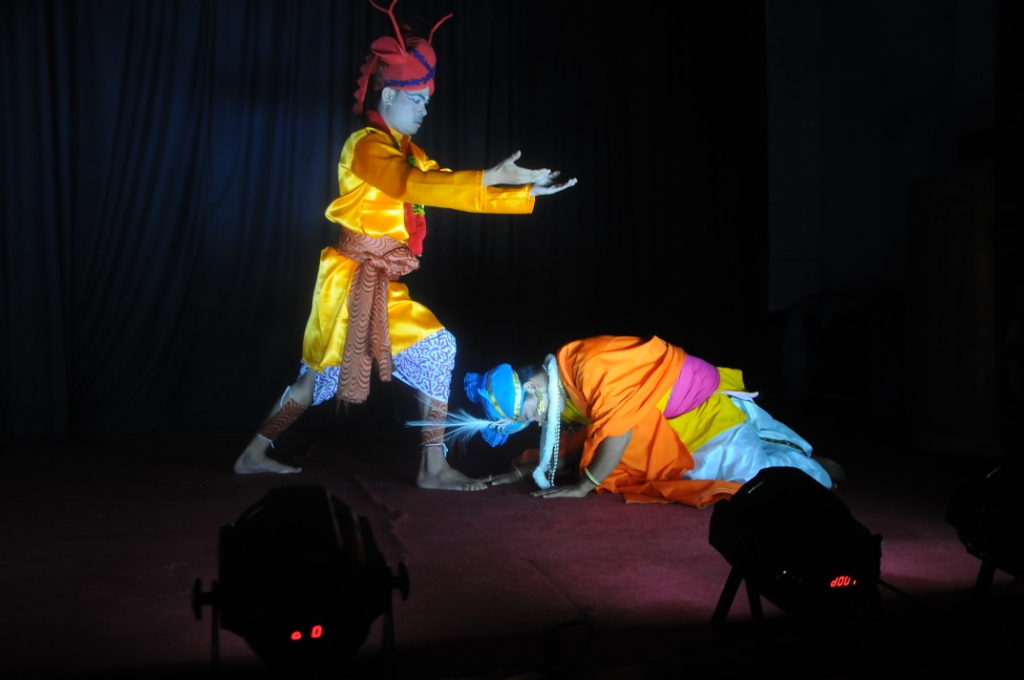
 R.P. Savita, who is NM’s Director (Conservation), proposed thanks at the session that was followed by a 30-minute dance-drama by 22 Manipur artistes who essayed the story of Poubi Lai.
 As for the ‘Poubi Lai’ sculptor, Karam Dineshwar was one of the successors of the royal family-associated Karigar craftspeople of present-day Bishnupur district. The artist had a dream of the mythical reptile one night in 2003, following which he worked on the image and completed it in six months.
 
The sculpture had its inaugural exhibition the same year at Manipur State Museum at Imphal. At IGRMS, it was subsequently slotted as an ‘Object of National Importance’, having been registered under the ‘AA’ category of Museum Collections.
 The last time the 1949-founded NM hosted a major single-object exhibition was almost two years ago when the museum displayed for 18 days an exquisite 10th-century stone sculpture of a ‘Yogini’ in September-October 2013. 

शनिवार, 4 जुलाई 2015

Museum institutes from India and Britain launch unique project to enhance visitors’ experience with art objects

·         Monks in Ladakh get crash course in museology

New Delhi, July 3: The exquisite sculpture of ‘Maitreyi’ Buddha, swathed in serene calmness, stands majestically in a monastic complex in the snow-capped Ladakh. The 40 ft high statue has for its company an assortment of objects — Thangkas, masks, big utensils — that are a visual delight for the visitors.
 
A Museum personnel explaining to visitors on handling of
replica objects at City Palace Museum, Jaipur
Miles apart and almost as an antithesis, the City Palace museum in Jaipur in the desert state of Rajasthan showcases an array of glistening weapons for defence and destruction that also brings hordes of visitors.

For a better understanding of the power of museum objects beyond face value and their connect with the visitors, two prominent museum institutes from India and the UK have been holding a series of field studies and workshops, the latest being in Ladakh last month. 

The ground-breaking research project, entitled “Things Encountered, Things Unbound: Objects engagements in museums in India and the UK”, is being jointly organised by the National Museum Institute (NMI), Delhi and University of Leicester, UK.

As part of the Ladakh project, a workshop was held at the Central Institute of Buddhist Studies (CIBS), Leh to deliberate upon the results of the visitor studies conducted at the Thiksey Monastery Complex, Ladakh. The workshop was jointly organised by the NMI and School of Museum Studies, University of Leicester.

“The project aims to investigate museum visitors’ engagements with objects in India, connect this with related research in the UK, and develop long-term collaboration between the two main partners (NMI and School of Museum Studies),” said Dr. Manvi Seth, HOD, Department of Museology, NMI who coordinated the project with Dr. Sandra Dudley, University of Leicester, UK.

“It is a pioneering project not only in India or the UK but perhaps anywhere in the world. A study of this kind of visitors’ engagement with objects has never been conducted before,” she added.

During the course of the project, field research in three different kinds of museums in India and the UK each is being done. It also involves training of museum students and professionals, besides extensive intellectual exchange in workshops in India and the UK. In addition, it explores the role of objects in museums, how visitors engage and have a dialogue with objects and how this may differ across cultural settings.

The first phase of the project was held at Jaipur in February and the second at the Thiksey Monastery Complex, Ladakh. Five research scholars from the NMI and three from Ladakh worked together for this project.

Mr. Rigzin Spalbar, Chief Executive Councillor, Ladakh Autonomous Hill Development Council, who was the chief guest at the workshop, said the project would help the monasteries and museums of Ladakh.

Monks attending the workshop at CIBS, Leh conducted by
 NMI and University of Leicester
“The work in museology training, documentation and handholding for projects in museum and heritage field being done by the NMI’s Department of Museology is immense. It has helped in creating unparalleled awareness amongst monasteries, museums and scholars in Ladakh,” he added.

The Department is also working on the ‘Documentation of Intangible Cultural Heritage of Ladakh Region’. Through this pilot project, the NMI is documenting age-old treasures in the field of performing arts (mask dancing, music); oral traditions (folk stories, songs, recitation of Buddhist verses);social traditions (birth ceremony, horse racing,festivals, cuisine, costumes); and knowledge about nature (agricultural practices, seasons, weather, medicinal plants).

Ven. Khenchen Tsewang Rigzin from Central Institute of Buddhist Studies, Ven. Lobzang Thapkas from Thiksey Monastery and Ven. Gyan Konchok Tashi, Secretary, Ladakh Gompa Association, graced the workshop.

“The monks present at the workshop would greatly benefit from this research. In fact, this kind of research can also work as a model for other monasteries,” said Ven. Rigzin.

Research work in progress at City Palace Museum, Jaipur
Highlighting the objectives of the research project, Dr. Manvi said museums are not just places for people to learn about history, but are also places of inspiration, transformation and engagement at many other levels.

“The power of objects needs to be understood beyond educational utility in museums,” she said, adding: “Not everyone comes to a museum to learn.”


 Dr. Sandra said that “through such studies we might be able to help museums and museology discipline to understand the visitors, objects, and their relationships better”. 

शुक्रवार, 26 जून 2015

Classical Meets Contemporary In Unique Yoga Art Exhibition

·        National Museum biggest contributor for 'Yoga Chakra' at Lalit Kala Akademi


New Delhi, June 25: A man sits with his legs stretched out and hands folded in a gesture of reverence. It is an image that could easily fit the description of a participant of the International Yoga Day across the world, only it is from five millennia ago. The terracota object from the Harappa civilization, between 2700 BC and 2100 BC, is a main attraction at an ongoing exhibition on yoga in the national capital.

Disembodied Jina (Ashariri Siddha), the shape of the
released spirit which has attained perfection
'The Seated Man in Namaskar Mudra' is part of the nearly 400 works in the 'Yoga Chakra: Tradition and Modernity' exhibition at the Rabindra Bhavan in New Delhi. A journey through centuries of artistic expression and diverse interpretation on the traditional culture of yoga, the exhibition has 41 works from the National Museum collection.

The replica of the famous 'Dancing Girl' bronze statue of a girl with one hand resting on her hip, from the Mohenjodaro period 4,500 years ago is another huge draw of the exhibition, organised by the Sangeet Natak Akademi, in which the National Museum is the biggest contributor.

"Yoga not only harmonizes our body, mind and heart but also has the potential to make the entire universe live in harmony," said Prime Minister Shri Narendra Modi, in his message to the exhibition, which was inaugurated on June 21 by Union Minister of State (Independent Charge) for Tourism and Culture and Minister of State for Civil Aviation Dr Mahesh Sharma. "Thus, it has the unique potential of transforming diverse and conflicting societies of tbe world into beautifully aligned ones," the Prime Minister further wrote in his message.

The exhibition at the Lalit Kala Akademi galleries in Rabinra Bhavan also has a 12th century bronze statue of Buddha cross legged with hands in the gesture of meditation and a stone Pashupati seal from Mohenjodaro civilization, believed to be 4500 years old.
Khadau

"The Pashupati seal, depicting Lord Shiva, is the earliest evidence of a yogic posture," said Sushma K Bahl, who has co-curated the exhibition with Archana B Sapra. "The classical artifacts helped us link the past with the present," Smt Behl added.

"The objects from Mohenjodaro and Harappa period and from other parts and periods of our civilization represent only a small portion of the classical collection of the National Museum linked to yogic traditions," said Shri K K Sharma, Deputy Curator of the National Museum and coordinator of the Yoga Chakra exhibition.

"The classical collection comprises of all kinds of media, including painting, sculpture and manuscript," Shri Sharma added.
Seated Male in Namaskar Mudra & Seated Male in Yoga Mudra

In its three thematic sections under 'Gyana', 'Dhyana' and 'Karma', and five sub-sections, the exhibition takes a deep look at how in India traditions have evolved over the centuries and also how historical and classical art continue to impact creativity.

Also the among the classical works is the 19th century Yoga Sutra from Kashmir, which is a collection of manuscripts based on the 196 sutras of sage Patanjali that constitute the foundations of ashtanga yoga. There is also a 19th century 'Bindu concentric circle' in wood depicting the machine, carved with concentric circles on a flat round base, used by yogis for meditation,

Yoga Narayana Vishnu
In one of the biggest public-private collaborations in art exhibitions, the exhibition has sourced works from 14 other collaborators besides the National Museum. One of the other major partners is the Museum of Sacred Art in Brussels, Belgium.

Among the classical works are an 11th century crowned Buddha statue in bronze and a terracotta clay tablet with Buddha's representstion, believed to be from 9th or 10th century. "You can't talk about yoga without mentioning Lord Buddha and Lord Mahavir," said Smt. Behl, who took three months to prepare the week-long exhibition. "The classical works of the National Museum gave us a base on which we felt confident to go ahead and put together the exhibition," she added.

Among the contemporary artists are S H Raza, who exhibits his 2013 work, 'Prem Bindu'. The exhibition also includes video and digital works.

The exhibition concludes on June 27.

सोमवार, 22 जून 2015

राष्ट्रीय संग्रहालय अंतर्राष्ट्रीय योग दिवस में शामिल हुआ योग पर आधारित प्रदर्शनी ‘‘योग चक्र’’ में राष्ट्रीय संग्रहालय की 41 कला वस्तुओं को प्रदर्शित किया गया

Buddha in Earth Touching Pose
नई दिल्ली, 22 जून: भारत की प्रमुख सांस्कृतिक संस्था, राष्ट्रीय संग्रहालय योग पर आयोजित एक उत्कृष्ठ प्रदर्शनी में हिस्सेदारी करके प्रधानमंत्री श्री नरेन्द्र मोदी के योग के लिए चलाये गये राष्ट्रीय अभियान में शामिल हुआ। शरीर और आत्मा के शुद्धिकरण की देश की प्राचीन पद्धति को प्रदर्शित करने वाली इस प्रदर्शनी में राष्ट्रीय संग्रहालय की कलाकृतियों को भी प्रदर्शित किया गया।
संग्रहालय ने संगीत नाटक अकादमी द्वारा आयोजित इस प्रदर्शनी ‘योग - चक्र’ में 36 मूल कलाकृतियों के अलावा प्राचीन कलाकृतियों की पांच प्रतिकृतियां प्रदान की। इनमें नृत्य करती हुई लड़की और योग मुद्राओं में टेराकोटा की मूर्तियां भी शामिल हैं। यह प्रदर्शनी राष्ट्रीय संग्रहालय के सहयोग से राष्ट्रीय राजधानी में रवींद्र भवन की ललित कला अकादमी की दीर्घाओं में आयोजित की गयी।
अंतर्राष्ट्रीय योग दिवस (21 जून) को शुरू हुई सप्ताह भर चलने वाली प्रदर्शनी में शामिल की गयी संग्रहालय की वस्तुओं में उत्तर प्रदेश के सारनाथ से लायी गयी एक योग मुद्रा में पत्थर की बनी 9 वीं शताब्दी की बुद्ध की प्रतिमा के साथ- साथ 11 वीं सदी की योग की मुद्रा में पत्थर से निर्मित योगिनी की मूर्ति शामिल है।
Seated Male in Namaskar Mudra
भारत के सांस्कृतिक इतिहास के एक अनूठे पहलू को दर्शाने वाली ये कलाकृतियां योग, भारत के हजारों साल के इतिहास और कश्मीर से लेकर केरल तक के भौगोलिक परिदृष्य से जुड़ी हैं। संग्रहालय के संग्रह के इस हिस्से में मूर्तियां, कांसे, पेंटिंग, पांडुलिपियां, मिट्टी और लकड़ी की मूर्तियां शामिल हैं।
यहां हड़प्पा और मोहनजोदड़ो के समय की चार अनूठी कला वस्तुओं की प्रतिकृतियां भी हैं जिनमें 2700 ईपू. से 2100 ईसा पूर्व के बीच की टेराकोटा में ‘नमस्कार की मुद्रा में बैठा मनुष्य’; 2500 ईसा पूर्व से 2200 ईसा पूर्व के बीच की मोहनजोदड़ो के समय की टेराकोटा में ही ‘योग मुद्रा में बैठा मनुष्य ’; 2500 ईसा पूर्व में मोहनजोदड़ो के समय की एक ‘पशुपति सील’ और उसी समय की नृत्य करती लड़की शामिल है।
इसके अलावा, गुप्त वंश के राजा समुद्रगुप्त के प्रसिद्ध सिक्के के एक प्रतिकृति भी है।
Yogini Vrishanana
यहां प्रदर्शित अन्य वस्तुओं में 20 वीं सदी से संबंधित केरल से लकड़ी से निर्मित एक ध्यान मग्न संत, 19 वीं सदी के कश्मीर से कागज पर योग सूत्र, हैदराबाद से पत्थर में योग मुद्रा में 13 वीं सदी के नाथ योगी, और हिमाचल प्रदेश के कांगड़ा से 18 वीं सदी के बैठे हुए योगी की पेंटिंग भी शामिल हैं।
राष्ट्रीय संग्रहालय के महानिदेशक श्री संजीव मित्तल ने कहा, ‘‘राष्ट्रीय संग्रहालय में कलाकृतियों की एक आश्चर्यजनक श्रृंखला है जिनका योग की पवित्र परंपराओं के साथ करीबी संबंध है। भव्य आयोजन के लिए संग्रहालय से चुनी गयी वस्तुएं निष्चित रूप से सभी आयु वर्ग के दर्शकों को मंत्रमुग्ध करेंगी।
प्रदर्शनी में योग से संबंधित कलाकृतियां ललित कला अकादमी, भारतीय संग्रहालय, कोलकाता, और भारत कला भवन, वाराणसी सहित पांच अन्य सांस्कृतिक संस्थाओं की हैं। प्रदर्शनी में 300 से अधिक कलाकृतियों को शामिल किया गया है और भारत और विदेश से लगभग 150 कलाकारों द्वारा नृत्य और संगीत के कार्यक्रम प्रस्तुत किये जा रहे हैं।
प्रदर्शनी के ‘योग- चक्र’ खंड में राष्ट्रीय संग्रहालय की वस्तुओं में ऐसी 300 मल्टीमीडिया अभिव्यक्तियां शामिल हैं जो ‘ज्ञान’, ‘कर्म’ और ‘भक्ति’ योग की अवधारणाओं को दर्शाती हैं।
Yogsutra, Bhairavastotra  and Haristotra (Bound in single  volume)

शुक्रवार, 12 जून 2015

राष्ट्रीय संग्रहालय में 15 से 17 जून तक वयस्को के लिए सुलेख (कैलिग्राफी) कार्यशाला आयोजित होगी


नई दिल्ली, 12 जून: किशोरों के लिए हाल ही में आयोजित सुलेख कार्यशाला (कैलिग्राफी) से मिली अभूतपूर्व प्रतिक्रिया से उत्साहित होकर, राष्ट्रीय संग्रहालय अगले सप्ताह इसी तरह की एक कार्यशाला आयोजित करने जा रहा है। इस बार यह कार्यशाला वयस्को के लिए होगी ।
राष्ट्रीय संग्रहालय में पहली मंजिल पर 15 जून (सोमवार) से आयोजित होने वाली यह तीन दिवसीय सुलेख कार्यशाला 18 वर्ष से अधिक उम्र वाले लोगों के लिए खुली होगी । 300 रुपये का शुल्क जमा करने के बाद इस कार्यशाला के लिए तीस उम्मीदवारों का पहले आओ - पहले पाओ के आधार पर चयन किया जाएगा।
राष्ट्रीय संग्रहालय की क्यूरेटर (सजावटी कला) अनामिका पाठक के अनुसार, इस दौरान कुल 15 घंटे का प्रशिक्षण सत्र होगा । इस सत्र का आयोजन लकड़ी, पत्थर और धातु जैसे कई माध्यमों पर तीन विशेषज्ञों के नेतृत्व में किया जाएगा।
उन्होंने कहा, ‘‘इस संबंध में हमसे काफी लोगों नें पूछताछ की है कि क्या 18 साल से अधिक उम्र के लोग भी सुलेख सीख सकते हैं । ये इंक्वायरी राष्ट्रीय  संग्रहालय के द्वारा 14 से 18 साल के बच्चों  के लिए एक कार्यशाला  (29 से 31 मई) आयोजित करने के  फैसले के बाद आयी।’’
पिछली बार आयोजित सुलेख कार्यशाला की ही तरह, यह कार्यशाला भी हर दिन सुबह 11 बजे से शुरू होगी और इंटरैक्टिव आधार पर आयोजित की जाएगी।
ये कार्यशालाएं दैनिक उपयोग की वस्तुओं पर इस्लामी शैली सुलेख पर राष्ट्रीय संग्रहालय प्रदर्शनी के दौरान आयोजित की जा रही हैं। इसके तहत पिछली पाचं शताब्दियों की 56 उपयोगी कलाकृतियों को प्रदर्शित किया जा रहा है। ‘‘सुलेखन कला: सुसज्जात्मक कलाकृतियों पर अरबी और फारसी लेख ’ शीर्षक  वाली 59 दिवसीय प्रदर्शनी 12 जुलाई को सम्पन्न हो रही है। यह प्रदर्शनी धातु की तारों,  लकड़ियों कपड़ो तथा कीमती पत्थरों पर सुलेखन पर केंद्रित है। ये सभी राष्ट्रिय संग्रहालय के संग्रहों से लिये गये हैं।  

सोमवार, 1 जून 2015

बिनाले, 16 के क्यूरेट के लिये सर्वसम्मति से नाम प्रस्तावित। जुलाई के आरंभ में होगी क्यूरेट की घोषणा

कोच्चि, 1 जून। अंतर्राष्ट्रीय आयाम एवं प्रसिद्धी हासिल कर चुके भारत के एकमात्र बिनाले- कोच्चि-मुजिरिस बिनाले (केएमबी) के आयोजक कोच्चि बिनाले फाउंडेशन (केबीएफ) की उच्च अधिकार समिति ने सर्वसम्मति से बिनाले के तीसरे संस्करण ‘‘बिनाले, 16’’ के लिये क्यूरेटर की भूमिका निभाने वाले कलाकार के नाम का प्रस्ताव कर दिया है। अगले साल दिसंबर से शुरू हो रहे बिनाले के क्यूटेर के नाम की औपचारिक घोषणा अगले महीने - जुलाई में की जायेगी।
दिल्ली में गत सप्ताहांत आयोजित आर्टिस्टिक एडवाइजरी कमेटी (एएसी) की हुयी बैठक में आगामी कोच्चि -मुजिरिस बिनाले के लिये क्यूरेटर के चुनाव पर और चर्चा करने तथा क्यूरेटर के नाम को अंतिम रूप देने का फैसला किया।
इस बाबत जानकारी देते हुये कोच्चि बिनाले फाउंडेशन के अध्यक्ष बोस कृश्णामचारी ने आज बताया कि कलाकारों, विद्वानों, कला समीक्षकों तथा संरक्षकों से बनी इस समिति की बैठक 30 मई को राष्ट्रीय राजधानी में हुयी थी। इस बैठक में सदस्यों ने क्यूरेटर की विभिन्न भूमिकाओं तथा जिम्मेदारियों की चर्चा की।
मुंबई के कलाकार तथा 2012 में आयोजित देश के पहले कोच्चि मुजिरिस बिनाले के क्यूरेटर श्री कृश्णामचारी ने बताया कि इस समिति की दूसरे दौर की बैठक इस महीने होगी जिसमें कुछ खास औपचारिकताओं को पूरा किया जायेगा तथा क्यूरेटर के बारे में अंतिम फैसला किया जायेगा। इसके बाद कोच्चि बिनाले फाउंडेशन का न्यास मंडल इस चुनाव को स्वीकृत करेगा। इसके बाद जुलाई के पहले सप्ताह में दिल्ली में आयोजित एक आधिकारिक समारोह में क्यूरेटर के नाम की घोषणा की जायेगी। इस समारोह में समर्थक, राजदूत, संरक्षक, कलाकार तथा संस्कृति के क्षेत्र के कार्यकर्ता भी मौजूद होंगे।
कोच्चि बिनाले फाउंडेशन के सचिव रियास कोमू ने कहा कि एएसी की मुख्य जिम्मेदारी केएमबी के क्यूरेटर का चुनाव करने की है। उन्होंने कहा, ‘‘हम हर दो साल पर बदलाव करते रहते हैं ताकि विभिन्न स्वरों एवं दृश्टिकोणों को जगह मिल सके।’’
एएसी की स्थापना चयन प्रक्रिया में पारदर्षिता एवं उत्तरदायित्व को सुनिष्चित करने के उद्देष्य से हुयी। इस समिति में श्री कृश्णामचारी तथा श्री कोमू के अलाावा कलाकार अमर कंवर, अतुल डोडिया, भारती खेर और ज्योति बसु, किरण नादर (अध्यक्ष-किरण नादर म्यूजियम आफ आर्ट्स), कला समीक्षक रंजीत होसकोट, गैलेरिस्ट शीरेन गांधी और केबीएफ के न्यासी सुनील वी शामिल हैं।
केबीएफ की ऐसी पहली समिति ने 2013 में जितिश कलात का चुनाव बिनाले, 2014 के क्यूरेटर के रूप में किया था। यह बिनाले 108 दिन तक चला और इस साल 29 मार्च को सम्पन्न हो गया। उस समिति में श्री कृश्णामचारी तथा श्री कोमू के अलाावा कला इतिहासकार गीता कपूर, भउ दाजी लाड म्यूजियम निदेशक तासनीम जकारिया मेहता, कलाकार शीला गौडा एवं बालान नाम्बियार, गुजराल फाउंडेशन के फिरोज गुजराल और क्यूरेट-गैलेरिस्ट अभय मसकारा शामिल थे।