बुधवार, 22 जुलाई 2015

Giant sculpture of Manipur’s mythical reptile on display at National Museum


42-day show lends Delhiites a rare peek at dragon-like Poubi Lai artwork
 
New Delhi, July 22: A refreshing inter-museum collaboration with focus on the fascinating heritage of a largely-ignored region has brought to the national capital a 21-foot-long wooden sculpture of a snake which is a celebrated icon in a remote belt of the country’s Northeast.
The one-object exhibition at National Museum (NM), which has just got on in a temporary gallery, throws light on a myth from Manipur’s Meitei tribe for whom the dragon-like hybrid animal has, for centuries been integral to their ethos but has only recently found shape in a tactile form.
‘Poubi Lai’, as the giant reptile is called by the ethnic group who speak a Sino-Tibetan language, is on a 42-day display at NM, courtesy the cooperation of Bhopal’s Indira Gandhi Rashtriya Manav Sangrahalaya (IGRMS) which owns the work that had its origin around the sprawling Loktak Lake off Moirang city, 45 km south of Manipur’s capital.
The man behind the 2003-created sculpture carved from a single log of wood is no more. Wood-carver Karam Dineshwar died a decade ago in his middle age, but the pioneering work first made it to Imphal before it became a permanent exhibit at IGRMS up on the Shyamala Hills in central India.
 
 
Today, it gives Delhiites their debut opportunity to take a peek at the ethnic object that has found its way to the first floor of NM. The July 21-August 31 exhibition was formally inaugurated on Tuesday evening by K.K Mittal, Additional Secretary to the Ministry of Culture, in the presence of NM Director-General Sanjiv Mittal and and Prof Sarit Kumar Chaudhuri who heads IGRMS.
 The show, where the brown Poubi Lai with scales all along and a pair of horns above its head, is placed on a green turf spread across a longish off-white pedestal. The gallery also features two dozen recent paintings essaying various tales about the myth besides a related short film that runs on a loop in an adjacent chamber.
 
Inaugurating ‘Poubi Lai: The Story of a Giant Python’, Mr K.K. Mittal said the collaboration would be a turning point in the inter-museum dynamics in India. “It will bring about great synchronisation and interesting opportunities to unveil several archives of the country,” he noted.
The NM Director-General, welcoming the gathering, said the Poubi Lai show in Delhi has been a result of the 2009-initiated museum reforms and the Leadership Training programme with British Museum. “Inter-institutional collaborations aim at taking community heritage to people across the country. This one-object exhibition is a wonderful example of such an initiative,” he added.
 Prof Chaudhuri, who is the director of the 1977-founded IGRMS, pointed out that Poubi Lai is a “perfect example how intangible heritage can be transformed into an evident piece”.
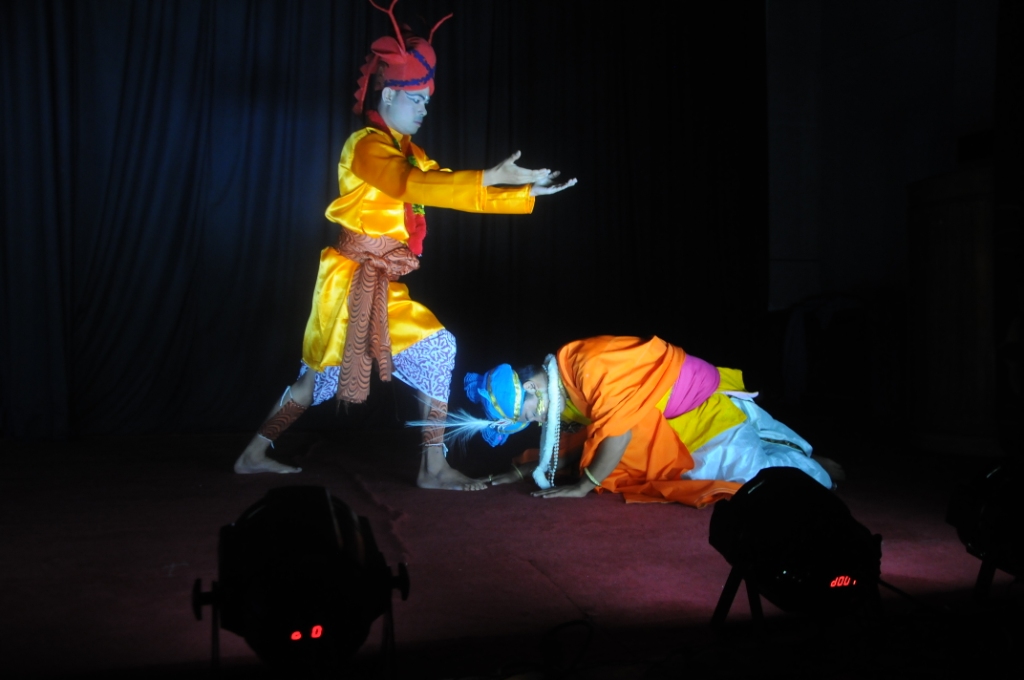
 R.P. Savita, who is NM’s Director (Conservation), proposed thanks at the session that was followed by a 30-minute dance-drama by 22 Manipur artistes who essayed the story of Poubi Lai.
 As for the ‘Poubi Lai’ sculptor, Karam Dineshwar was one of the successors of the royal family-associated Karigar craftspeople of present-day Bishnupur district. The artist had a dream of the mythical reptile one night in 2003, following which he worked on the image and completed it in six months.
 
The sculpture had its inaugural exhibition the same year at Manipur State Museum at Imphal. At IGRMS, it was subsequently slotted as an ‘Object of National Importance’, having been registered under the ‘AA’ category of Museum Collections.
 The last time the 1949-founded NM hosted a major single-object exhibition was almost two years ago when the museum displayed for 18 days an exquisite 10th-century stone sculpture of a ‘Yogini’ in September-October 2013. 

शनिवार, 4 जुलाई 2015

Museum institutes from India and Britain launch unique project to enhance visitors’ experience with art objects

·         Monks in Ladakh get crash course in museology

New Delhi, July 3: The exquisite sculpture of ‘Maitreyi’ Buddha, swathed in serene calmness, stands majestically in a monastic complex in the snow-capped Ladakh. The 40 ft high statue has for its company an assortment of objects — Thangkas, masks, big utensils — that are a visual delight for the visitors.
 
A Museum personnel explaining to visitors on handling of
replica objects at City Palace Museum, Jaipur
Miles apart and almost as an antithesis, the City Palace museum in Jaipur in the desert state of Rajasthan showcases an array of glistening weapons for defence and destruction that also brings hordes of visitors.

For a better understanding of the power of museum objects beyond face value and their connect with the visitors, two prominent museum institutes from India and the UK have been holding a series of field studies and workshops, the latest being in Ladakh last month. 

The ground-breaking research project, entitled “Things Encountered, Things Unbound: Objects engagements in museums in India and the UK”, is being jointly organised by the National Museum Institute (NMI), Delhi and University of Leicester, UK.

As part of the Ladakh project, a workshop was held at the Central Institute of Buddhist Studies (CIBS), Leh to deliberate upon the results of the visitor studies conducted at the Thiksey Monastery Complex, Ladakh. The workshop was jointly organised by the NMI and School of Museum Studies, University of Leicester.

“The project aims to investigate museum visitors’ engagements with objects in India, connect this with related research in the UK, and develop long-term collaboration between the two main partners (NMI and School of Museum Studies),” said Dr. Manvi Seth, HOD, Department of Museology, NMI who coordinated the project with Dr. Sandra Dudley, University of Leicester, UK.

“It is a pioneering project not only in India or the UK but perhaps anywhere in the world. A study of this kind of visitors’ engagement with objects has never been conducted before,” she added.

During the course of the project, field research in three different kinds of museums in India and the UK each is being done. It also involves training of museum students and professionals, besides extensive intellectual exchange in workshops in India and the UK. In addition, it explores the role of objects in museums, how visitors engage and have a dialogue with objects and how this may differ across cultural settings.

The first phase of the project was held at Jaipur in February and the second at the Thiksey Monastery Complex, Ladakh. Five research scholars from the NMI and three from Ladakh worked together for this project.

Mr. Rigzin Spalbar, Chief Executive Councillor, Ladakh Autonomous Hill Development Council, who was the chief guest at the workshop, said the project would help the monasteries and museums of Ladakh.

Monks attending the workshop at CIBS, Leh conducted by
 NMI and University of Leicester
“The work in museology training, documentation and handholding for projects in museum and heritage field being done by the NMI’s Department of Museology is immense. It has helped in creating unparalleled awareness amongst monasteries, museums and scholars in Ladakh,” he added.

The Department is also working on the ‘Documentation of Intangible Cultural Heritage of Ladakh Region’. Through this pilot project, the NMI is documenting age-old treasures in the field of performing arts (mask dancing, music); oral traditions (folk stories, songs, recitation of Buddhist verses);social traditions (birth ceremony, horse racing,festivals, cuisine, costumes); and knowledge about nature (agricultural practices, seasons, weather, medicinal plants).

Ven. Khenchen Tsewang Rigzin from Central Institute of Buddhist Studies, Ven. Lobzang Thapkas from Thiksey Monastery and Ven. Gyan Konchok Tashi, Secretary, Ladakh Gompa Association, graced the workshop.

“The monks present at the workshop would greatly benefit from this research. In fact, this kind of research can also work as a model for other monasteries,” said Ven. Rigzin.

Research work in progress at City Palace Museum, Jaipur
Highlighting the objectives of the research project, Dr. Manvi said museums are not just places for people to learn about history, but are also places of inspiration, transformation and engagement at many other levels.

“The power of objects needs to be understood beyond educational utility in museums,” she said, adding: “Not everyone comes to a museum to learn.”


 Dr. Sandra said that “through such studies we might be able to help museums and museology discipline to understand the visitors, objects, and their relationships better”. 

शुक्रवार, 26 जून 2015

Classical Meets Contemporary In Unique Yoga Art Exhibition

·        National Museum biggest contributor for 'Yoga Chakra' at Lalit Kala Akademi


New Delhi, June 25: A man sits with his legs stretched out and hands folded in a gesture of reverence. It is an image that could easily fit the description of a participant of the International Yoga Day across the world, only it is from five millennia ago. The terracota object from the Harappa civilization, between 2700 BC and 2100 BC, is a main attraction at an ongoing exhibition on yoga in the national capital.

Disembodied Jina (Ashariri Siddha), the shape of the
released spirit which has attained perfection
'The Seated Man in Namaskar Mudra' is part of the nearly 400 works in the 'Yoga Chakra: Tradition and Modernity' exhibition at the Rabindra Bhavan in New Delhi. A journey through centuries of artistic expression and diverse interpretation on the traditional culture of yoga, the exhibition has 41 works from the National Museum collection.

The replica of the famous 'Dancing Girl' bronze statue of a girl with one hand resting on her hip, from the Mohenjodaro period 4,500 years ago is another huge draw of the exhibition, organised by the Sangeet Natak Akademi, in which the National Museum is the biggest contributor.

"Yoga not only harmonizes our body, mind and heart but also has the potential to make the entire universe live in harmony," said Prime Minister Shri Narendra Modi, in his message to the exhibition, which was inaugurated on June 21 by Union Minister of State (Independent Charge) for Tourism and Culture and Minister of State for Civil Aviation Dr Mahesh Sharma. "Thus, it has the unique potential of transforming diverse and conflicting societies of tbe world into beautifully aligned ones," the Prime Minister further wrote in his message.

The exhibition at the Lalit Kala Akademi galleries in Rabinra Bhavan also has a 12th century bronze statue of Buddha cross legged with hands in the gesture of meditation and a stone Pashupati seal from Mohenjodaro civilization, believed to be 4500 years old.
Khadau

"The Pashupati seal, depicting Lord Shiva, is the earliest evidence of a yogic posture," said Sushma K Bahl, who has co-curated the exhibition with Archana B Sapra. "The classical artifacts helped us link the past with the present," Smt Behl added.

"The objects from Mohenjodaro and Harappa period and from other parts and periods of our civilization represent only a small portion of the classical collection of the National Museum linked to yogic traditions," said Shri K K Sharma, Deputy Curator of the National Museum and coordinator of the Yoga Chakra exhibition.

"The classical collection comprises of all kinds of media, including painting, sculpture and manuscript," Shri Sharma added.
Seated Male in Namaskar Mudra & Seated Male in Yoga Mudra

In its three thematic sections under 'Gyana', 'Dhyana' and 'Karma', and five sub-sections, the exhibition takes a deep look at how in India traditions have evolved over the centuries and also how historical and classical art continue to impact creativity.

Also the among the classical works is the 19th century Yoga Sutra from Kashmir, which is a collection of manuscripts based on the 196 sutras of sage Patanjali that constitute the foundations of ashtanga yoga. There is also a 19th century 'Bindu concentric circle' in wood depicting the machine, carved with concentric circles on a flat round base, used by yogis for meditation,

Yoga Narayana Vishnu
In one of the biggest public-private collaborations in art exhibitions, the exhibition has sourced works from 14 other collaborators besides the National Museum. One of the other major partners is the Museum of Sacred Art in Brussels, Belgium.

Among the classical works are an 11th century crowned Buddha statue in bronze and a terracotta clay tablet with Buddha's representstion, believed to be from 9th or 10th century. "You can't talk about yoga without mentioning Lord Buddha and Lord Mahavir," said Smt. Behl, who took three months to prepare the week-long exhibition. "The classical works of the National Museum gave us a base on which we felt confident to go ahead and put together the exhibition," she added.

Among the contemporary artists are S H Raza, who exhibits his 2013 work, 'Prem Bindu'. The exhibition also includes video and digital works.

The exhibition concludes on June 27.

सोमवार, 22 जून 2015

राष्ट्रीय संग्रहालय अंतर्राष्ट्रीय योग दिवस में शामिल हुआ योग पर आधारित प्रदर्शनी ‘‘योग चक्र’’ में राष्ट्रीय संग्रहालय की 41 कला वस्तुओं को प्रदर्शित किया गया

Buddha in Earth Touching Pose
नई दिल्ली, 22 जून: भारत की प्रमुख सांस्कृतिक संस्था, राष्ट्रीय संग्रहालय योग पर आयोजित एक उत्कृष्ठ प्रदर्शनी में हिस्सेदारी करके प्रधानमंत्री श्री नरेन्द्र मोदी के योग के लिए चलाये गये राष्ट्रीय अभियान में शामिल हुआ। शरीर और आत्मा के शुद्धिकरण की देश की प्राचीन पद्धति को प्रदर्शित करने वाली इस प्रदर्शनी में राष्ट्रीय संग्रहालय की कलाकृतियों को भी प्रदर्शित किया गया।
संग्रहालय ने संगीत नाटक अकादमी द्वारा आयोजित इस प्रदर्शनी ‘योग - चक्र’ में 36 मूल कलाकृतियों के अलावा प्राचीन कलाकृतियों की पांच प्रतिकृतियां प्रदान की। इनमें नृत्य करती हुई लड़की और योग मुद्राओं में टेराकोटा की मूर्तियां भी शामिल हैं। यह प्रदर्शनी राष्ट्रीय संग्रहालय के सहयोग से राष्ट्रीय राजधानी में रवींद्र भवन की ललित कला अकादमी की दीर्घाओं में आयोजित की गयी।
अंतर्राष्ट्रीय योग दिवस (21 जून) को शुरू हुई सप्ताह भर चलने वाली प्रदर्शनी में शामिल की गयी संग्रहालय की वस्तुओं में उत्तर प्रदेश के सारनाथ से लायी गयी एक योग मुद्रा में पत्थर की बनी 9 वीं शताब्दी की बुद्ध की प्रतिमा के साथ- साथ 11 वीं सदी की योग की मुद्रा में पत्थर से निर्मित योगिनी की मूर्ति शामिल है।
Seated Male in Namaskar Mudra
भारत के सांस्कृतिक इतिहास के एक अनूठे पहलू को दर्शाने वाली ये कलाकृतियां योग, भारत के हजारों साल के इतिहास और कश्मीर से लेकर केरल तक के भौगोलिक परिदृष्य से जुड़ी हैं। संग्रहालय के संग्रह के इस हिस्से में मूर्तियां, कांसे, पेंटिंग, पांडुलिपियां, मिट्टी और लकड़ी की मूर्तियां शामिल हैं।
यहां हड़प्पा और मोहनजोदड़ो के समय की चार अनूठी कला वस्तुओं की प्रतिकृतियां भी हैं जिनमें 2700 ईपू. से 2100 ईसा पूर्व के बीच की टेराकोटा में ‘नमस्कार की मुद्रा में बैठा मनुष्य’; 2500 ईसा पूर्व से 2200 ईसा पूर्व के बीच की मोहनजोदड़ो के समय की टेराकोटा में ही ‘योग मुद्रा में बैठा मनुष्य ’; 2500 ईसा पूर्व में मोहनजोदड़ो के समय की एक ‘पशुपति सील’ और उसी समय की नृत्य करती लड़की शामिल है।
इसके अलावा, गुप्त वंश के राजा समुद्रगुप्त के प्रसिद्ध सिक्के के एक प्रतिकृति भी है।
Yogini Vrishanana
यहां प्रदर्शित अन्य वस्तुओं में 20 वीं सदी से संबंधित केरल से लकड़ी से निर्मित एक ध्यान मग्न संत, 19 वीं सदी के कश्मीर से कागज पर योग सूत्र, हैदराबाद से पत्थर में योग मुद्रा में 13 वीं सदी के नाथ योगी, और हिमाचल प्रदेश के कांगड़ा से 18 वीं सदी के बैठे हुए योगी की पेंटिंग भी शामिल हैं।
राष्ट्रीय संग्रहालय के महानिदेशक श्री संजीव मित्तल ने कहा, ‘‘राष्ट्रीय संग्रहालय में कलाकृतियों की एक आश्चर्यजनक श्रृंखला है जिनका योग की पवित्र परंपराओं के साथ करीबी संबंध है। भव्य आयोजन के लिए संग्रहालय से चुनी गयी वस्तुएं निष्चित रूप से सभी आयु वर्ग के दर्शकों को मंत्रमुग्ध करेंगी।
प्रदर्शनी में योग से संबंधित कलाकृतियां ललित कला अकादमी, भारतीय संग्रहालय, कोलकाता, और भारत कला भवन, वाराणसी सहित पांच अन्य सांस्कृतिक संस्थाओं की हैं। प्रदर्शनी में 300 से अधिक कलाकृतियों को शामिल किया गया है और भारत और विदेश से लगभग 150 कलाकारों द्वारा नृत्य और संगीत के कार्यक्रम प्रस्तुत किये जा रहे हैं।
प्रदर्शनी के ‘योग- चक्र’ खंड में राष्ट्रीय संग्रहालय की वस्तुओं में ऐसी 300 मल्टीमीडिया अभिव्यक्तियां शामिल हैं जो ‘ज्ञान’, ‘कर्म’ और ‘भक्ति’ योग की अवधारणाओं को दर्शाती हैं।
Yogsutra, Bhairavastotra  and Haristotra (Bound in single  volume)

शुक्रवार, 12 जून 2015

राष्ट्रीय संग्रहालय में 15 से 17 जून तक वयस्को के लिए सुलेख (कैलिग्राफी) कार्यशाला आयोजित होगी


नई दिल्ली, 12 जून: किशोरों के लिए हाल ही में आयोजित सुलेख कार्यशाला (कैलिग्राफी) से मिली अभूतपूर्व प्रतिक्रिया से उत्साहित होकर, राष्ट्रीय संग्रहालय अगले सप्ताह इसी तरह की एक कार्यशाला आयोजित करने जा रहा है। इस बार यह कार्यशाला वयस्को के लिए होगी ।
राष्ट्रीय संग्रहालय में पहली मंजिल पर 15 जून (सोमवार) से आयोजित होने वाली यह तीन दिवसीय सुलेख कार्यशाला 18 वर्ष से अधिक उम्र वाले लोगों के लिए खुली होगी । 300 रुपये का शुल्क जमा करने के बाद इस कार्यशाला के लिए तीस उम्मीदवारों का पहले आओ - पहले पाओ के आधार पर चयन किया जाएगा।
राष्ट्रीय संग्रहालय की क्यूरेटर (सजावटी कला) अनामिका पाठक के अनुसार, इस दौरान कुल 15 घंटे का प्रशिक्षण सत्र होगा । इस सत्र का आयोजन लकड़ी, पत्थर और धातु जैसे कई माध्यमों पर तीन विशेषज्ञों के नेतृत्व में किया जाएगा।
उन्होंने कहा, ‘‘इस संबंध में हमसे काफी लोगों नें पूछताछ की है कि क्या 18 साल से अधिक उम्र के लोग भी सुलेख सीख सकते हैं । ये इंक्वायरी राष्ट्रीय  संग्रहालय के द्वारा 14 से 18 साल के बच्चों  के लिए एक कार्यशाला  (29 से 31 मई) आयोजित करने के  फैसले के बाद आयी।’’
पिछली बार आयोजित सुलेख कार्यशाला की ही तरह, यह कार्यशाला भी हर दिन सुबह 11 बजे से शुरू होगी और इंटरैक्टिव आधार पर आयोजित की जाएगी।
ये कार्यशालाएं दैनिक उपयोग की वस्तुओं पर इस्लामी शैली सुलेख पर राष्ट्रीय संग्रहालय प्रदर्शनी के दौरान आयोजित की जा रही हैं। इसके तहत पिछली पाचं शताब्दियों की 56 उपयोगी कलाकृतियों को प्रदर्शित किया जा रहा है। ‘‘सुलेखन कला: सुसज्जात्मक कलाकृतियों पर अरबी और फारसी लेख ’ शीर्षक  वाली 59 दिवसीय प्रदर्शनी 12 जुलाई को सम्पन्न हो रही है। यह प्रदर्शनी धातु की तारों,  लकड़ियों कपड़ो तथा कीमती पत्थरों पर सुलेखन पर केंद्रित है। ये सभी राष्ट्रिय संग्रहालय के संग्रहों से लिये गये हैं।  

सोमवार, 1 जून 2015

बिनाले, 16 के क्यूरेट के लिये सर्वसम्मति से नाम प्रस्तावित। जुलाई के आरंभ में होगी क्यूरेट की घोषणा

कोच्चि, 1 जून। अंतर्राष्ट्रीय आयाम एवं प्रसिद्धी हासिल कर चुके भारत के एकमात्र बिनाले- कोच्चि-मुजिरिस बिनाले (केएमबी) के आयोजक कोच्चि बिनाले फाउंडेशन (केबीएफ) की उच्च अधिकार समिति ने सर्वसम्मति से बिनाले के तीसरे संस्करण ‘‘बिनाले, 16’’ के लिये क्यूरेटर की भूमिका निभाने वाले कलाकार के नाम का प्रस्ताव कर दिया है। अगले साल दिसंबर से शुरू हो रहे बिनाले के क्यूटेर के नाम की औपचारिक घोषणा अगले महीने - जुलाई में की जायेगी।
दिल्ली में गत सप्ताहांत आयोजित आर्टिस्टिक एडवाइजरी कमेटी (एएसी) की हुयी बैठक में आगामी कोच्चि -मुजिरिस बिनाले के लिये क्यूरेटर के चुनाव पर और चर्चा करने तथा क्यूरेटर के नाम को अंतिम रूप देने का फैसला किया।
इस बाबत जानकारी देते हुये कोच्चि बिनाले फाउंडेशन के अध्यक्ष बोस कृश्णामचारी ने आज बताया कि कलाकारों, विद्वानों, कला समीक्षकों तथा संरक्षकों से बनी इस समिति की बैठक 30 मई को राष्ट्रीय राजधानी में हुयी थी। इस बैठक में सदस्यों ने क्यूरेटर की विभिन्न भूमिकाओं तथा जिम्मेदारियों की चर्चा की।
मुंबई के कलाकार तथा 2012 में आयोजित देश के पहले कोच्चि मुजिरिस बिनाले के क्यूरेटर श्री कृश्णामचारी ने बताया कि इस समिति की दूसरे दौर की बैठक इस महीने होगी जिसमें कुछ खास औपचारिकताओं को पूरा किया जायेगा तथा क्यूरेटर के बारे में अंतिम फैसला किया जायेगा। इसके बाद कोच्चि बिनाले फाउंडेशन का न्यास मंडल इस चुनाव को स्वीकृत करेगा। इसके बाद जुलाई के पहले सप्ताह में दिल्ली में आयोजित एक आधिकारिक समारोह में क्यूरेटर के नाम की घोषणा की जायेगी। इस समारोह में समर्थक, राजदूत, संरक्षक, कलाकार तथा संस्कृति के क्षेत्र के कार्यकर्ता भी मौजूद होंगे।
कोच्चि बिनाले फाउंडेशन के सचिव रियास कोमू ने कहा कि एएसी की मुख्य जिम्मेदारी केएमबी के क्यूरेटर का चुनाव करने की है। उन्होंने कहा, ‘‘हम हर दो साल पर बदलाव करते रहते हैं ताकि विभिन्न स्वरों एवं दृश्टिकोणों को जगह मिल सके।’’
एएसी की स्थापना चयन प्रक्रिया में पारदर्षिता एवं उत्तरदायित्व को सुनिष्चित करने के उद्देष्य से हुयी। इस समिति में श्री कृश्णामचारी तथा श्री कोमू के अलाावा कलाकार अमर कंवर, अतुल डोडिया, भारती खेर और ज्योति बसु, किरण नादर (अध्यक्ष-किरण नादर म्यूजियम आफ आर्ट्स), कला समीक्षक रंजीत होसकोट, गैलेरिस्ट शीरेन गांधी और केबीएफ के न्यासी सुनील वी शामिल हैं।
केबीएफ की ऐसी पहली समिति ने 2013 में जितिश कलात का चुनाव बिनाले, 2014 के क्यूरेटर के रूप में किया था। यह बिनाले 108 दिन तक चला और इस साल 29 मार्च को सम्पन्न हो गया। उस समिति में श्री कृश्णामचारी तथा श्री कोमू के अलाावा कला इतिहासकार गीता कपूर, भउ दाजी लाड म्यूजियम निदेशक तासनीम जकारिया मेहता, कलाकार शीला गौडा एवं बालान नाम्बियार, गुजराल फाउंडेशन के फिरोज गुजराल और क्यूरेट-गैलेरिस्ट अभय मसकारा शामिल थे।

शनिवार, 30 मई 2015

भारतीय उपमहाद्वीप में राष्ट्रवादी भावना ने शीर्षस्तरीय संग्रहालयों की नींव रखी: विशेषज्ञ

नयी दिल्ली, 30 मई: प्रमुख कला इतिहासकार का मानना है कि भारतीय उपमहाद्वीप में नव स्वाधीन देशों के गौरव को प्रदर्शित करने की उत्कट भावना के कारण उन देशों में स्थापित संग्रहालयों में औपनिवेषिक शासन काल की कलाकृतियों के बजाय राष्ट्रीय विरासत एवं गौरव को प्रदर्शित करने वाली कलाकृतियों को स्थान दिया गया। इन संग्रहालयों से ही विरासत के संरक्षण की प्रवृति की शुरूआत हुई जो आज तक जारी है।
जवाहर लाल नेहरू विश्वविद्यालय की डा. कविता सिंह ने राजधानी में आयोजित एक व्याख्यान में कहा कि भारत, पाकिस्तान और बंगलादेश के राष्ट्रीय संग्रहालयों ने ब्रिटिश शासन काल से पूर्व की विरासतों पर ध्यान केन्द्रित किया। इसका कारण यह भी था कि इन संग्रहालयों की स्थापना इन देशों को आजादी मिलने के तुरंत बाद हुई । 
Kavita Singh 
एक ओर जहां भारत और पाकिस्तान में राष्ट्रीय संग्रहालयों की स्थापना इन दोनों देशों को 1947 में ब्रिटेन से आजादी मिलने के दो साल के बाद हुई जबकि ढाका में 1971 के बंगलादेश मुक्ति संग्राम के दो साल के बाद राष्ट्रीय संग्रहालय की स्थापना हुई।  डा. कविता सिंह ने शुक्रवार की शाम को 17 वें राष्ट्रीय सग्रहालय व्याख्यानमाला के दौरान यह बात कही। इस व्याख्यानमाला का शीर्षक था ‘‘द म्युजियम इज नेशनल’’। 
जवाहर लाल नेहरू विश्वविद्यालय में स्कूल आफ आर्ट्स एंड एस्थेटिक्स में अध्यापन करने वाली डा. सिंह ने कहा, ‘‘इन संग्रहालयों के संस्थापक यह साबित करना चाहते थे कि सदियों का औपनिवेषिक शासन भी इन देशों के साथ उनके मध्यकालिन एवं प्राचीन इतिहास से उनके रिश्ते को छिन्न भिन्न नहीं कर सका। दरअसल जितना विविधतापूर्ण संस्कृति थी, उतना अधिक प्रयास अपने गौरव की विशिष्ठता को साबित करने के लिये किया गया। यह ‘‘इमेजिन्ड कम्युनिटी’’ का एक उदाहरण था। डा. सिंह स्कूल आफ आर्ट्स एंड एस्थेटिक्स में दक्षिण एशिया में संग्रहालयों की राजनीति के बारे में अध्यापन करती हैं। 
डा. सिंह कहती हैं कि 1912 में स्थापित लंदन संग्रहालय अथवा 1973 में पेरिस में शुरू हुये संग्रहालय - द लौववरे की तुलना में भारतीय उपमहाद्वीप के संग्रहालयों के मामले में मानसिकता बिल्कुल विपरीत नजर आती है। लंदन और पेरिस के संग्रहालयों में कम संख्या में राश्ट्रीय विरासत को प्रदर्शित करने वाली कलाकृतियां हैं और इनमें इतिहास की व्यापक व्याख्या की झलक अधिक मिलती है। 
दिल्ली, कराची और ढाका के राष्ट्रीय संग्रहालय एक अलग भावना का परिचय देते हैं और अपनी बेशकीमती ऐतिहासिक विरासत को अधिक प्रदर्शित करते हुये अपने ऐतिहासिक गौरव का बखान अधिक करते हैं। इस तरह से ये तीनों संग्रहालय इस बात को उजागर करते हैं कि ‘‘विरासत अतीत का वह हिस्सा है जिसे हम आत्मसात करते हैं।’’ इसकारण से ही इन संग्रहालयों के लिये वैसी कलाकृतियों को चुना गया जो उन अध्यायों अथवा प्रथाओं का प्रतिनिधित्व करती हैं जो राष्ट्रवादी भावना में निहित हैं।
यह कम महत्वपूर्ण नहीं है कि भारत की विरासत को ‘‘सर्वश्रेष्ठ सराहरना’’ नवम्बर, 1947 में ब्रिटेन से मिली जब लंदन के रायल् एकेडमी आफ आर्ट्स ने भारत की कलाकृतियों की प्रदर्शनी आयोजित की। केवल तीन माह पूर्व ही भारत 1868 से शुरू हुये करीब दो शताब्दियों के औपनिवेशवाद की चंगुल से मुक्त हुआ था। 
300 कलाकृतियों के इस सेट को ही 1948 में नयी दिल्ली में राष्ट्रीय संग्रहालय में सबसे पहले स्थान मिला। इस संग्रहालय में आरंभ में ब्रिटिश वायसराय का महल था जो बाद में राष्ट्रपति भवन बन गया। 
डा. कविता सिंह ने कहा, ‘‘यह प्रतीक विलक्षण था।’’ डा. सिंह हाल में राष्ट्रीय संग्रहालय में दक्षिण एशिया की विरासत पर आयोजित प्रदर्शनी ‘‘नौरस: दक्कन के कई कला रूप’’ की सह क्यूरेटर थी।  
अगर राष्ट्रीय संग्रहालय को अंतर्राष्ट्रीय रूप से मशहूर संग्रहालय विद्धान डा. ग्रेस मोर्ले ने विकसित किया तो पाकिस्तान के राष्ट्रीय संग्रहालय को ब्रिटिश पुरातत्ववेता तथा सेना अधिकारी मार्टिमर व्हीलर के रूप में अपना पहला संरक्षक मिला जिन्होंने भारतीय सभ्यता की कला कृतियों को समुचित स्थान प्रदान किया। भारतीय पुरातत्व सर्वेक्षण के महानिदेशक के रूप में उन्होंने 1940 के दशक में उत्खनन की निगरानी की थी। 
डा. सिंह ने अपने 80 मिनट के पावर प्वाइंट प्रजेंटेशन के दौरान बताया कि बंगलादेश के मामले में 46 दीर्घाओं के साथ वहां के राष्ट्रीय संग्रहालय की जोरदार शुरूआत हुयी। इसने बंगलादेश की सांस्कृतिक अतीत से कहीं अधिक देश के प्राकृतिक इतिहास को उजागर किया।
इस व्याख्यानमाला के पूर्व राष्ट्रीय संग्रहालय ने घोषणा की गयी कि 28 जनवरी से 20 अप्रैल तक आयोजित नौरस प्रदर्शनी शीघ्र ही आनलाइन होगी और संग्रहालय की वेबसाइट पर 19 वीं शताब्दी तक के 400 वर्षोँ के दौरान की 4120 कलाकृतियों के विवरणों एवं तस्वीरों को प्रदर्शित किया जायेगा।

गुरुवार, 28 मई 2015

RAJESH CHAND


Kochi Biennale 2016 curator to be chosen Saturday

New Delhi, May 28: The Kochi Biennale Foundation (KBF) will choose the curator of the third edition of India’s only biennale coming up next year-end, by holding this weekend a top-level meeting that would ensure transparency to the key selection process.

A high-powered Artistic Advisory Committee comprising nine members including KBF trustees, artists, scholars and patrons will meet in the national capital on May 30 to decide on the person who would be curating the next Kochi-Muziris Biennale slated to begin on December 12, 2016.

The Saturday deliberations will be attended by top KBF President Bose Krishnamachari, Secretary Riyas Komu and Trustee Sunil V, besides art critic Ranjit Hoskote, Kiran Nadar Museum of Art’s Chairperson Kiran Nadar, gallerist Shireen Gandhy and artists Atul Dodia, Jyothi Basu and Bharati Kher.


The 2010-founded KBF, which is a non-profit organisation headquartered at Kochi in central Kerala, had formed the panel recently to ensure transparency in the process of selecting the curator, official sources said today.


“The new artistic advisory board consists of eminent and respected personalities from the world of art; and not just KBF officials,” pointed out Krishnamachari.

Added Komu: “That ensures a continuation of the transparent process to select the new curator. It won’t be a unilateral decision.”


The KBF’s first such committee had met in 2013 and chosen Jitish Kallat as the curator of the 2014 KMB which lasted for 108 days before concluding on March 29 this year. That body comprised art historian Geeta Kapur, Bhau Daaji Laad Museum director Tasneem Zackeria Mehta, artists Sheela Gowda and Balan Nambiar, Gujral Foundation’s Feroze Gujral and curator-gallerist Abhay Maskara, besides Krishnamachari and Komu.

गुरुवार, 21 मई 2015

कैनबरा संगह्रालय में रामायण पर आधारित लघु चित्रों की प्रदर्शनी

 नयी दिल्ली, 22 मई: रामायण से जुड़ी लोक रूचि की कथाएं अपने देश से दूर एक दूसरे देश  में बिल्कुल अलग किस्म के दर्शकों को आकर्शित करने वाली है। ऑस्ट्रेलिया की नेशनल गैलरी (एनजीए) ने कैनबरा मेंं प्राचीन लघु चित्रों की एक प्रदर्शनी आयोजित की है जो प्राचीन महाकाव्य को एक साथ भव्य रूप से पेश कर रहा है। ‘‘राष्ट्रीय संग्रहालय, नई दिल्ली के भारतीय लघु चित्र: राम की कहानी’’ नामक तीन दिवसीय प्रदर्शनी में 17 वीं से 19 वीं शताब्दी की 101 चित्रों को प्रदर्शित किया गया है और यह भारत और ऑस्ट्रेलिया के बीच संस्कृति पर हाल में हुए समझौते के तहत पहली बड़ी पहल है। यह प्रदर्शनी कैनबरा में कल से शुरू हुई।  ऑस्ट्रेलिया की नेशनल गैलरी (एनजीए) के निदेशक जेरार्ड वॉन ने कहा कि ‘‘जीवंत और उत्तम भारतीय लघु चित्रो की प्रदर्शनी दीर्घा के लिए महत्वपूर्ण है। उन्हने कहा, ‘‘यह सभी ऑस्ट्रेलियाई लोगों के साथ भारत की समृद्ध सांस्कृतिक विरासत को साझा करने के लिए हमारी प्रतिबद्धता का हिस्सा है।’’ उन्होने समद्धृ विविध क्षेत्रीय शैलियों को प्रदर्शित करने वाले विस्तृत चित्रों के बारे में बात की जिन्हें राश्ट्रीय संग्रहालय (एनएम) के 17 हजार से अधिक लघु चित्रों के दुनिया के सबसे बड़े संग्रह से चुना गया है। ऑस्ट्रेलिया की नेशनल गैलरी (एनजीए) में कल शुरू हुई यह प्रदर्शनी 23 अगस्त तक खुली रहेगी और आम लोगों के लिए प्रवेश निःशुल्क है।
Launch of The Story of Rama Exhibition at
 National Gallery of  Canberra, Australia
प्रधानमंत्री नरेंद्र मोदी की महाद्वीप के इस देश की नवंबर 2014 में की गयी यात्रा के दौरान भारत और ऑस्ट्रेलिया के बीच कला और संस्कृति के क्षेत्र में सहयोग पर समझौता ज्ञापन पर हस्ताक्षर किया गया था। आस्ट्रेलिया के भारतीय उच्चायक्तु नवदीप सूरी ने बताया कि यह ऐतिहासिक समझौता विभिन्न देशों के साथ भागीदारी करने के लिए भारत की तत्परता को दर्शाता है। उन्होने कहा, ‘‘हमें उम्मीद है कि सभी आस्ट्रेलिया वासी हमारे देश के सबसे प्रसिद्ध कहानियों में से एक रामायण के कला संबंधित इन अद्भुत कामों का आनंद लेंगे।’’ वहां आयोजित इस समारोह में उपस्थित राष्ट्रीय संग्रहालय के महानिदेशक संजीव मित्तल ने आस्ट्रेलिया वासियों के साथ रामायण की कहानी को साझा करते हुए अपने देश के लिए खुशी व्यक्त की। संस्कृति मंत्रालय के भी संयुक्त सचिव, इस अधिकारी ने कहा, ‘‘यह पीढ़ियों के वैचारिक भेदभाव से परे है और हमारी समृद्ध और गहरी संस्कृति को प्रतिबिंबित करता है।’’
रामायण की कहानी को कालानुक्रमिक रूप से पेश करने के लिए 101 चित्रों का चयन करने वाले राष्ट्रिय संग्रहालय के क्यूरेटर डाॅ. विजय कुमार माथुर ने कहा कि इस संग्रह को भारत के उत्तरी, मध्य और पूर्वी प्रदेशों से जमा किया गया था। उन्होंने कहा, ‘‘ये लघुचित्र मुग़ल, डेक्कन, पहाड़ी, राजस्थान और मध्य भारत के स्कूलों से लिये गये हैं। वे एक परिपक्व आंदोलन का प्रतिनिधित्व करते हैं जो रामायण की भावना को रंगीन रूप में प्रतिबिंबित करते हैं। उन्होंने कहा कि 1949 में स्थापित राष्ट्रीय संग्रहालय ने 2013 में राम कथा प्रदर्शनी आयोजित की थी। उसके बाद इसे बेल्जियम ले जाया गया।  दुनिया के बेहतरीन साहित्यिक कृतियों में शुमार, रामायण प्यार, वफादारी, विश्वासघात, शासन कला और बुराई पर अच्छाई की जीत की एक लोक कथा है। इस कहानी के नायक राम हैं, जो एक आदर्श राजकुमार हैं और जिनकी उनके सम्मान, वीरता और करुणा के लिए प्रशंसा की जाती है। कहानी में एक साहसिक घटना तब घटी जब राम की प्यारी पत्नी सीता का श्रीलंका के दस सिरों वाले दानव राजा रावण के द्वारा अपहरण कर लिया गया। 
The great battle between Rama and Ravana c 1780
Portrait of Rama

राष्ट्रीय संग्रहालय किशोरों के लिए 29 से 31 मई तक सुलेख कार्यशाला आयोजित करेगा

Kashkul (Mendicant’s bowl)
Deccan, late 17th-early 18th century
Coco-de-mer shell, copper; carving, casting
Language: Arabic; Script: Naskh
नई दिल्ली, 20 मई: राष्ट्रीय संग्रहालय (एनएम) रोजमर्रे के उपयोग की वस्तुओं पर इस्लामी शैली में सुलेख पर प्रदर्शनी के साथ-साथ, युवा पीढ़ी को सुलेख की मृतप्राय लेकिन मोहक कला से रूबरू कराने के लिए इस महीने के अंत में तीन दिवसीय कार्यशाला का आयोजन कर रहा है। बच्चों के लिए सुलेख पर 29 से 31 मई तक आयोजित होने वाली इस कार्यशाला में विषेशज्ञ 14 से 18 साल के बच्चों को प्रषिक्षण प्रदान करेंगे। हर दिन इस सत्र की शुरुआत सुबह 11 बजे होगी और यह सत्र पांच घंटे तक चलेगा जिसके तहत सुलेख विषेशज्ञ इंटरैक्टिव सत्र का आयोजन करेगे और लकड़ी, धातु और कपड़ा जैसे माध्यमों पर अपने कौशल का प्रदर्शन करेंगे। इसके लिए पंजीकरण 27 मई तक की जाएगी और इसमें प्रविश्टि ‘डीडीओ, नेशनल म्यूजियम, न्यू डेल्ही ’ के नाम से 300 रुपये का डिमांड ड्राफ्ट का भुगतान करने के बाद पहले आओ-पहले पाओ के आधार पर प्राप्त होगी। इस कार्यशाला का आयोजन उस समय किया जा रहा है जब राष्ट्रीय संग्रहालय धातु के बर्तन, लकड़ी, कपड़ा और अर्द्ध कीमती पत्थरों पर शिलालेख पर ध्यान केंद्रित करने के साथ ‘‘सुलेखन कला: सुसज्जात्मक कलाकृतियों पर अरबी और फारसी लेख’’ शीर्षक वाली प्रदर्शनी में पिछली पांच शताब्दियों की 56 उपयोगी कलाकृतियों को प्रदर्शित कर रहा है। ये सभी कलाकृतियां संग्रहालय के स्वयं के रिजर्व संग्रह से ली गयी हैं। 59 दिवसीय यह प्रदर्शनी 12 जुलाई को समाप्त होगी।

शनिवार, 16 मई 2015

National Museum opens rare show of calligraphy & craftsmanship

·                     Minister Mahesh Sharma inaugurates exhibition of Arabic-Persian inscriptions
New Delhi, May 15: Age-old aesthetics of calligraphy and craftsmanship combined in a rare show that began in the capital this evening when Union Minister of State for Tourism and Culture Dr Mahesh Sharma inaugurated a two-month exhibition of Islamic-style writing on objects of daily use.

Displaying 56 utility artefacts from the past five centuries, ‘Art of Calligraphy and Beyond: Arabic-Persian Inscriptions on Decorative Arts objects’ at National Museum (NM) focuses on tastefully done inscriptions on metal-ware, wood, textiles and semi-precious stones — all of them from its own reserve collections.
The minister, after taking a round of the 59-day exhibition, said sought to reinforce the country’s syncretism. “This great institute (NM) is doing a wonderful work to preserve our art and culture with this calligraphy exhibition,” he wrote on the visitors’ register.
NM’s Director-General Sanjiv Mittal, who accompanied the minister along the gallery pointed out that the show curated by his curators Dr Anamika Pathak and Mr Zahid Ali Ansari focused on inscriptions beyond the usual medium of paper and architecture.
Dr Pathak, who is NM curator (decorative arts) explained to the minister how the show has its artefacts arranged in five main groups: writing implements, religion, faith, tradition and trade.
All what is written on the exhibits has been made intelligible to the general visitor as Dr Naseem Akhtar, an authority on Arabic-Persian language, has transcribed all the inscriptions at the gallery designed by NM’s Layout Artist Kuldeep Pokhriyal and Priya.
The exhibition, which will be on till July 12, is not just about Arabic-Persian inscriptions on a set of artefacts, the oldest among them being from 1494. Several other qualities make it unique. For instance, it shows different forms of surface ornamentation and aesthetic values.

“Sometimes it increases its value, especially when the name of the patron or calligrapher is inscribed on the object,” pointed out Dr Pathak, NM curator (decorative arts).
For instance, a brass shallow bowl from circa 1495 CE (the oldest at the show) belongs to Sultan Sikander Lodi who ruled Delhi for 28 years from 1489. Interestingly, it informs the name of the calligrapher—as Mohmood Bin Mahammad Bin Haji Mahmood Farsi.
Similarly, a brass globe from the period of Mughal emperor Shajahan (1627-58) informs the maker’s name: Mohammad Ibn Illahdad Humayuni Lahori.
What’s more, the works are not confined to paper. One can find beautiful inscriptions on objects such as metal-ware pen-cases, bowls, plates, alams, wooden boxes, mendicant bowls, amulets, bracelets, textiles and costumes.
Twenty artefacts at the exhibition are “very important”, said Mr Ansari, assistant curator (decorative arts). For, these provide details such as the name of the calligrapher, the date of manufacturing or/and the name of the owner. The objects have been decorated with different techniques such as koftagari or damascening, bidri, niello, engraving, writing, printing and embroidering on textiles.

The calligraphy exhibition got on a day before the concluding date of another temporary show — on the culture of India’s biggest tribal community. Named ‘Cadence and Counterpoint: Documenting Santal Musical Traditions’, the 32-day exhibition has 44 instruments and a film on their culture, besides their photographs over six-and-a-half decades from 1950.

गुरुवार, 7 मई 2015

प्राचीन संथाल संस्कृति की यूरोप से भारत तक की आकर्षक यात्रा

नई दिल्ली, 7 मई: संगीत वाद्ययंत्रों ने दक्षिण एशिया  से पश्चिमी यूरोप तक की और अब उनके अपने पैतृक देश की राजधानी तक का लंबा सफर तय किया है और इस यात्रा का एक रोमांचक इतिहास रहा है।लगभग आधी सदी पहले, युवा जर्मन पुरालेख विशेषज्ञ  बेंगट फोसहाग को एक सारंगी भेंट की गयी थी। इससे प्रभावित होकर उन्होंने दुनिया के विभिन्न हिस्सों से वाद्य यंत्रों को जमा करना शुरू किया।
Banam with human and snake head Wood,
leather, thread 80 × 18 × 14.5 cm,
Indira Gandhi Rashtriya Manav Sangrahalaya,
Bhopal 2003-14-AB
इसके बाद सन् 2013 में उन्होंने वाद्य यंत्रों के अपने संग्रह के एक हिस्से को स्विट्जरलैंड स्थित रिटबर्ग संग्रहालय को भेंट कर दिया जिनमें 92 प्राचीन भारतीय वाद्ययंत्र भी शामिल थे। इन वाद्ययंत्रों में कुुछ वाद्ययंत्रों को राष्ट्रीय संग्रहालय में
आयोजित की जा रही एक प्रदर्शनी  में पेश किया गया है। यह प्रदर्शनी 32 दिनों तक चलेगी जिसमें देश की संथाल आदिवासियों की संस्कृति की विरासत की झलक मिलेगी। यह आयोजन ज्यूरिख स्थित रिटबर्ग, दिल्ली स्थित क्राफ्ट म्यूजियम एवं भोपाल स्थित इंदिरा गांधी राष्ट्रीय मानव संग्रहालय के सहयोग से आयोजित किया जा रहा है। ‘‘केडेंस एवं काउंटरप्वाइंट: डाक्युमेंटिंग संथाल म्युजिकल ट्रैडिषंस’’ नामक यह प्रदर्शनी 17 मई तक चलेगी जिसमें 44 संथाली वाद्ययंत्रों को प्रदर्शित किया जा रहा है। इनमें मुख्य रूप से ‘‘बनाम, तमाक, केतली ढोलक एवं क्षैतिज मंडल’’ शामिल है। इसके अलावा भारत के पूवी क्षेत्र के आदिवासियों की अनोखी कठपुतली को भी प्रदर्शित किया जा रहा है। इस प्रदर्शनी में 1950 के बाद के करीब साढ़े छह दशक से अधिक की काल अवधि की तस्वीरों को भी प्रदर्शित किया जा रहा है। इस प्रदर्शनी  में आदिवासी संस्कृति के बारे में एक फिल्म को भी दिखाया जायेगा  जिसके जरिये दर्षक 101 वर्ष पूर्व रेकार्ड किये गये संथाली संगीत का भी आनंद उठा सकेंगे। 
इस प्रदर्शनी के क्यूरेटरों में शामिल डाॅ. मैरी-इव केलियो-षयुरर प्राचीन उपकरणों के बारे में बताती हैं कि 1952 में स्थापित संग्रहालय रिटबर्ग ने फोसषाग के संग्रह को सम्पूर्ण रूप में संरक्षित करने की जरूरत को समझा। उन्होंने कहा, ‘‘हम जानते हैं कि इस संग्रह को अलग-थलग नहीं किया जाना चाहिये तथा डीलरों एवं निलामियों के कारण विलुप्त होने नहीं दिया जाना चाहिये।’’ उनके सहयोगी क्यूरेटर डॉ रुचिरा घोष, मुस्ताक खान, कृतिका नरूला और डाॅ. जोहानेस बल्ट्ज ने उनके इस दृष्टिकोण का समर्थन किया।  
ग्राफिक डिजाइनर एवं इल्युस्टेटर फोसाग कहते हैं कि संस्थाल तम्बूरा देखने में इतना आकर्षक होता है कि तुरंत खरीदने का मन करता है। लेकिन वह दुख जताते हुये कहते है कि आज नकली तम्बूरे ज्यादा दिखते है।
संगीत विषेशज्ञ डाॅ. जयश्री बनर्जी ने कहा कि संथाल संगीत परम्परा को झारखण्ड, पश्चिम बंगाल, ओडिशा और बिहार में अलग-अलग चुनौतियों का सामना करना पड़ रहा है जो कि उनके मूल स्थल रहे हैं। वह कहती हैं, ‘‘एक चुनौती तो अपने मूल संदर्भ से विस्थापित होने की है जबकि दूसरी चुनौती वैचारिक परिवेष में हस्तक्षेप की है। एक महत्वपूर्ण बात यह है कि आज जब अनेक वाद्य यंत्र विलुप्त होने के कगार पर है वैसे में बदलाव के लिये बाहरी दवाब डाला जा रहा है - या तो अतिरिक्त संगीत विचारों के लिये या परंपरा के मानकीकरण के लिए।’’
इस प्रदर्शनी में 1914 की एक ऑडियो क्लिप को सुनाया जा रहा है। इसमें संथाली संगीत संस्कृति के मिठास को महसूस किया जा सकता है। करीब तीन मिनट की इस क्लिप में यहां आने वाले दर्षकों को आकर्शित करने की क्षमता है। यहां आने वाले दर्षक इस आॅडियो क्लिप को हेड फोन के जरिये भी सुन सकते हैं।जहां तक फिल्म का सवाल है, यह 27 मिनट की है और यह रंगीन है। ‘‘फेसेज ऑफ दी फोरेस्ट’’ नाम की इस फिल्म की शूटिंग 1973 में हुयी थी और इसका निर्देषन देवेन भट्टाचार्य ने किया है। राष्ट्रीय संग्रहालय में आयोजित प्रदर्शनी में देबेन भट्टाचार्य के मिदनापुर जिले के कमारबुडी गांव और संताल गांव के फोटोग्राफ को भी दिखाया गया है। 
इस प्रदर्शनी में कलाकार एवं फिल्मकार रविकांत द्विवेदी द्वारा दुर्लभ संथाली प्रथाओं पर तैयार किये गये दस्तावेजों को भी प्रदर्शित किया जा रहा है। इसके साथ ही युवा फोटोग्राफर सुधांषु षाडिल्य की तस्बीरों को भी दर्षाया जा रहा है। 61 वर्षीय द्विवेदी कहते हैं संताल की चादर-बादर कठपुतली (यह कठपुतली भी इस प्रदर्शनी की शोभा बढ़ा रही है) एक सरल सिद्धांत पर काम करती है जो 4500 साल पुराने हड़प्पा युग के स्ट्रिंग खिलौने 
के समान है। सम्पूर्ण दृष्य को प्रस्तुत करने के लिये इस प्रदर्शनी में एक छोटी सी वीडियो स्क्रीन को भी लगाया गया है जिसमें कलाकारों के द्वारा हाथों और पैरों के समन्वय के जरिये कठपुतली नृत्य को दिखाया गया है। इनके साथ गायक गीत भी गाते हैं और नृतक नृत्य भी करते हैं। 
Madal(hand-struck two-headed drum) Terracotta, leather, resin, 55 × 32 × 19 cm, Indira Gandhi Rashtriya Manav Sangrahalaya, Bhopal 2005-243
इस प्रदर्शनी की एक प्रमुख विशेषता यह है कि राष्ट्रीय संग्रहालय नेत्रहीन आगंतुकों को भी प्रदर्शनी का आनंद एवं अनुभव लेने का मौका प्रदान करेगा। इसके लिये ब्रेल पुस्तिकाएं, स्पर्श ग्राफिक्स और एक ऑडियो गाइड का इंतजाम किया गया है। यूनेस्को और विकलांगता से ग्रस्त लोगों के लिये काम करने वाली दिल्ली स्थित संस्था 
‘‘सक्षम’’ के  सहयोग की बदौलत आयोजित इस आयोजन के बारे में राष्ट्रीय संग्रहालय की आउटरिच कंसल्टेंट ज्योति राय कहती हैं, ‘‘इस संग्रहालय के लिये ऐसा पहली बार हुआ है।‘‘राष्ट्रीय संग्रहालय में हाल में आयोजित एक प्रदर्शनी में, 2002 में स्थापित ‘‘सक्षम’’ ने देश के संग्रहालयों से उन उपकरणों को बढ़ावा देने का आह्वान किया जिनसे विकलांगता से ग्रस्त लोगों के बीच सांस्कृतिक अनुभवों का आदान - प्रदान हो सके।

बुधवार, 29 अप्रैल 2015

बिहार ललित कला अकादमी राज्य स्तरीय कला प्रदर्शनी का आयोजन करेगी

पटना, २८ अप्रैल , बिहार ललित कला अकादमी इस वर्ष राज्य स्तरीय कला प्रदर्शनी का आयोजन करने जा रही है।  पिछले कई वर्षों से राज्य सरकार ने इस तरह की प्रदर्शनी का आयोजन नहीं कर पाई थी। बिहार ललित कला अकादमी के अध्यक्ष श्री आनंदी प्रसाद बादल एवं उपाध्यक्ष श्री मिलन दास ने संयुक्त रूप से विज्ञप्ति जारी कर बताया कि इस प्रदर्शनी में चाक्षुस कला से जुड़े बिहार में रहने वाले कलाकारों के साथ-साथ बिहार के बाहर रहने वाले कलाकार भी भाग ले सकते हैं। इस प्रदर्शनी में चित्रकला, लोककला, मूर्तिकला, ड्राइंग, फोटोग्राफी एवं ग्राफिक कला से जुडी कलाकृतियों का चयन किया जाएगा जिनमे से चित्रकला में 3 , लोककला में 1 , ड्राइंग में 1 , मूर्तिकला में 2 , फोटोग्राफी में 2 तथा ग्राफिक में 1 कुल 10 दस कृतियों को पुरस्कृत किया जाएगा। 
बिहार ललित कला आदमी की पटना स्थित कला दीर्घा में आयोजित होने वाली इस प्रदर्शनी में भाग लेने हेतु निर्देशिका अकादमी के कार्यालय से 28 अप्रैल से 22 मई 2015 के बीच प्राप्त किया जा सकेगा। 

SAITAN: A trailblazer in the art of theatre

 
New Delhi, 28 April 2015-As professionals, they have honed their skills in the best of medical institutions in the country, but once out of their white aprons, they effortlessly enter into a world of grease and paint to show their theatrical prowess. If they are dexterous with scalpel and stethoscope, they are also firmly grounded in the world of art.

 
Giving wings to their love and passion for theatre is a group, called SAITAN, launched last year by two sprightly youths, Namita Verma and Rajneesh Gautam. While Rajneesh, himself a medical student, has done theater with some professional groups like Roobaroo, The Illusionists and Manchayan; Namita, an avid supporter of theatre, comes from a PR background.
 
“We had this idea about creating a platform which would serve as a learning and performing tool for theatre enthusiasts, especially medical students who are deprived of showcasing their talents. That’s how this group came in existence,” explains Rajneesh.
 
“Actually, the word SAITAN is a combination of two words — SAINT and SATAN. It reflects us; we all have our good side and bad; we are our own God and Devil. So this word reflects the human, and all our plays are about people,” he expounds. 
 
He points out that all of the crew, except Namita, have a medical background and they are also writers, actors, directors etc. “This is the only theatre group in Delhi which has its full crew as doctors. There is a notion that medical guys are always sort of nerds and bookworms. But there is a hell lot of artistic talents and creativity in medical students. We guys have a lot to portray on the canvas of art, including theatre. What we lack is a suitable infrastructure and platform to showcase that.”
 
In July last year, the group got off the block by staging its first play "The deadly sins", a thriller based on the biblical Seven Deadly Sins. Rajneesh directed the play, which is based on a fiction that explores different perceptions of the good and the evil. In this Christian mythological thriller, the seven cardinal sins mentioned in the Bible are presented in seven different acts. The main protagonists of all seven acts are Anthony and Luc Salvatore who explore gluttony, lust, sloth, greed, envy, wrath and pride.
Salvatore offers Anthony two choices: either die or hear six stories that involve the sins he committed in the course of his life. The crux of this play is that a sin does not mean doing wrong; it also means inaction, failure to do what is right.
 
The group is now working on a play "DAAYAN D", which is based on a woman who is accused of killing her husband and of practicing witchcraft. It’s a courtroom drama, with a tinge of suspense in it.
 
“This is our self-scripted play. There is another script on which we are working. It is a Hindi adaptation of Agatha Christie's celebrated novel, Murder on the Orient Express,” says Namita.
 
About the play, "Murder at the Empress", she says it is a murder mystery based on a script written by Phillip C. Wagner under the same name. “This time, we are associated with the Stage play society of Vardhman Mahavir Medical College, ENTELECHY . This play is directed by Bhoomika Meena which will be on 4th May at Akshara Theater, CP.
 
Synopsis:
What if a rich sociopath woman lived on the fifth floor of a venerable hotel, where the rooms are no longer rented?? What if she is a maniac? What if a mere improvisation of a murder trapped two actors in a real murder mystery? What if the honesty and gullibility of a maid cost her a lifetime?
That's the premise of this eerie and entertaining romp, which in itself is a delightfully tricky theatrical puzzle. As the mystery continues, new secrets unfold changing the course of the investigation every time the detective is about to catch the murderer.