गुरुवार, 5 मार्च 2015

अनाथालय की बेसहारा लड़कियों का चित्रण कोच्चि-मुजिरिस बिनाले में

कलाकार मिथु सेन ने बिनाले में केरल के एक अनाथालय में यौन दुव्र्यवहार से पीडि़त लड़कियों के जीवन
का चित्रण किया
कोच्चि, 5 मार्च: कैनवास पर ब्रश चलानेवाले की बजाय, वह अपनी कला को सीधे उस जगह पर ले गयी जहां उजाला नहीं बल्कि अंधेरा है। प्रख्यात कलाकार मिथु सेन अपनी कला को केरल के यौन और भावनात्मक रूप से शोषित नाबालिग लड़कियों के एक अनाथालय में ले गयीं।
प्रख्यात कलाकार मिथु सेन ने कोच्चि में बेसहारा लड़कियों के एक अनाथालय में 42 मिनट का दिलचस्प किन विचलित कर देने वाला एक वीडियो इंस्टालेशन ‘मेरी केवल एक ही भाषा है; यह मेरी नहीं है’ तैयार किया है।जब वह इस वीडियो को तैयार कर रही थीं तो उन लड़कियों को यह नहीं बताया गया था वे उनकी परियोजना का हिस्सा बनने जा रही है, जिसे यहां चल रहे कोच्चि मुजिरिस बिनाले के मुख्य समारोह स्थल एस्निवाल हाउस में प्रमुखता से प्रदर्शित किया गया है।
Artist Mithu Sen_KBF
इस वीडियो को बनाते समय, कलाकार सचेत थी कि इससे बच्चों को किसी एक विषय पर केंद्रित नहीं कर, उनकी पीड़ा और आशा, सहजता और मासूमियत, जोखिम और विद्रोह और अन्य चीजों सहित जीवन के लिए उनके उत्साह को भी साझा किया जाये। उनके जीवन का अनुभव करने के लिए और यह समझने के लिए कि उनके लिए जीवन का क्या मतलब है, वह अपनी पहचान को छिपाकर काल्पनिक नाम ‘मागो’ की कल्पना करते हुए करीब एक महीने तक उनके साथ अनाथालय में रहीं।
सेन ने, किसी स्क्रिप्ट के बगैर ही ‘स्वाभाविक आतिथ्य’ के साथ उनकी भाषा की सीमाओं और बाहर बातचीत करने की संभावना का पता लगाने के लिए, अपने होम वीडिया कैमरा और आईफोन में उनकी रोजमर्रा की जिंदगी को फिल्माया। ‘मागो’ एक बेघर व्यक्ति है जो अस्पष्ट बोलती है। वह समय की अवधारणा को नहीं समझती है, और दो अज्ञात स्थानों में आती- जाती है।
वहां रहने के दौरान, सेन ने खुद को ऐसी स्थिति में रखा कि वह और बच्चे सभी काल्पनिक थे। इसे ऐसे कलाकार पर दृष्य रूप में फिल्माया गया, जो कि अनाथालय में घरेलू माँ है और बच्चे जो कि खुशी पूर्वक और थोड़ी- थोड़ी देर में कैमरा अपने हाथों में ले रहे थे। परफार्मेंस के ‘शेष भाग’ के साथ इस फुटेज से वीडियो और साउंड इंस्टालेशन से ऐसा वीडियो तैयार किया गया जिसे यहां प्रदर्शित किया गया है।
अपने कार्य पर प्रकाश डालते हुए, दिल्ली के कलाकार ने कहा कि इसमें ‘प्रदर्शन’ और ‘प्रौद्योगिकी’ के माध्यम से दो प्रायोगिक पक्ष षामिल हैं।  उन्होंने कहा, ‘‘कोच्चि में एक सरकारी घर में भावनात्मक और शारीरिक रूप से
पीडि़त युवा लड़कियों के साथ हिंसा को शामिल किये बगैर अपनी पहचान को बदलकर एक काल्पनिक चरित्र का सृजन करना और किसी भाषा के बगैर बातचीत / परफार्मेंस मेरे काम को परिभाषित करता है।’’
उन्होंने कहा, ‘‘मुझे लगता है, भाषा एक अजीब और विदेशीपन का अनुभव कराता है जिससे हम कविता की सुगंध, छाया को सुनने या प्रकाश का स्वाद नहीं ले पाते हैं। इस कठोर संरचना से बचते हुए, यह परियोजना न केवल समझ की संकीर्णता से बाहर संचार स्थापित करने के माध्यम का पता लगाने की कोशिश करती है, बल्कि इस तरीके से बातचीत करने की भी कोशिश करती है जिसे पढ़ा, सुना या समझा नहीं जा सके।’’
सेन ने कहा कि उन्होंने लड़कियों की अजनबियों पर विश्वास करना शुरू करने में मदद करने के लिए ......... उनके काल्पनिक चरित्र को बनाया। उन्हें उम्मीद नहीं छोड़नी चाहिए, लेकिन कुछ सहज ज्ञान युक्त कृत्यों के साथ उन्हें शीघ्र प्रतिक्रिया करने की प्रवृत्ति सीखनी चाहिए। प्रदर्शन के एक भाग के रूप में, मैं उन लड़कियो के जीवन को अपनाकर और उनके साथ समन्वय स्थापित कर उनके साथ कुछ समय तक रहीं। मैंने एक कार्यात्मक घर में एक कलात्मक प्रयोग करने की कोशिश की।’’
उन्होंने कहा कि अनाथालय में गैर-भाषा में बातचीत संचार के सामान्य रूप के खिलाफ विरोध प्रदर्शन का एक रूप था। ‘‘मैंने (मागो) बच्चों को एक भाषा में संवाद स्थापित करने के बोझ से मुक्त कर दिया और उनके साथ शारीरिक हाव भाव से बात की जो कि डरावना, हिंसा वाला, नुकसान पहुंचाने वाला नहीं था बल्कि सार्वभौमिक था। मैं शारीरिक और भावनात्मक व्यवहार के साथ उनमें विश्वास पैदा करना चाहती थी। मैं उन्हें एक वैकल्पिक दुनिया में विश्वास दिलाना चाहती थी। मेरा मानना है कि इसने छिपे रहने वाले या दबा कर रखे गये भावनाओं और विचारों को व्यक्त करने के लिए मनोचिकित्सा के रूप में मदद की।’’
सेन के कार्य न सिर्फ उन पर, बल्कि बच्चों पर भी कथार्टिक प्रभाव डालते हैं। उन्होंने कहा, ‘‘इस कार्य के दौरान इन मासूम युवा परित्यक्त लड़कियों (चिंता और अकेलेपन के साथ- साथ आत्मविश्वास में कमी वाली) को अपने समाज में दूसरों के भ्रष्ट व्यवहार से अवगत कराया जा रहा था। वे अदम्य, पारिवारिक बंधन से मुक्त और समाज द्वारा उपेक्षित हैं। मेरी परियोजना से मुझे गैर-भाषा संचार के माध्यम से पारिवारिक चरित्र के निर्माण की जटिलता को समझने में मदद मिली।’’
कलाकार ने गैर भाषी संचार / परफार्मेंस की मदद से बच्चों के अतीत / जीवन के जोखिम और कमजोरी को समझने और उन्हें जीवन में अजनबियों के साथ असामान्य रूप से पेश आने के लिए मार्गों का सृजन किया। वह
कहती हैं, ‘‘उन दिनों के दौरान बच्चों के साथ बातचीत के दौरान अर्द्ध-काल्पनिक चरित्र उभरा और विकसित हुआ।’’
वह कहती हैं, ‘‘मैंने मागो को लाया, जो बिल्कुल अलग और एक अलग- थलग रहने वाली (समाज के बच्चों की तरह) है और जो सकारात्मक अलगाव में विश्वास करती है। मागो सिर्फ एक सकारात्मक काल्पनिक चरित्र नहीं
है, बल्कि बच्चों के लिएआशा और विश्वास के लिए एक रूपक है।’’
सेन मानती हैं कि मागो के साथ बच्चों के अनुभव एक कलाकार (उनकी मूल सामाजिक पहचान) के रूप में अधिक सच है और वास्तविक हैं। वह कहती हैं, ‘‘बच्चों ने मागो के रूप में मुझे तब्दील किया; उन्होंने मुझे बनाया। तब मैने खुद को मागो के रूप में सृजित किया। मैं उनकी आँखों में उभरी; मागो उन्हें और मेरे बीच जैविक गतिशील से वास्तविक बातचीत से उभरी।’’
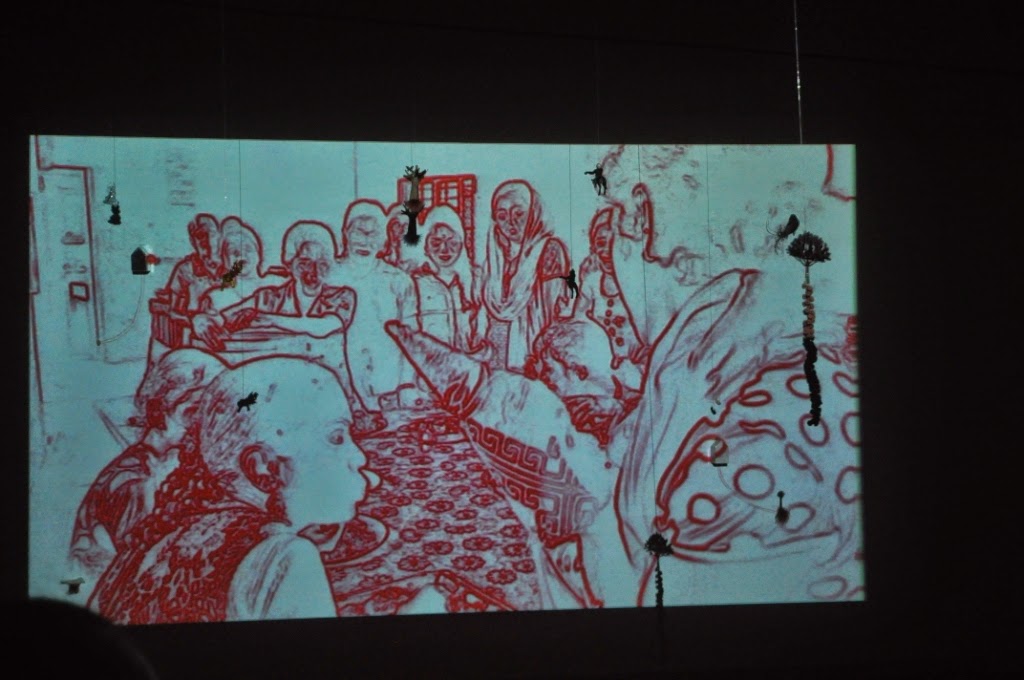
सेन अनाथालय में बच्चों की पहचान को लेकर बेहद सतर्क थीं। वह कहती है, ‘‘मेरी फिल्म में, मैंने रचनात्मक तरीके से सभी फुटेज को नष्ट कर दिया। मेरी फिल्म एक नृवंशविज्ञान वृत्तचित्र नहीं है। यह एक वास्तविकता पर आधारित एक असली या फंतासी फिल्म की तरह है। यह कुछ प्रकार के तार्किक रहन- सहन का दस्तावेज नहीं था; इसके बजाय, यह कम समय की एक श्रृंखला में उनके जीवन को उजागर करने के लिए किया गया था।
एक वास्तविक दुनिया के सेट के भीतर एक वैकल्पिक दुनिया का सृजन करते हुए .... मैं एक कलाकार के रूप में
उनकी वास्तविकता को सामने लाना चाहती थी। मैंने किसी की मासूमियत का इस्तेमाल नहीं किया, यह एक कार्यात्मक घर पर एक प्रयोग है।’’
कलाकार कहती हैं कि उन्होंने बच्चों के नाम न छापकर उनकी पहचान की रक्षा करने की कोशिश की। फिल्म में
न तो बच्चों के चेहरे और न ही उनकी वास्तविक जगह पहचान में आते हैं। कोई भी व्यक्ति फिल्म में किसी भी व्यक्ति से खुद को जोड़ नहीं पाएगा। इसमें सिर्फ एक मानवीय कहानी कही गयी है। और यह सब प्रौद्योगिकी की मदद से किया गया है।
बच्चों को हाल ही में एक और दुनिया का अनुभव करने के लिए और कला के विभिन्न रूपों को देखने के लिए बिनाले लाया गया। वह कहती हैं, ‘‘मुझे लगता है कि जीवन में इस तरह के अनुभवों से उन्हें रूबरू कराना हमारी जिम्मेदारी है।’’

मंगलवार, 3 मार्च 2015

Meaningful works addressing today’s realities: Madhusudhanan

Old ‘Radical Movement’ artist and filmmaker feels KMB ’14 is crucial to society
Kochi, Mar 2: The Kochi Muziris Biennale (KMB) has a “very crucial role in society in addressing new global realities and developing a discourse with people in the globalised world,” said artist Madhusudhanan.
 “We do not need to compare ourselves to other biennales or model ourselves on even important exhibitions, such as the Venice Biennale,” noted the award-winning filmmaker, whose work ‘Logic of Disappearance’ at Aspinwall House has sparked huge interest.
 “We have to develop our own discourses with people and we have made a good start in this direction,” said the artist, who was among the prominent founders of the Radical Painters’ and Sculptors’ Association during the 1980s.
Artist Madhusudhanan 
Madhusudhanan, who changed his medium from painting to film, noted that “KMB ’14 has many meaningful works that address global realities”. He was particularly moved by Australian artist Fiona Hall’s ‘Curve Ball’, which also features at Aspinwall House.
Madhusudhanan’s work consists of 90 charcoal drawings depicting several historical incidents and characters, as if seen in quick flashes of light. “There was a lighthouse on the shores of my birthplace and these drawing have been created as image fragments made visible by its sweeping light,” said the artist, who has the credit of writing the manifesto for the left-leaning Radical Movement among artists.
“Madhu's works are an archive of a ruptured ideology and its larger impact in our life,” said KMB ’14 director of programmes Riyas Komu. “These drawings reflect his knowledge on cinema, and use the same visual language to retrieve and revive an ideology from its darkness. It opens up great possibilities to immediate a discourse on communism and humanism. “
The point of creating the ‘Radical Movement’ was to make art more accessible to people, but after the suicide of the movement’s chief architect K P Krishnakumar, Madhusudhanan switched over to the film medium which he felt reached out to wider audiences. His 2008 Malayalam film ‘Bioscope’ won several awards and travelled the world.
“My installation at KMB ’14 also seems to have reached out to people and I have been called personally by many,” he said. “This did not happen with art before.”
Madhusudhanan, who visited the Biennale over the past week, commended the efforts of KMB ‘14 director Bose Krishnamachari, Komu and curator Jitish Kallat, saying ‘they have put their lives into the biennale, and it can be seen in the exhibition.’

“It is not routine work,” said the artist, who divides his time between his home in Kerala and Delhi. “It is not like bringing an exhibition in Europe. Here, they are building a culture and an institution that we are not used to, but is something we need.”

सोमवार, 2 मार्च 2015

Deccani art’s syncretism strings well at National Museum show

‘Nauras’ unveils cultural zenith of 16th-19th CE southern sultanates
New Delhi, Mar 2: The size may not merit special attention, but the figures in it definitely do. For, the 89cm x 74cm Kalamkari work throws light on the region’s cosmopolitanism at the peak of its glory.
Painted with painstaking care, it shows a fanciful palace where a ruler in Persian clothes accepts wine from a woman in a European hat. As if jostling for space in the collage, Armenians, Chinese, Turks and Iranians stage an appearance in the garden and a yogi inspects a pineapple.
Ajaib al Makhluqat 
This 375-year-old artwork from Golconda typifies an amazing syncretism that once defined the Deccan’s socio-cultural fabric—now finding sharp expression at a milestone exhibition in the national capital. The show at National Museum (NM) unveils the richness of a cultural give-and-take southern India witnessed during the 16th to the 19th centuries, courtesy a whole range of interactions with people from different parts of the world.
Titled ‘Nauras: The Many Arts of the Deccan’ and co-organised by The Aesthetics Project,  the 53-day show mirrors the Deccani ethos that has largely remained unexplored because of an equally glorious and contemporaneous Mughal art.
The south’s eclecticism of those days was no less impressive. “Notice that it’s a pineapple that the yogi is holding,” points out Dr Preeti Bahadur, who has curated ‘Nauras’ along with fellow art historian Dr Kavita Singh of Jawaharlal Nehru University. “Now, pineapple was a new delectable those days, introduced to the Indians by the Portugese.”
If syncretism is a defining feature of Deccani art for four centuries towards the end of the medieval era, the ongoing exhibition is in itself the result of a grand get-together of institutions. For, besides NM (in consultation with The Aesthetics Project which is a platform of academics, artisans and performers exploring India’s art heritage), the show has a set of exhibits from National Gallery of Modern Art (NGMA) in the capital.
“We have never had such an exciting tie-up between a public, private and academic institution,” notes Dr Venu Vasudevan, Director-General of the 1949-founded NM. Highlighting Deccani cosmopolitanism, its singing sultans, perfumes, the Mughal Presence, trade goods and royal lineages, the show has been tastefully designed by actor-artist Oroon Das.
Figurative Huqqa Base with Scenes from the Padmavat
At the six-section ‘Nauras’ which displays more than 120 objects, as if in contrast to the curious Kalamkari work, is a temple hanging further ahead of the gallery. Measuring a longish 34ft x 6.7ft and dating back to the Nayaka Period (of present-day, Karnataka/Tamil Nadu) of last quarter of the 18th century, it is a fine tapestry on cloth,  embroidered with cotton twisted threads and appliqué decoration.
If the Kalamkari work surfs over quite a few races of the globe by portraying their faces and attires, the temple hanging has its theme delving deeper into the Ramayana.
In the broad central panel, Rama and Sita are seated on a throne attended by sages and followers including Sugriva, Hanuman and others from the monkey army. Three panels on either side show other witnesses to the coronation.
“The iconography of Rama, Sita, Brahma and Indra follow pan-Indian models, but the Narasimha evokes a local tradition,” notes Dr Singh, who is an associate professor at JNU’s School of Art and Aesthetics. “Brahma, Indra and the guardians stand under cusped arches that are derived from Sultanate buildings.”
So, what is NGMA’s contribution to ‘Nauras’? It’s a line-up of critically admired Ragamala paintings. A colourful and intricate series of 22 folios, their aesthetics trace to the 18th-century art of northern Deccan. “Effectively, they are a garland of ragas, as they depict the various musical modes that have a relation with seasons as well,” notes Dr Bahadur, who is also an author.
The exhibition also features another set of Ragamala paintings—a 27-folio set from NM reserves.
Equally interesting is the Ajaib-al-Makhluqat which is on display. It is an Arabic compendium on astronomy and natural history composed in the 13th century by Iranian scholar Zakaria bin Muhammad Al Qazwini. Meaning ‘Wonders of Creation’, it describes rare creatures and phenomena on heaven and on earth, based on observation, astronomy, astrology, occult and hearsay.
Revealing further on Islam’s Shiite stream that the Deccani sultanates had declared as their religion is the Alam Standard. Cast in brass and bearing inscriptions on it, the late 18th-century finial is typically placed on the top of the pole draped with banners carried in the Muharram procession.
Nauras also gives individual glimpse at a certain heroic African in the Deccan. There is a 17th-century CE portrait of Malik Ambar, an Abyssynian brought to the southern India as a slave before he went on to become the prime minister of Ahmednagar and successfully led a resistance against the Mughals.
Ragaputra Deshakha
Given that Andhra region became a major belt of tobacco production, thehuqqa was manufactured in the peninsula, from where the equipment for smoking travelled to the north. A look at one section can reveal how finehuqqa bases made of bidri ware were a specialty of Deccani metalwork in which silver and sometimes gold are inlaid in zinc alloy.
Another cynosure is the pichhawai or painted backdrop that is placed behind the icon of Krishna Srinathji. At Nauras is a special kind of pichhwai, extensively coloured with gold leaf. The two-century-old artwork shows the thunderous clouds of a monsoon sky, under which gopis flank a kadamba tree. The Vallabhacharya cult that patronised Krishna Srinathji and commissioned such Pichcwais in the Deccan, were actually Gujarati merchants who had settled down in the region.
Calligraphy with marbled border is another artefact of viewer curiosity.  Scripted in Naksh on a paper of 36x32 cm, the 17th-century Arabic text has extracts from a famous Arabic poem in praise of the Prophet, his daughter Fatima, cousin and son-in-law Ali, and grandsons Hasan and Husain. The interesting feature is a broad border that is made by floating colours on water, using a paper to pick up the swirling patterns, a technique of marbling that reached its peak in the Deccan.
One can also view one of the rarest and most complex examples of marbling that come from Bijapur. The painting portrays Rustom, the hero of the Persian epic Shah-nama capturing the horse Raksh. In Bijapur, marbled paintings were made by applying a resistant gum to the areas that were not to be marbled; afterwards, this was scraped away and details were added by brush.
The exhibition also shows the Al-Buraaq, which is a composite creature believed to be the steed of Prophet Mohammed for his flight to paradise.

If Deccani arms and armour gained popularity among the Mughals, as a result of Aurangzeb’s incursions and rule in this region, then Naurasshowcases his metal armous, Shamshir sword, the Khanjar and the Jambia daggers with the name of the king inscribed.

बिनाले में अस्थियों पर बनी शांतामणि की कलाकृति की प्रदर्शनी

कोच्चि , 02 मार्च: बिनाले में शांतामणि मुदैया की नायाब कलाकृति ‘बैकबाने ’ दर्शकों के आकर्षण का केन्द्र बन रही है। कलाकार शांतामणि मुदैया का कहना है कि अस्थियां मनुष्य को आंकने का अच्छा माध्यम है। अस्थियां एक दूसरे से अलग-अलग होती हैं लेकिन जब आपस में इकट्ठा होकर एक इकाई बनती है तो इनमें गजब की मजबूती आ जाती है।’’
Artist Shanthamani Muddaiah
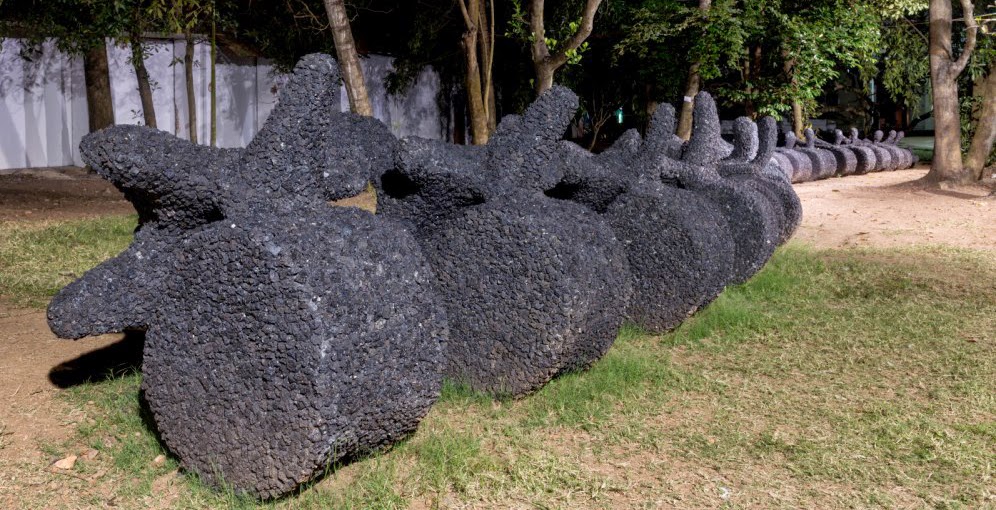
कोच्चि - मुजिरिस बिनाले (केएमबी) में प्रदर्शित अपनी कलाकृति को शांतामणि ने ‘बैकबोन’ शीर्षक दिया है। यह एक बड़ी रीढ़ (स्पाइनल कॉलम) के आकार में सीमेंट और राख से बनी मूर्ति है जिसे फोर्ट कोच्चि में एस्पिनवाल हाउस के मैदान में रखा गया है।
शांतामणि अपनी कलाकृति के बारे में पूरी तरह से दार्शनिक अंदाज में कहती हैं, ‘‘हमारे विचार, हमारी मान्यताओं और खुद के बारे में हमारी धारणा के अनुसार हमारे पास कई खंड हैं जो मिलकर एक सम्पूर्ण कलाकृति बनाती है।’’
उनकी 7 गुना 5 गुना 70 फुट की कलाकृति ‘बैकबाने ’ एक नदी जैसे आकार में मैदान में रखी हुई है। लेकिन इस कलाकृति को अचानक यहां नहीं लाया गया। कलाकार हाल ही में गंगा नदी की तीन महीने की यात्रा पर गयी थीं। उन्होंने इसे रूपकों से भरा पाया। वह हमारी संस्कृति की ‘रीढ़ की हड्डी’ मानी जाने वाली प्राचीन नदी पर एक समकालीन वृतांत पेश करना चाहती थी।
उनकी बिनाले की कलाकृति में कार्बन सरीखी सामग्री का उपयोग किया गया है, जिसका इस्तेमाल नदी के द्वारा सामना किये जा रहे प्रदूषण जैसे मौजूदा मुद्दों को इंगित करने के लिए किया गया है।’’
अंतरराष्ट्रीय स्तर पर अपनी कलाकृतियों को प्रदर्शित करने वाली शांतिमणि को जब प्रसव के लिए उनकी रीढ़ की हड्डी में एनीस्थिसिया का इंजेक्शन दिया गया तो उनकी रीढ़ की हड्डी (बैकबोन) प्रभावित हो गयी। ऐसा 90 के दशक के आखिरी में हुआ था उसके बाद विज्ञान ने काफी तरक्की कर ली। उसके बाद तो नैनो तकनीक, गामा किरणों और एमआरआई जैसी नयी आँखों  (तकनीकों) के माध्यम से मानव शरीर में देखा जाने लगा।
बेंगलुरू की इस कलाकार ने कहा, ‘‘बैकबोन मेरे काम का केन्द्र है। मैं हमेशा से ज्ञान प्राप्त करने के लिए उत्सुक रही हूं और यह भी जानने के लिए उत्सुक रही हूं कि हम अपने शरीर के अंदर और हमारे आसपास की दुनिया को किस प्रकार देख सकते हैं। प्रौद्योगिकीय नवाचारों ने हमें अपने स्वयं के शरीर के अंदर देखने के लिए अवसर प्रदान किया। शरीर के अंदर देखने के नए विज्ञान ने मुझमें दिलचस्पी पैदा की।’’
एमएस विश्वविद्यालय बड़ौदा से एमएफए करने वाली शांतामणि अपनी कलाकृतियों में अल्पकालिक प्राकृतिक सामग्रियों का इस्तेमाल करती हैं और अक्सर कागज और लकडी़ के कोयले से कलाकृतियां बनाती हैं। अपने बिनाले की कलाकृतियों में उन्होंने भस्म का इस्तेमाल किया ‘‘जो न तो राख है और न ही खनिज है, बल्कि यह वैसा पदार्थ है जो सभी जीवन शक्ति को फीका कर देती है और मूर्ति की मरम्मत के लिए इसका इस्तेमाल किया जाता है और कई बार यह एक रूपक होता है।
खुद को सबसे पहले एक चित्रकार समझने वाली और अपने हाथ के माध्यम से सोचने वाली कलाकार कहती हैं, ‘‘मैंने इस मूर्ति को बाहर लाने की चुनौती को पसंद किया और इसके डायनैमिक्स को इस माहौल में पेश  किया।
‘‘मैनें दर्शको के द्वारा इससे बातचीत करने के अंदाज का आनंद लिया।’’
केएमबी’ 14 के क्यूरेटर जितिश कलात ने कहा कि इस कलाकृति को देखकर महसूस होता है ‘‘मानो बहुत पहले के इतिहास को इस कदाचित अचानक निकाले गये जीवाश्म के रूप में लाया गया है। सीमेंट और राख से बनी शांतामणि की 70 फुट लंबी मूर्ति को देखकर ऐसा प्रतीत होता है कि किसी विशाल गोजर ने महासागर को पार कर एस्पिनवाल हाॅल के खुले लाॅन को अपना अंतिम विश्राम स्थल बना लिया हो। राख जैसे ज्वालामुखी चट्टान का उपयोग विशेष रूप से बहुत ही रोचक है। पदार्थ की छिद्रदार सतह में कुछ भूवैज्ञानिक निशान हैं और यह खुद जीवाश्मों की तरह प्रतीत होता है।’’
शांतामणि को लगता है कि फोर्ट कोच्चि ने ‘बिनाले की खूबसूरती’ को बढ़ा दिया है। उन्होंने इस तथ्य की सराहना की कि इस प्रदर्शनी ने नया मुकाम हासिल किया है। वह कहती हैं, ‘‘आपको इस जैसी जगह नहीं मिल सकती है, जिसे देखकर ऐसा लगता है मानो इसने इतिहास को पहन लिया हो। आप ऐसा केवल तब अनुभव करेंगे जब आप यह महससू करेंगे कि भारत को इस तरह एक जगह की सख्त जरूरत है; एक ऐसी जगह जिसका वास्तव में रचनात्मक प्रक्रिया के साथ संबंध है।’’

रविवार, 22 फ़रवरी 2015

इटली की तर्ज पर दिल्ली में भी बनेगी आर्ट स्ट्रीट

नई दिल्ली नगर पालिका परिषद् (NDMC) कनॉट प्लेस और दिल्ली के कई दूसरे इलाकों में इटली की तर्ज पर आर्ट स्ट्रीट खोलने की योजना बना रही है. इससे कलाकृतियां खरीदने के लिए कला प्रेमियों को अब बड़ी आर्ट गैलरियों में जाने की जरूरत नहीं होगी.
NDMC ने पहले ही पब्लि‍क प्राइवेट पाटर्नरशिप परियोजना के तहत प्रपोजल मांगे हैं, जिसके अंतर्गत पेंटर और मूर्ति डिजाइनर पेंटिंग्स व मूर्तियां बनाकर बेच सकेंगे. NDMC के अध्यक्ष जलज श्रीवास्तव ने बताया कि कलाकृति खरीदने के लिए बड़ी आर्ट गैलरियों में जाना होता है. कॉलेज स्टूडेंट्स और बड़े कलाकारों के लिए इन बड़ी गैलरियों में जाना संभव नहीं होता. इसलिए हमारी योजना सड़कों पर इटली की तर्ज पर कला और कलाकारों को लाने की है, जहां कलाकार सड़क के किनारे अपनी पेंटिंग्स दिखा सकेंगे और बेच भी पाएंगे.
NDMC एक प्रतिस्पर्धी नीलामी प्रक्रिया के जरिए किसी स्वतंत्र कला संस्थान या कंपनी को पीपीपी परियोजना के लिए अनुबंध देगी. इस परियोजना को शुरू करने में दो महीने का और समय लग सकता है और पहली आर्ट स्ट्रीट कनॉट प्लेस में राजीव गांधी हैंडीक्राफ्ट्स भवन के नजदीक शुरू होगी. श्रीवास्तव ने बताया यह कॉनसेप्ट तहबाजारी योजना से बहुत मिलता-जुलता होगा. लोग कलाकारों को अपने सामने ही पेंटिंग्स बनाते हुए देख सकेंगे. उनके मुताबिक, 'हम लोग बाबा खड़क सिंह मार्ग पर एम्पोरियम मार्ग पर काम शुरू करेंगे. असल में मैं सफदर हाशमी मार्ग पर यह शुरू करना चाहता था लेकिन ट्रैफिक और पार्किंग की समस्याओें के चलते वहां पर स्थानीय प्रतिरोध ज्यादा है. ऐसे में हम लोग दूसरी जगह काम कर रहे हैं.'


साभार :

शुक्रवार, 20 फ़रवरी 2015

Youngest biennale artist’s brick-wall work speaks fascinating folktales

C Unnikrishnan’s untitled installation is set for Sharjah biennale starting next month

Kochi, Feb 20: He raised an artwork by piling up self-painted bricks but least stonewalled the essential aesthetics or intended messages in the off-beat process.

If anything, C Unnikrishnan’s work at the Kochi-Muziris Biennale (KMB) has only dismantled the conventional idea that the fired clay-block is a frustratingly uncommunicative object. The fledgling artist’s—actually he is the youngest at the ongoing KMB’14—wall of little pictures tells stories which viewers say they can relate to and enjoy at different layers.
Artist C Unnikrishnan's  

Amid the warm reception in Indian art circuit, there is more good news for the 23-year-old: his installation has now been selected for the 12th Sharjah Biennale. Eungie Joo, the curator of the three-month exhibition at the Gulf emirate starting on March 25, was thoroughly impressed with it after she paid a visit to its Kochi counterpart recently.

Unnikrishnan was a student at the Thrissur College of Fine Arts last year when Kochi Biennale Foundation president Bose Krishnamachari and KMB’14 curator Jitish Kallat saw his work. And it took just a few days for them to inform him that he had been selected for the 108-day KMB that to begin on December 12.

“Even so, I did not realise that I would be showing at the main biennale,” says Unnikrishnan, a native of semi-hilly Pezhumpara village in Palakkad district of central Kerala. “I was overwhelmed about exhibiting with artists of international renown.”

Kallat recalls that Unnikrishnan’s work at the graduation exhibition at his college was a hand-painted brick wall in the middle of the gallery space. “It stood as if an image memoir had interwoven with masonry. Each unit carried an image, as if each brick were a viewfinder to a different world. This on-campus encounter led me to invite Unnikrishnan to participate in the biennale,” he adds, expressing “thrill” at Unnikrishnan being chosen for the Sharjah Biennale. “I am writing a short essay on Unnikrishnan for the Sharjah Biennale Catalogue.”

Unnikrishnan says his biennale work at CSI Bungalow in Fort Kochi is a continuation of what he did as a college student. Technically, it is a freestanding wall of more than 300 bricks—each one featuring a canvas that has a very personal take on life around him. So there is a string of jasmine buds, pots and pans, a real skeleton of a lizard, fish, coconuts drying, women in purdah, ants dragging along a dead fly; every picture tells such a story that the viewer forgets each one is contained within the space of a rectangular terracotta cube.
Artist C Unnikrishnan's  art installation on bricks at CSI Bungalow,Fort Kochi

“It is a diary of local history and folklore,” says Unnikrishnan, who used oils and acrylics for his unique work. “I used to walk around the area and speak to the people here. Some of the work displayed here is based on the stories I heard here. A canvas feels like a large space; the brick feels closer and I like the roughness and texture of bricks.” He also tried his hand at something new for KMB’14 and did some carving on the bricks.

Unnikrishnan first started creating the work in his room at home, completing a painting a day, as if making entries in a visual diary. His parents, who are daily-wage workers, had anyway no clue of his kind of art; in fact they always wanted him to learn something that would fetch him a job which would also support them financially. So to placate them, he gave tuition classes for young children.
Even so, Unnikrishnan’s teachers kept pushing him into art. Soon, he got his first group show in Chennai after a teacher goaded him about not doing anything to further a career in the field he liked. The video he created of his bricks also had conversations of his family—mainly his mother and sister—in the backdrop.


“My background and a personal element are very strong in my work,” says the artist, recalling the rich rusticity of his native land near Nenmara. His KMB’14 work, thus, teems with tales bearing local ethos.
“My aunt is an oracle, so her stories and songs, and myth and beliefs have always crept into my work,” he adds. “I started doing this at home, when I felt that I had no one to talk to. It was my escape to produce a diary of my thoughts on my wall at home.”

Krishnamachari says he, as an artist, found Unnikrishnan’s use of material “very interesting”. The “creative spark” that the young artist shows in finding a new material for art-making and the narrative he constructs every day, on life around him and rituals from his village “make his work stand out”, he adds.

बिनाले में सबसे कम उम्र के कलाकार के द्वारा ईंट की दीवार पर बनायी गयी लोककथाओं पर आधारित कलाकृतियां दर्शकों के आकर्शण का केन्द्र होंगी


सी. उन्नीकृष्णन का शीर्षकहीन इंस्टालेशन अगले महीने से शुरू होने वाले शारजाह बिनाले का मुख्य आकर्षण होगा
कोच्चि, 20 फरवरी: उन्होंने स्वयं ही ईंटों को पेंट कर उन पर कलाकृतियां बनायीं। उनका इरादा ईंट की दीवार पर कलाकृतियां बनाकर गैर पारंपरिक तरीके से सौंदर्य को प्रदर्शित करना और उसमें छिपे संदेशों को आम लोगों तक पहुंचाना है।
सी. उन्नीकृष्णन
उनका इरादा चाहे कुछ भी हो, लेकिन कोच्चि- मुजिरिस बिनाले (केएमबी) में सी. उन्नीकृष्णन की कलाकृतियों ने उन परम्परागत अवधारणा को खारिज कर दिया है कि आग में पकायी गयी मिट्टी की वस्तुएं निराशा पैदा करने वाली और एकांत में रखी जाने वाली वस्तु है। इस कलाकार ने बहुत ज्यादा अनुभव हासिल नहीं किया है। वह यहां चल चल रहे केएमबी’14 में सबसे कम उम्र का कलाकार है। उनके द्वारा दीवारों पर बनायी गयी छोटी- छोटी तस्वीरें अलग- अलग कहानियां सुनाती है जिसे दर्शक किसी भी चीज से जोड़ सकते हैं और विभिन्न प्रकार से उनका आनंद ले सकते हैं।
भारतीय कला जगत में इस कलाकार का गर्मजोशी से स्वागत किया गया है। इस 23 वर्षीय कलाकार के लिए इससे भी अधिक अच्छी खबर यह है कि उनकी कलाकृतियों का चयन अब 12 वें शारजाह बिनाले के लिए किया गया है। खाड़ी अमीरात में 25 मार्च सेे शुरू होने वाले तीन महीने की प्रदर्शनी की क्यूरेटर इयुगी जू ने हाल ही में अपने सहयोगियों के साथ कोच्चि का दौरा किया और वह इससे खासा प्रभावित हुईं।
कोच्चि बिनाले फाउंडेशन के अध्यक्ष बोस कृष्णमाचारी और केएमबी’14 के क्यूरेटर जितिश कलात ने जब पिछले साल सी. उन्नीकृष्णन की कलाकृतियों को देखा तो उस समय वह त्रिशूर काॅलेज आॅफ फाइन आर्ट्स में छात्र थे। उनकी कलाकृतियों को देखने के कुछ दिनों बाद ही उन्हें बता दिया गया कि 12 दिसंबर से शुरू होने वाले 108 दिवसीय केएमबी के लिए उनका चयन किया गया है।
Artist C Unnikrishnan's  art installation on bricks at CSI Bungalow,Fort Kochi.
मध्य केरल के पलक्कड़ जिले में अर्द्ध-पहाड़ी पेझुमपारा गांव के निवासी उन्नीकृष्णन कहते हैं, ‘‘यह जानने के बाद भी कि मेरा चयन केएमबी’14 के लिए कर लिया गया है, मुझे विश्वास नहीं हुआ कि मेरी कलाकृतियों को मुख्य बिनाले में प्रदर्शित किया जाएगा। मैं अंतरराष्ट्रीय स्तर के प्रसिद्ध कलाकारों के साथ अपनी कलाकृतियों को प्रदर्शित करने को लेकर काफी रोमांचित था।’’
कलात याद करते हुए कहते हैं कि उन्नीकृष्णन के काॅलेज में स्नातक प्रदर्शनी में उनकी कलाकृतियां दीर्घा के मध्य में हाथ से पेंट की गयी ईंट की दीवार पर बनायी गयी थीं। शारजाह बिनाले के लिए उन्नीकृष्णन का चयन किये जाने पर रोमांच अनुभव करते हुए उन्होंने कहा, ‘‘यह दीवार उस तरह से खड़ी थी मानो किसी तस्वीर के वृतांत को चिनाई कर गुथ दिया गया हो। प्रत्येक इकाई में एक- एक तस्वीर थी और हर ईंट एक अलग दुनिया के दृश्य को दर्शा रही थी। इस परिसर में प्रदर्शित उनकी कलाकृतियों ने मुझे उन्नीकृष्णन को बिनाले में आमंत्रित करने के लिए प्रेरणा दी। मैं शारजाह बिनाले सूची के लिए उन्नीकृष्णन पर एक लघु निबंध लिख रहा हूँ।’’
उन्नीकृष्णन ने कहा कि फोर्ट कोच्चि में सीएसआई बंगले में उनकी बिनाले कलाकृतियां उनके द्वारा काॅलेज के दिनों में बनायी गयी कलाकृतियों का ही अगला चरण है। तकनीकी तौर पर, यह 300 से अधिक ईंटों से बनी अपने बलबूते खड़ी एक दीवार है जिसमें हर ईंट पर एक तस्वीर बनायी गयी है जिसे उन्होंने अपने आसपास के जीवन से प्रेरित होकर बनाया है। इनमें चमेली की कलियों की लड़ी, बर्तन और पैन, छिपकली और मछली का वास्तविक कंकाल, सूखा नारियल, परदे में महिलाएं, एक मृत मक्खी को खींच रहीं चींटियां शामिल हैं। आयताकार टेराकोटा क्यूबनुमा क्षेत्र की हर तस्वीर एक ऐसी कहानी कहती है कि दर्शक पहले वाली कहानी को भूल जाता है। 
अपने अनोखे कार्य के लिए तेल और एक्रेलिक का इस्तेमाल करने वाले उन्नीकृष्णन कहते हैं, ‘‘यह स्थानीय इतिहास और लोकगीत की एक डायरी है। मैं इस क्षेत्र में घूमता रहा हूं और यहाँ के लोगों से बातचीत करता रहा हूं। यहाँ प्रदर्शित कुछ कलाकृतियां उन कहानियों पर आधारित हैं जिन्हें मैंने यहां सुना है। कैनवास एक बड़ी जगह की तरह लगता है, ईंट निकटता का आभास कराते हैं और मुझे ईंटों का खुरदरापन और उनकी बनावट पसंद है।’’ उन्होंने केएमबी’14 के लिए कुछ नया करने की भी कोशिश की और ईंटों पर कुछ नक्काशी की।
उन्नीकृष्णन ने पहले अपने घर में ही अपने कमरे में कलाकृतियां बनाना शुरू किया। एक दिन में एक पेंटिंग को पूरा करने के बाद वह उसे एक दृश्य डायरी में दर्ज करते थे। उनके माता- पिता दिहाड़ी पर काम करने वाले मजदूर हैं। उन्हें इस तरह की कला का बिल्कुल ज्ञान नहीं था। वास्तव में वे चाहते थे कि उन्नीकृष्णन कुछ ऐसा काम सीखे जिससे उसे नौकरी मिल जाए। इससे उन्हें आर्थिक रूप से भी मदद मिलता। इसलिए उन्नीकृष्णन ने अपने माता- पिता को खुश करने के लिए युवा बच्चों को ट्यूशन देना शुरू किया।
फिर भी, उन्नीकृष्णन के शिक्षक उन्हें कला के क्षेत्र में ले ही आये। जल्द ही, उन्हें चेन्नई में अपना पहला समूह शो में भाग लेने का मौका मिला। उस शो के बाद एक शिक्षक ने उन्हें बताया कि वह जिस क्षेत्र को पसंद करते हैं, उस क्षेत्र में कैरियर बनाने के लिए कुछ भी नहीं कर रहे हैं। उन्होंने उन्नीकृष्णन को इस क्षेत्र में कुछ करने के लिए प्रेरित किया। उनके द्वारा ईंटों पर बनाया गया वीडियो पृष्ठभूमि में उनके अपने परिवार के बारे में काफी कुछ कहता है- मुख्य रूप से उनकी मां और बहन के बारे में।
कलाकार नेनमारा के नजदीक अपने पैतृक निवास की सादगी के बारे में कहते हैं, ‘‘मेरी कलाकृतियों में मेरी पृष्ठभूमि और व्यक्तिगत तत्व बहुत मजबूती से निहित हैं।’’ इस प्रकार, उनकी केएमबी’14 की कलाकृतियां स्थानीय लोकाचार की कहानियों पर आधारित हैं।
उन्होंने कहा, ‘‘मेरी चाची पूजा- पाठ करने वाली महिला हैं, इसलिए उनकी कहानियां और गीत, और मिथक और विश्वास हमेशा मेरी कलाकृतियों में शामिल हो ही जाते हैं। जब मुझे लगा कि मेरे साथ बात करने वाला कोई नहीं है, तो मैंने घर पर ही कलाकृतियां बनाना शुरू कर दिया। और इस प्रकार मैंने अपने अपने घर में दीवार पर अपने विचारों की डायरी बनाना शुरू किया।’’
कृष्णमाचारी कहते हैं कि एक कलाकार के रूप में उन्होंने पाया कि उन्नीकृष्णन के द्वारा इस्तेमाल की जाने वाली सामग्रियां बहुत ही रोचक होती हैं। उन्होंने कहा कि युवा कलाकार कलाकृतियां बनाने के लिए नई सामग्रियों की खोज करते हैं और अपने आसपास के जीवन और अपने गांव के अनुष्ठानों पर हर दिन कथा के सृजन ने उनमें ‘‘रचनात्मक चिंगारी’’ पैदा की और उनके कार्याें को एक अलग पहचान दी।

Famed three-wheelers of Fort Kochi turn 'vehicles of art'

Kochi, February 19: “It is our Biennale”, says one slogan. “Art is Life”, says another. From this week, these messages from the second Kochi-Muziris Biennale will don the exteriors of auto-rickshaws in Fort Kochi, the main venue of the 108-day festival.
:KMB '14 director of programmes Riyas Komu pasting 'Art is Life Itself' stickers on autorickshaws at Fort Kochi.

More than 100 auto-rickshaws queued up outside the Aspinwall House, the main venue of the biennale, to get the stickers bearing the messages of art. The enthusiastic drivers of the vehicles said they were eager to support the biennale, which is helping them too.

“A lot of tourists from within India and abroad are coming to Kochi to see the biennale,” said auto rickshaw driver Jarar K K. “Every day we take them to the biennale venues.”

On Wednesday, Kochi Biennale Foundation co-founder and artist Riyas Komu led the drive to turn the auto-rickshaws in Fort Kochi into “vehicles of art”.
“The rickshaw drivers of Fort Kochi are the local ambassadors of the biennale. Their spirited enthusiasm forms a huge support for the event,” said Komu.
Added Ashkar Puthenparackal, an auto-rickshaw driver: "The biennale is a pride of our town. We have to support it.”

“It was the first time I was seeing an art event,” noted Puthenparackal, who found time to see the event himself. “I was astounded by what I saw. I want to see more.”
The auto-rickshaws are a popular mode of transport in Fort Kochi, a major tourist attraction, helping visitors get from one destination to another with ease. The biennale is also running a batter-operate shuttle service between venues.

शुक्रवार, 13 फ़रवरी 2015

The thrill of football films at KMB ‘14

Week-long Artist’s Cinema package on the game starts tomorrow
 A scene from Mexican artist Miguel Calderon's film 'Mexico vs Brazil', which will be shown in KMB '14's  ‘Hard Tackle: The untold story of football’ film package
Kochi, Feb 13: The Kochi Muziris Biennale 2014 is set to score with ‘Hard Tackle: The untold story of football’, a week-long package, on ‘the beautiful game’ as part of its Artist’s Cinema programme. The film screenings at the Aspinwall pavilion begin tomorrow at 7 pm.
The February 14-20 package, with films from India, the UK, Germany, Switzerland and Mexico, is curated by film critic-journalist Faizal Khan, and features short films, documentaries and features, that portray the politics, economics and socio-cultural background in the game. 
“The idea is to link society with sports to create an understanding of different cultures and as a unifying factor for people to celebrate and come together,” says Faizal, whose father Mohammed Usman played for Kerala.
Faizal and biennale director of programmes Riyas Komu have put together football film packages for the International Film Festival of India in Goa and the International Film Festival in Kerala, which proved so popular that Komu has been roped in as a consultant on this particular package in several cities, including in Indore and Pune.
Marmots playing football in animated short film 'FC Murmeli' by Swiss directors Jochen Ehmann and Dustin Rees that will be shown in KMB '14's  ‘Hard Tackle: The untold story of football’ film package
The KMB ’14 package has poignancy, humour, surrealism and some of the films feature big names on the field. “There are a couple of ‘anti-football’ films,” said Faizal. Germany’s ‘The Whole Stadium’ is a 90-minute film that only looks at the spectators and ‘Stoppage Time’ is a short on the national anthems that come at the start of the match.
Indian film ‘The Vigil’ by the Raqs Media Collective, a Delhi trio who are also exhibiting at KMB 14’s Kashi Art Gallery, features a match between two Chinese football clubs, from the point of view of the goalkeepers. Originally telecast on two screens, the 92-minute film is premiering here in a new avatar, and is being shown in a split screen. A film put together by the Berlin Film Festival to commemorate the 2006 World Cup hosted by Germany shows a short clip of India’s failed attempt to play in 1950.
The package will be advertised among the different clubs in the city and also at Fort Kochi’s Parade Ground, which is a popular local venue for the game. Malayali footballer I M Vijayan will be felicitated on February 20, the closing day.

German documentary filmmaker Lena Siebertz's 'Stoppage Time', which will be shown in KMB '14's  ‘Hard Tackle: The untold story of football’ film package

Komu noted that the film package was already set to travel to other parts of India as a KMB outreach, starting with Malappuram. “Football represents the best movements of civilians on earth,” said Komu. “There are more than 600 football films in the world; it shows the depth of interest that people have towards converting the stories around football into motion pictures.”

बुधवार, 11 फ़रवरी 2015

कोच्चि- मुजिरिस बिनाले में एन. एस. हर्ष की कलाकृति ‘‘मैटर’’ और इंफिनिटी

कोच्चि, 11 फरवरी: कोच्चि - मुजिरिस बिनाले, 2014 के क्यूरेटर जितिश कलात जब कलाकार एन. एस. हर्ष के पास पहुंचे तब वह बंदर के आकार वाली अपनी खास कलाकृति को सजाने-संवारने में जुटे थे। उस कलाकृति को देखकर श्री कलात के मुंह से अनायास निकल गया, ‘‘वह निश्चित रूप से इस कलाकृति को लेना चाहेंगे।’’
इससे प्रेरित होकर एन. एस. हर्ष उस कलाकृति को अंतिम रूप देने में जुट गये और महीनों की उनकी मेहनत रंग लायी और इस मेहनत की परिणति बिनाले में ‘‘मैटर’’ नामक कला-कृति स्थापित की। ‘‘मैटर’’ नामक कलाकृति साधु सरीखा बंदर है जिसके एक हाथ में ‘‘गोलाकार’’ वस्तु है जबकि दूसरे हाथ से वह आकाश की ओर इशारा कर रहा है। बिनाले के आयोजन स्थलों में से एक पेपर हाउस में प्रवेश करते ही आगंतुकों के सामने यह कलाकृति दिखाती है। उनकी एक कलाकृति ‘‘पुनरापी जननम पुरापी मरनम’’ (एक बार फिर जन्म, एक बार फिर मृत्य) बिनाले के अन्य आयोजन स्थल एस्पिनवाल में प्रदर्शित की गयी है। 

Mysore-based artist N S Harsha at his KMB '14
 work 'Punarapi Jananam Punarapi Maranam' at Aspinwall 
वह क्यों संघर्ष कर रहा था? मैसूर के कलाकार कहते हैं, ‘‘मैं किसी भी मैटर को आमतौर पर कल्पना के साथ बहुत ही साधारण ढंग से संभालता हूं। और यह वास्तव में जमीनी और भारी है। बंदर यह सुझाव देते हुए ब्रह्मांड की ओर इशारा कर रहा है कि यह ‘‘हमेशा के लिए’’ है और हमारी शाश्वत मानव खोज है। यह कलाकृति यह बताती है कि आप गहराई से क्या महसूस करते हैं और जिसके लिए आपके पास शब्द नहीं है।’’ 
हर्ष की कृतियों में बंदर एक आवर्ती विषय है। बर्लिन के सांस्कृतिक परिसर, अगस्तस्ट्रासी 10 में उनकी मूर्तिकला इंस्टालेशन ‘‘तमाशा’’ में लंगूरों के झुण्ड को दर्शाया गया है जिसने इमारत पर कब्जा कर लिया है। बर्लिन और लंदन में रहने वाले, लेकिन हमेशा मैसूर वापस आने को इच्छुक कलाकार कहते हैं, ‘‘बंदर हमेशा सक्रिय रहते हैं। वे मेरे मन के लिए रूपक हैं। मैं उन्हें अपने स्टूडियो में लेकर आया। मुझे वह अच्छे लगते हैं । पशु मेरी सोच में बसे हुए हैं।’’
‘पुनरापी जननम पुनरापी मरनम’ का शीर्षक उन्होंने जन्म और मृत्यु के अंतहीन चक्र पर एक संस्कृत भजन से लिया है, जो बिल्कुल अलग प्रकार का भजन है। इस कलाकृति का 79 फीट गुना 12 फीट का विशाल आकार खौफनाक लेकिन प्रेरणादायक है। इसमें ब्रह्मांड को घूमते हुए चित्रित किया गया है जिसे एक अनंत लूप के रूप में प्रस्तुत किया गया है जिसमें  तारों और ग्रहों को बिंदी के रूप में दिखाया गया है। यह स्थान और समय के माध्यम से एक कभी न खत्म होने वाली यात्रा है।
45 वर्षीय कलाकार कहते हैं, ‘‘इसे एक नाटकीय पृष्ठभूमि के विचार के साथ बनाया गया था। यह एक डूडल है लेकिन मानव पैमाने पर नहीं। जब लोग इसके पास जाते हैं, इसे देखते हैं और इसके आकार से बात करना चाहते हैं तो ऐसा लगता है मानो लोग अंतरिक्ष के चारो ओर घूम रहे हैं । कला मेरे माध्यम से नहीं, बल्कि मेरे द्वारा बनायी जाती है। हमें यह विचार करना होगा कि हम सिर्फ माध्यम हैं जो इस अनंत ब्रह्मांड के माध्यम से गुजरता है।’’
Mysore-based artist N S Harsha at his KMB '14
work 'Punarapi Jananam Punarapi Maranam' at Aspinwall
कलात कहते हैं ‘पुनरापी जननम पुनरापी मरनम’ बहुत बड़े  अनुपात में एक अकेला ब्रश स्ट्रोक की तरह है। यह इतना बड़ा और विस्तुत है कि इसमें एक पूरा ब्रह्मांड समा सकता है। कलात कहते हैं, ‘‘टेढ़ा - मेढ़ा ब्रश स्ट्रोक एक अंतहीन लूप की तरह खुद में ही वापस आ जाता है मानो यह एक अन्य ब्रह्मांड से मिलने के लिए यात्रा कर रहा है। ‘‘व्होल्र्ड एक्सप्लोरेशन्स’’ में ‘‘मैटर’’ आकाशीय और स्थलीय के बीच एक पुल है।’’
उन्हें लगता है कि ‘‘व्होल्र्ड एक्सप्लोरेशन्स’’ का क्यूरेटर थीम एक आकस्मिक संबंध की अनुमति नहीं देता है, आरै वास्तव में यह लोगों को ‘‘ब्रह्मांड में उनकी स्थिति’’ के बारे में बड़े सवाल पूछने के लिए मजबूर करता है।वह कहते हैं , ‘‘मैं इस बात को लेकर उत्साहित था कि इस क्षेत्र को खोजने में  लोगों को कितनी सदियां लगी। लेकिन जितिश ने इसे लोकप्रिय बनाने के लिए एक मंच के रूप में देखा। हमने हमेशा सांस्कृतिक गतिविधि के लिए भारत के उत्तर की ओर देखा, लेकिन मैने महसूस किया कि बिनाले दक्षिण को देश में एक मुख्य केद्रं बना सकता है। यह मेरे लिए बहुत खास था कि यह दक्षिण में हो रहा है।’’
हर्ष टोक्यो के समकालीन संग्रहालय, मोरी आर्ट्स सेंटर  के मुख्य क्यूरेटर जापान के मामी काटौका के साथ दूसरी बार केएमबी का दौरा  कर रहे थे, जो 2016 में  उनकी कलाकृतियों का एक पूर्वव्यापी आयोजन कर रहा है।

मंगलवार, 10 फ़रवरी 2015

कला मंगल की अगली कड़ी - छायाचित्रों की प्रदर्शनी

पटना 10 फ़रवरी ;  बिहार ललित कला अकादमी के रूटीन कार्यक्रम कला मंगल की अगली कड़ी के रूप में  छायाचित्रों की सामूहिक प्रदर्शनी  का उद्घाटन आज अकादमी कला दीर्घा में हुआ। प्रदर्शनी का उद्घाटन अकादमी के अध्यक्ष एवं वरिष्ठ कलाकार आनंदी प्रसाद बादल नें फीता काट कर किया। इस अवसर पर एक कैटलॉग का भी लोकार्पण किया गया। प्रदर्शनी के संयोजक अंकित रंजन पाठक हैं। 
प्रदर्शनी में छायाकार शशि रंजन प्रकाश , रवि कुमार गुप्ता , अंकित रंजन पाठक , माधुरी लहेरी , विश्वजीत कुमार , विनीता सिन्हा की करीब 60 छायाचित्रों को प्रदर्शित किया गया है। प्रदर्शनी इस महीने की 15 तारीख तक चलेगी। 


Singapore President Calls for Deepening of Cultural Ties with India

·        Peranakan Exhibition Gets Underway at National Museum 

New Delhi, Feb 10: Singapore opened a window on the celebrated hybrid culture of Peranakan Chinese settlers by holding an exhibition for the first time in India at the National Museum here today with its President Dr. Tony Tan Keng Yam emphasizing the importance of holding such events to enhance and deepen bilateral ties.
 
Singapore President Dr Tony Tan Keng Yam lights the lamp, opening the Peranakan Exhibition at National Museum, Delhi, on feb 10. Left of him are Museum D-G Dr Venu Vasudevan and top bureaucrat Mr Raghav Chandra
“Such an exhibition promotes a better understanding of Singapore’s multi-racial communities and how they form the core of its identity,” Dr Tan said, while inaugurating the one-and-a-half-month-long exhibition, ‘The Peranakan World -- Cross-cultural Art of Singapore and the Straits of Malacca’.

Recalling the historical ties between Singapore and India, he noted that the two countries share administrative, and judicial systems even today. "India has a profound impact on the culture of Singapore," the President said, and revealed that the Southeast Asian country would be hosting an India culture festival this year and open an Indian Heritage Centre as well.

The Peranakan exhibition is part of President Tan’s first state visit to India to commemorate the 50th anniversary of the establishment of diplomatic relations between the two countries. He was accompanied by Ms. Grace Fu, Minister in the Prime Minister’s Office and Second Minister for Foreign Affairs; Mr. Lawrence Wong, Minister for Culture, Community and Youth, and Mrs. Rosa Daniel, Chief Executive Officer, National Heritage Board, Singapore.

The Peranakan Chinese are descendants of southern Chinese traders who settled in Southeast Asia and married local women. Their culture is rooted in Chinese traditions, but with strong influences from Southeast Asia and Europe.  Peranakan art in this exhibition reflects the diverse influences of Indian, Chinese, Malay and European cultures that were fused into a distinctive style.
 
Singapore President, Dr Tony Tan Keng Yam signing
 the Visitor's Book after inaugurating the Peranakan Exhibition
at National Museum, Delhi, 
In her address, Mrs. Rosa Daniel, Deputy Secretary for Ministry of Culture, Community and Youth, said this is the first exhibition from Singapore in India which presents a wonderful array of Peranakan objects: textiles, costumes, jewellery, beadwork, colourful porcelain and opulent furniture. Many of these objects fuse forms and techniques from different cultures: Chinese, Indian, Malay and European.

 Elaborating, she said the characteristic of the sarong has its source in India: printed cotton textiles from Gujarat and the Coromandel Coast were exported to the Malay world, which inspired Batik versions made by Peranakans and the other ethnic groups in Southeast Asia.

National Museum Director-General Dr. Venu Vasudevan said the exhibition would signal the "beginning of an enduring relation" between National Museum and museums of Singapore. "The exhibition was mounted in a record time, which is a testimony to the deep and multi-layered ties between the two countries," he added.

Mr Raghav Chandra, Additional Secretary and Financial Advisor, Union Ministry of Culture, also spoke at the function, which was attended, among others, by Mrs Tan, the wife of the Singapore President.

With 122 objects from the 1912-founded Peranakan Museum, supplemented by loans from collectors in Singapore, the exhibition, which runs through March 25, gives a fascinating account of how Chinese immigrants married locally, developed new hybrid forms, and created a unique culture in their new homes in Southeast Asia.

The objects at the exhibition date back to the late 19th and early 20th centuries and depict four themes: Chinese sources; influences from the Malay world and the Indian Ocean; the response to Europe; and the role of Peranakans in shaping modern Southeast Asia.

The first major exhibition of Indian antiquities in Singapore that was held in 1994 at Asian Civilisations Museum. As many as 330 artefacts from The National Museum, Delhi were displayed in “Alamkara: 5000 years of India”, which saw a record 165,000 visitors.

Dr Alan Chong, Director of the Asian Civilisations and Peranakan Museum, said, “Peranakan art is an important example of multi-cultural exchange. Many of the textiles, porcelain and beadwork in the exhibition are unmistakably Peranakan, yet can trace sources to India, the Malay world, Europe and China. The exhibition also strengthens the idea that culture is shared. Port cities like Singapore have been formed by centuries of trade, immigration and colonial rule.”

For instance, the sarong kebaya originated in the mixed communities of Goa and Sri Lanka and then travelled to Southeast Asia. Indian cotton was used as clothing and inspired and developed in Southeast Asia batik. Furniture design was similarly shared in the Coromandel Coast, Sri Lanka and Java.

A major component of the exhibition is the Peranakan jewellery. For Peranakans, jewellery is an important cultural marker, a treasured heirloom, an indicator of social standing, and often part of a bride’s dowry.

A gold belt buckle, a kerosang (made of gold and diamonds), a cotton altar cloth bearing dragon motifs and inscriptions, portraits for ancestor veneration, and a flower basket wedding bed hanging are among the other fascinating art objects on display. 


The exhibition also showcases the Chinese porcelain specially made for Peranakan patrons. Peranakan porcelain, called “nyonyaware”, is characterised by vivid, contrasting colours. Buddhist emblems, mythical beasts, and flowers and birds, often within lobed panels, animate the surfaces.